Today in News History
On July 1, several notable moments in the history of News stand out. In 1287, Narathihapate, Burmese king (born 1238) passed away. In 1911, Sergey Sokolov, Russian marshal and politician, Soviet Minister of Defence (died 2012) was born. In 1916, World War I: First day on the Somme: On the first day of the Battle of the Somme 19,000 soldiers of the British Army are killed and 40,000 wounded. In 1918, Ahmed Deedat, South African writer and public speaker (died 2005) was born. In 1919, Malik Dohan al-Hassan, Iraqi politician (died 2021) was born. In 1919, Gerald E. Miller, American vice admiral (died 2014) was born. In 1921, Seretse Khama, Batswana lawyer and politician, 1st President of Botswana (died 1980) was born. In 1922, Mordechai Bibi, Israeli politician (died 2023) was born. In 1940, Cahit Zarifoğlu, Turkish poet and author (died 1987) was born. In 1942, Izzat Ibrahim al-Douri, Iraqi field marshal and politician (died 2020) was born. Together, these milestones provide historical context for today's news news and ongoing narratives.
Iran prepares grand funeral for late supreme leader killed on war’s first day
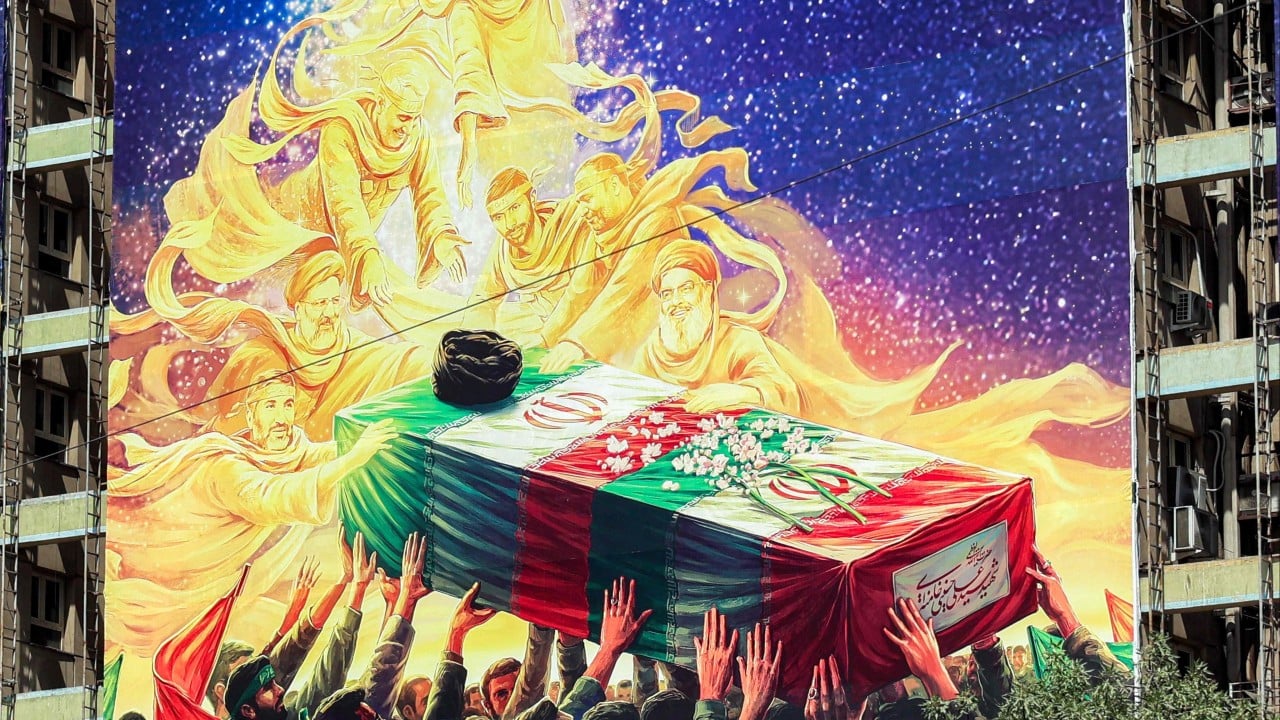
Giant portraits of Ayatollah Ali Khamenei, Iran’s late supreme leader killed in US-Israeli air strikes, have been hung from Tehran’s Grand Mosalla as workers raced to prepare for his grand funeral ceremony. His funeral, initially delayed at the height of the Middle East war, will take place as Iran and the United States observe a fragile ceasefire after signing a preliminary deal to halt the conflict. Khamenei, a spiritual figure for many Shias, was killed aged 86 at his compound in the centre...
Narrative Intelligence Brief
This article was published by South China Morning Post, a source frequently categorized with a lean left bias based in Hong Kong. Our narrative intelligence engine continuously monitors coverage from this outlet to track framing, bias, and rhetorical patterns. Our initial algorithmic scan of this specific piece did not flag high-confidence rhetorical techniques, suggesting a generally straightforward reporting style or neutral framing. By understanding the editorial perspective of South China Morning Post, readers can better contextualize the information presented and compare it across our broader media matrix to find the real narrative.
More from South China Morning Post
July 1, 2026
Singapore telecoms company slashes CEO’s salary over outages
July 1, 2026
Singapore seizes US$42.4 million bungalow linked to Nvidia chip fraud
July 1, 2026
Lawmaker William Wong arrested over alleged drink-driving crash at CUHK campus
July 1, 2026
Himalayan pass reopens as ‘goodwill’ gesture in China-India thaw
July 1, 2026
Hongkongers snap up July 1 freebies and discounts with gusto
Analysis Methodology
This narrative analysis was generated using the CoDataLab Global Intelligence Engine. Our proprietary AI scans thousands of cross-border sources to identify sentiment patterns, framing techniques, and potential media bias. While AI provides the data-driven foundation, our objective is to empower readers with additional context beyond the standard headline.The content displayed above is a structured summary designed for rapid information processing. For the full original report, please visit the source outlet.More Coverage
Discussion
"cup"
Why FIFA’s World Cup hydration breaks are so controversial

Van Dijk despairs after Netherlands World Cup exit: ‘The most terrible moments for a footballer’
SOLWAY: Everything has become political — and why that's dangerous