Today in News History
On June 25, several notable moments in the history of News stand out. In 1923, Jamshid Amouzegar, 43rd Prime Minister of Iran (died 2016) was born. In 1940, World War II: The French armistice with Nazi Germany comes into effect. In 1944, World War II: The Battle of Tali-Ihantala, the largest battle ever fought in the Nordic countries, begins. In 1944, World War II: United States Navy and British Royal Navy ships bombard Cherbourg to support United States Army units engaged in the Battle of Cherbourg. In 1950, The Korean War begins with the invasion of South Korea by North Korea. In 1996, The Khobar Towers bombing in Saudi Arabia kills 19 U.S. servicemen. In 1999, Fred Trump, American real estate developer and businessman (born 1905) passed away. In 2007, PMTair Flight 241 crashes in the Dâmrei Mountains in Kampot Province, Cambodia, killing all 22 people on board. In 2022, Two people are killed and 21 more injured after a gunman opens fire at three sites in Oslo in a suspected Islamist anti-LGBTQ+ attack. In 2024, Thousands of people storm Kenya's Parliament Buildings protesting the passing of the government's 2024/25 Finance Bill. Together, these milestones provide historical context for today's news news and ongoing narratives.
Iran boasts about looming $40 billion windfall it never had before Trump attack: report
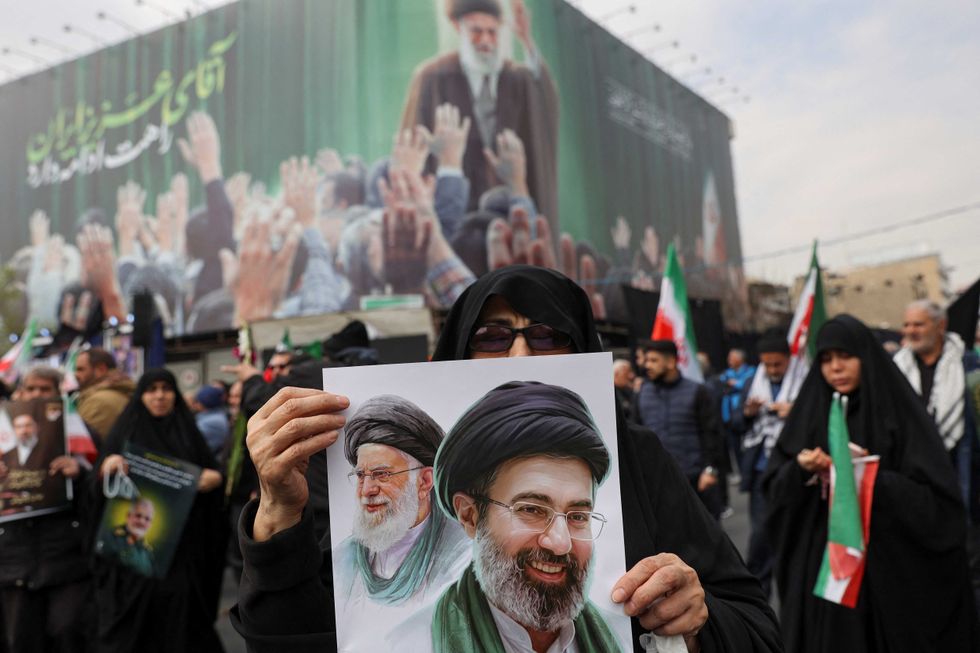
Iran has discussed plans with its neighbors to extract billions from the global economy by setting up permanent tolls in the Strait of Hormuz—a direct result of President Trump's disastrous war that handed Tehran unprecedented leverage over the world's most critical oil artery.According to the Wall Street Journal reporting, Iranian officials are boasting to Middle Eastern neighbors that a lucrative new revenue stream is imminent. The Islamic Republic estimated that charging for security, safety, and environmental services in the strait could generate 40 billion annually for participating states.The scheme would represent a dramatic reversal of pre-war conditions. Iran has positioned itself to control and monetize the global shipping chokepoint it effectively seized when the war began, causing worldwide pain.To gain regional buy-in, Tehran pitched the toll arrangement throughout the Middle East and to Beijing, proposing that Persian Gulf neighbors share in the revenue, with the Journal noting the model mirrors Turkey's system in the Dardanelles, where ships pay a tax known as the gold franc for passage.Everyone needs to know that management of the strait will never return to the way it was before, declared Iran's chief negotiator, Mohammad Bagher Qalibaf, during a visit to Oman on Tuesday to discuss the arrangements, the Journal reported.According to the report, The number of ships crossing the strait on Wednesday reached its highest since the war began, with around 70 crossings, according to ship trackers, whose estimates vary. On average, before the war, 130 oil tankers went through the neck of the Persian Gulf each day.Secretary of State Marco Rubio attempted to push back during a Middle East trip this week, insisting that tolls or fees represent an unacceptable precedent that would spread like a contagion and cause chaos.No country on earth has the right to charge for the use of international waterways, and that will never be an acceptable condition of any deal, Rubio said in Bahrain, claiming Persian Gulf countries have rejected the toll idea.However, the Journal reported Rubio's objections may prove toothless, noting, The 60-day deal to end the fighting and reopen the waterway puts Iran in charge of demining it and insists on toll-free passage for ships in that time. But the document also gives Iran, which doesn’t recognize maritime law governing the strait, a say in the future management of the shipping chokepoint.
Narrative Intelligence Brief
This article was published by Raw Story, a source frequently categorized with a left bias based in United States of America. Our narrative intelligence engine continuously monitors coverage from this outlet to track framing, bias, and rhetorical patterns. Our initial algorithmic scan of this specific piece did not flag high-confidence rhetorical techniques, suggesting a generally straightforward reporting style or neutral framing. By understanding the editorial perspective of Raw Story, readers can better contextualize the information presented and compare it across our broader media matrix to find the real narrative.
More from Raw Story
June 25, 2026
Rare conviction in Trump-hyped operation falls apart amid misconduct scandal
June 25, 2026
Republicans scramble to unsnarl the knot Trump created with housing bill fiasco: report
June 25, 2026
'Confirms our worst fears': Expert sounds the alarm over Supreme Court's 'freewheeling'
June 25, 2026
Half of Americans think the Trump White House is fibbing about president's health: poll
June 25, 2026
The song Trump loves gives tune to his spreading rot
Analysis Methodology
This narrative analysis was generated using the CoDataLab Global Intelligence Engine. Our proprietary AI scans thousands of cross-border sources to identify sentiment patterns, framing techniques, and potential media bias. While AI provides the data-driven foundation, our objective is to empower readers with additional context beyond the standard headline.The content displayed above is a structured summary designed for rapid information processing. For the full original report, please visit the source outlet.More Coverage
Discussion
"cup"
PODCAST: Is France prepared to face more hellish heatwaves and why are the French ruling the World Cup

Kevin Taylor blasts on Djed Spence after controversial Thomas Partey handshake snub incident

Energy crisis continues as households trapped in £4.79BILLION debt with bill hike only days away