
Today in News History
On July 12, several notable moments in the history of News stand out. In 1493, Hartmann Schedel's Nuremberg Chronicle, one of the best-documented early printed books, is published. In 1855, Pavel Nakhimov, Russian admiral (born 1802) passed away. In 1861, Anton Arensky, Russian pianist, composer, and educator (died 1906) was born. In 1888, Zygmunt Janiszewski, Polish mathematician and academic (died 1920) was born. In 1914, Mohammad Moin, Iranian linguist and lexicographer (died 1971) was born. In 1916, Lyudmila Pavlichenko, Ukrainian-Russian soldier and sniper (died 1974) was born. In 1945, Boris Galerkin, Russian mathematician and engineer (born 1871) passed away. In 1960, Orlyonok, the main Young Pioneer camp of the Russian SFSR, is founded. In 1998, Arkady Ostashev, Soviet/Russian scientist and engineer (born 1925) passed away. In 2014, Valeriya Novodvorskaya, Russian journalist and politician (born 1950) passed away. Together, these milestones provide historical context for today's news news and ongoing narratives.
Институт Русистики назвал пять самых длинных слов в русском языке

Самое длинное зафиксированное слово русского языка насчитывает 55 букв. Об этом сообщили в Институте Русистики.
Narrative Intelligence Brief
This article was published by Vechernyaya Moskva, a source frequently categorized with a center bias based in Russia. Our narrative intelligence engine continuously monitors coverage from this outlet to track framing, bias, and rhetorical patterns. Our initial algorithmic scan of this specific piece did not flag high-confidence rhetorical techniques, suggesting a generally straightforward reporting style or neutral framing. By understanding the editorial perspective of Vechernyaya Moskva, readers can better contextualize the information presented and compare it across our broader media matrix to find the real narrative.
More from Vechernyaya Moskva
July 12, 2026
DHA: 28 туристов госпитализировали после отравления в турецком отеле
July 12, 2026
СМИ: Макрон соберет в Париже не менее 25 членов «коалиции желающих» помочь Киеву
July 12, 2026
Скорость, сила и технологичность: топ-5 самых опасных и смертоносных истребителей в мире
July 12, 2026
Автомобиль протаранил толпу в Чили, шесть человек погибли
July 12, 2026
Собянин: Силами ПВО Минобороны уничтожены три БПЛА, летевших на Москву
Analysis Methodology
This narrative analysis was generated using the CoDataLab Global Intelligence Engine. Our proprietary AI scans thousands of cross-border sources to identify sentiment patterns, framing techniques, and potential media bias. While AI provides the data-driven foundation, our objective is to empower readers with additional context beyond the standard headline.The content displayed above is a structured summary designed for rapid information processing. For the full original report, please visit the source outlet.More Coverage
Discussion
"wimbledon"
Back-To-Back! Jannik Sinner Keeps Hold of His Wimbledon Crown

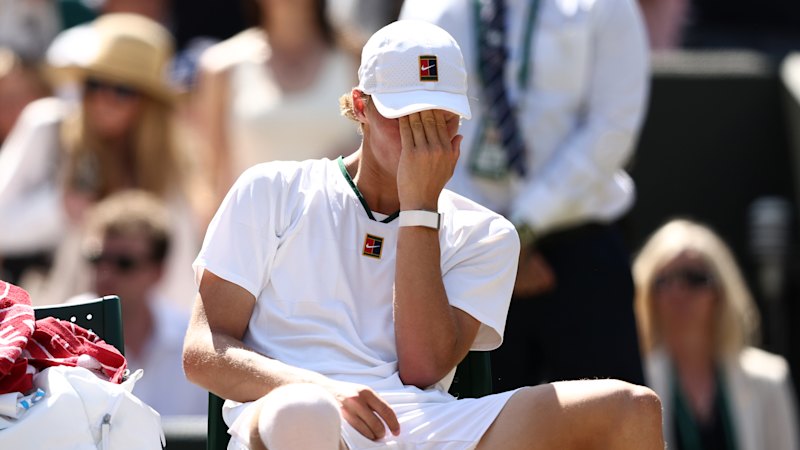
Heartbreak for Cruz Hewitt as teen loses Wimbledon boys’ final thriller
Jannik Sinner wins Wimbledon: Top seed beats Alexander Zverev in thrilling men's final to claim back-to-back titles

How other outlets are covering this story
Compare narratives across 4 related reports from 4 sources. Real Narrative News aggregates the coverage spectrum so you can see who emphasises what — bias tags reflect the outlet, not the story.
Coverage bias distribution
4 sources
Left 0%
Center 25%
Right 75%
Vedomosti
· Jun 30, 2026
Таможня сообщила об очередях в Эстонии из желающих попасть в РФ
Таможня сообщила об очередях в Эстонии из желающих попасть в РФ
Lenta.ru
· Jul 6, 2026
В России собрались урезать продажи недорогой икры
В России собрались урезать продажи недорогой икры
Chita.ru
· Jul 9, 2026
Запрет на иностранный вход: в России заработал закон, предусматривающий штраф в 700 тысяч
Авторизация должна проводиться только отечественными инструментами
Vechernyaya Moskva
· Jul 4, 2026
Путин подписал закон об обеспечении бензином внутреннего рынка
Президент России Владимир Путин в субботу, 4 июля, подписал закон, направленный на обеспечение внутреннего рынка автомобильным бензином и дизельным топливом, а также на поддержку российских нефтеперерабатывающих заводов. Документ опубликован на официальном портале правовых актов.
Topics:
Related coverage for "Институт Русистики назвал пять самых длинных слов в русском языке": Vedomosti — Таможня сообщила об очередях в Эстонии из желающих попасть в РФ. Lenta.ru — В России собрались урезать продажи недорогой икры. Chita.ru — Запрет на иностранный вход: в России заработал закон, предусматривающий штраф в 700 тысяч. Vechernyaya Moskva — Путин подписал закон об обеспечении бензином внутреннего рынка