
Today in News History
On July 12, several notable moments in the history of News stand out. In 965, Meng Chang, emperor of Later Shu (born 919) passed away. In 981, Xue Juzheng, Chinese scholar-official and historian passed away. In 1884, Louis B. Mayer, Russian-born American film producer, co-founded Metro-Goldwyn-Mayer (died 1957) was born. In 1913, The Second Revolution breaks out against the Beiyang government, as Li Liejun proclaims Jiangxi independent from the Republic of China. In 1970, Lee Byung-hun, South Korean actor, singer, and dancer was born. In 1995, Chinese seismologists successfully predict the 1995 Myanmar-China earthquake, reducing the number of casualties to 11. In 2013, Amar Bose, American businessman, founded the Bose Corporation (born 1929) passed away. In 2014, Valeriya Novodvorskaya, Russian journalist and politician (born 1950) passed away. In 2015, Cheng Siwei, Chinese engineer, economist, and politician (born 1935) passed away. In 2015, Tenzin Delek Rinpoche, Tibetan monk and activist (born 1950) passed away. Together, these milestones provide historical context for today's news news and ongoing narratives.
Inside China's race for tech self-reliance
Narrative Analysis: Name Calling
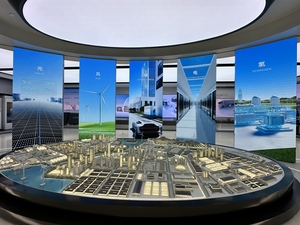
Korea Herald correspondent HEFEI, China — Far from slowing China's technological rise, US sanctions and export controls have accelerated Beijing's drive for self-reliance, pushing Chinese companies to build domestic alternatives across industries. Landlocked Anhui province, west of Shanghai, has emerged as one of the clearest examples of that effort. Home to a growing cluster of artificial intelligence, electric vehicle, battery and renewable energy companies, the province has transformed itself
Narrative Intelligence Brief
This article was published by The korea Herald News, a source frequently categorized with a center bias based in South Korea. Our narrative intelligence engine continuously monitors coverage from this outlet to track framing, bias, and rhetorical patterns. In this specific piece, our systems detected the potential use of the "Name Calling" technique. This narrative approach is often used to shape reader perception by highlighting specific emotional or rhetorical angles. By understanding the editorial perspective of The korea Herald News, readers can better contextualize the information presented and compare it across our broader media matrix to find the real narrative.
More from The korea Herald News
July 12, 2026
Cooling off along Seoul's waterways
July 12, 2026
Summer heat sends 200,000 to Gangwon beaches for weekend dip
July 12, 2026
Global IP productions fuel record growth in Korea's theater market
July 12, 2026
Hanwha Life Esports wins 2026 MSI title after marathon five-game final
July 12, 2026
New slice-of-life novel finds comfort in food and human connection
Reliability Insights
P
Technique: Name Calling
System analysis detected use of specific narrative techniques in this piece.Analysis Methodology
This narrative analysis was generated using the CoDataLab Global Intelligence Engine. Our proprietary AI scans thousands of cross-border sources to identify sentiment patterns, framing techniques, and potential media bias. While AI provides the data-driven foundation, our objective is to empower readers with additional context beyond the standard headline.The content displayed above is a structured summary designed for rapid information processing. For the full original report, please visit the source outlet.More Coverage
Discussion
"iran"
Trump Threatens to ‘Completely Decimate’ Iran as Mojtaba Khamenei Vows Revenge | Iran-US Crisis |

Acting Iranian Defense Minister: ‘enemy's weak points closely monitored’

"No Conspiracy": Former Israeli Consul Dismisses Conspiracy Theories about Lindsey Graham's Death

How other outlets are covering this story
Compare narratives across 6 related reports from 6 sources. Real Narrative News aggregates the coverage spectrum so you can see who emphasises what — bias tags reflect the outlet, not the story.
Coverage bias distribution
6 sources
Left 50%
Center 0%
Right 50%
Seeking Alpha
· Jun 30, 2026
KWEB: World Class Tech Weighed By The China Discount
KWEB: World Class Tech Weighed By The China Discount
CNN
· Jun 25, 2026
From Shein to Pop Mart: How Chinese brands are grabbing global market share
Chinese companies are moving beyond their home base, expanding overseas and reshaping fashion, tech, and consumer markets worldwide. CNN’s Hanako Montgomery explains why.
NDTV
· Jun 22, 2026
'Super-Efficient, R&D Focused, State-Backed': Anant Goenka Explains Why Chinese Cos Win
FICCI President Anant Goenka says China's manufacturing edge stems from relentless competition, long-term innovation bets and deep state support.
South China Morning Post
· Jun 23, 2026
What fuels global trade imbalances: China’s overcapacity or America’s failure to adapt?
China’s industrial overcapacity should not be singled out for blame amid trade imbalances, as economies worldwide are struggling to adapt to shifts in the global economy, contributing to mounting pressures, a prominent Chinese scholar said in comments directed at the United States. “The reason why our imbalance is becoming a bigger problem is that the rest of the world is having a bigger problem in adjusting the economic structure,” said Huang Yiping, dean of Peking University’s National School...
National Center for Public Policy Research
· Jul 10, 2026
Steve Milloy: Corporate America’s China Addiction Has Become a National Security Threat
“U.S. corporations have outsourced vital consumer production to a geopolitical rival that is openly committed to displacing America as the world’s leading power,” writes Free Enterprise Project Executive Director Steve Milloy. “Corporate reliance on China has resulted in a supply chain so brittle that an...
Hindustan Times
· Jul 6, 2026
Has China obtained the world’s most important machine?
Its Dutch manufacturer is fighting to rebut American claims
Topics:
Related coverage for "Inside China's race for tech self-reliance": Seeking Alpha — KWEB: World Class Tech Weighed By The China Discount. CNN — From Shein to Pop Mart: How Chinese brands are grabbing global market share. NDTV — 'Super-Efficient, R&D Focused, State-Backed': Anant Goenka Explains Why Chinese Cos Win. South China Morning Post — What fuels global trade imbalances: China’s overcapacity or America’s failure to adapt?. National Center for Public Policy Research — Steve Milloy: Corporate America’s China Addiction Has Become a National Security Threat. Hindustan Times — Has China obtained the world’s most important machine?