
Today in News History
On June 22, several notable moments in the history of News stand out. In 1714, Matthew Henry, Welsh minister and author (born 1662) passed away. In 1783, A poisonous cloud caused by the eruption of the Laki volcano in Iceland reaches Le Havre in France. In 1828, Lars Ingier, Norwegian road manager, land owner, and mill owner (born 1760) passed away. In 1837, Ernst Ziller, German-Greek architect, designed the Presidential Mansion (died 1923) was born. In 1899, Michał Kalecki, Polish economist and academic (died 1970) was born. In 1926, Rachid Solh, Lebanese politician, 48th Prime Minister of Lebanon (died 2014) was born. In 1945, Rainer Brüderle, German economist and politician, German Minister of Economics and Technology was born. In 1946, Józef Oleksy, Polish economist and politician, 7th Prime Minister of Poland (died 2015) was born. In 1956, Shah Mehmood Qureshi, Pakistani agriculturist and politician, 25th Pakistani Minister of Foreign Affairs was born. In 1960, Erin Brockovich, American lawyer and environmentalist was born. Together, these milestones provide historical context for today's news news and ongoing narratives.
Inflationary Environment Suggests Higher Rates, Seema Shah Says
Narrative Analysis: Card Stacking
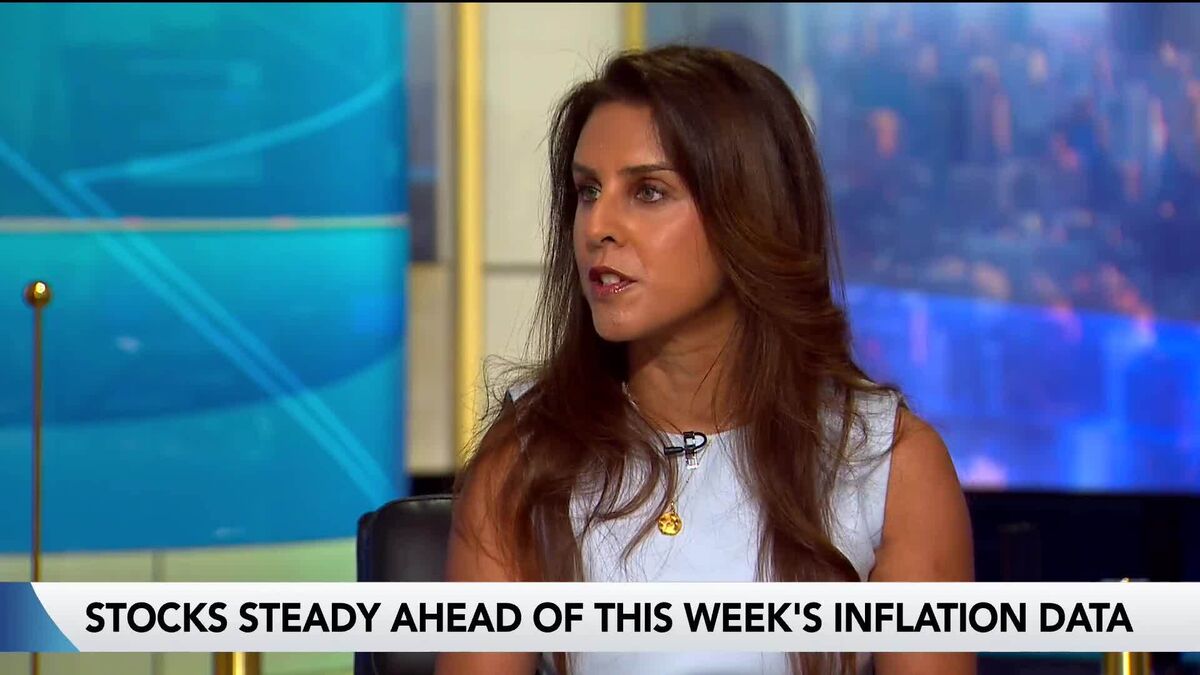
Seema Shah, Principal Asset Management chief global strategist, discusses the near-term inflationary impact of the AI capital expenditure cycle, emphasizing that its implications remain underappreciated by investors. She speaks on Bloomberg Surveillance. (Source: Bloomberg)
Narrative Intelligence Brief
This article was published by Bloomberg, a source frequently categorized with a lean left bias based in United States of America. Our narrative intelligence engine continuously monitors coverage from this outlet to track framing, bias, and rhetorical patterns. In this specific piece, our systems detected the potential use of the "Card Stacking" technique. This narrative approach is often used to shape reader perception by highlighting specific emotional or rhetorical angles. By understanding the editorial perspective of Bloomberg, readers can better contextualize the information presented and compare it across our broader media matrix to find the real narrative.
More from Bloomberg
June 22, 2026
A Blockbuster Summer for Debt Issuance
June 22, 2026
Chinese Carmakers Weighing Canada Manufacturing Deals, Joly Says
June 22, 2026
Paragon Debt Targeted by Deutsche Bank Analysts Over Deal Spree
June 22, 2026
Lesley Marks and Katerina Simonetti on US-Iran Talks, Market Outlook
June 22, 2026
Diversify Outside of 'AI Only Play' Says Mamadou-Abou Sarr
Reliability Insights
P
Technique: Card Stacking
System analysis detected use of specific narrative techniques in this piece.Analysis Methodology
This narrative analysis was generated using the CoDataLab Global Intelligence Engine. Our proprietary AI scans thousands of cross-border sources to identify sentiment patterns, framing techniques, and potential media bias. While AI provides the data-driven foundation, our objective is to empower readers with additional context beyond the standard headline.The content displayed above is a structured summary designed for rapid information processing. For the full original report, please visit the source outlet.More Coverage
Discussion
"cup"
My boss won’t let me work from home the day after World Cup games – I’m furious

Everyone’s Mad About Brady Tkachuk Going To Florida

Krispy Kreme recalls World Cup doughnuts due to contamination with deadly allergen
