
Today in News History
On July 12, several notable moments in the history of News stand out. In 1576, Mughal Empire annexes Bengal after defeating the Bengal Sultanate at the Battle of Rajmahal. In 1917, Satyendra Narayan Sinha, Indian statesman (died 2006) was born. In 1961, Indian city Pune floods due to failure of the Khadakwasla and Panshet dams, killing at least two thousand people. In 1961, Shiva Rajkumar, Indian actor, singer, and producer was born. In 1981, Pradeepan Raveendran, Sri Lankan director, producer, and screenwriter was born. In 1995, Chinese seismologists successfully predict the 1995 Myanmar-China earthquake, reducing the number of casualties to 11. In 1999, Rajendra Kumar, Indian actor (born 1921) passed away. In 2006, The 2006 Lebanon War begins. In 2014, Jamil Ahmad, Pakistani author (born 1931) passed away. In 2015, Cheng Siwei, Chinese engineer, economist, and politician (born 1935) passed away. Together, these milestones provide historical context for today's news news and ongoing narratives.
India's growth story, not AI trade reversal, will drive foreign flows: Sameer Dalal
Narrative Analysis: Bandwagon
India's economic strength, not AI's decline, will drive foreign capital inflows, according to Sameer Dalal. He believes AI's market correction is temporary, while India's improving fundamentals, including falling crude prices and monsoon progress, position it for growth. Dalal remains bullish on pharma and cement sectors, sees achievable targets for Tata Motors, and suggests patience for IT investors, anticipating a strong FY28.
Narrative Intelligence Brief
This article was published by Economic Times, a source frequently categorized with a center bias based in India. Our narrative intelligence engine continuously monitors coverage from this outlet to track framing, bias, and rhetorical patterns. In this specific piece, our systems detected the potential use of the "Bandwagon" technique. This narrative approach is often used to shape reader perception by highlighting specific emotional or rhetorical angles. By understanding the editorial perspective of Economic Times, readers can better contextualize the information presented and compare it across our broader media matrix to find the real narrative.
More from Economic Times
Reliability Insights
P
Technique: Bandwagon
System analysis detected use of specific narrative techniques in this piece.Analysis Methodology
This narrative analysis was generated using the CoDataLab Global Intelligence Engine. Our proprietary AI scans thousands of cross-border sources to identify sentiment patterns, framing techniques, and potential media bias. While AI provides the data-driven foundation, our objective is to empower readers with additional context beyond the standard headline.The content displayed above is a structured summary designed for rapid information processing. For the full original report, please visit the source outlet.More Coverage
Discussion
"cup semifinal"
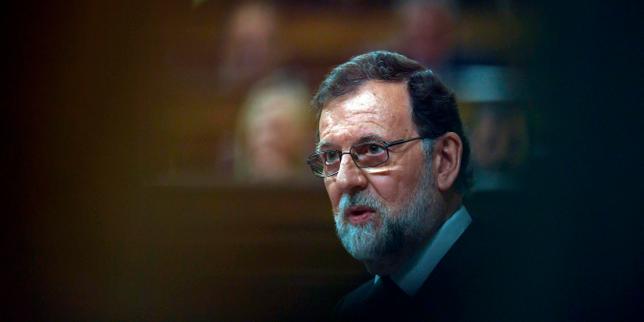
Former Spanish PM Rajoy makes racist remarks about France's football team
[Photo] JUST IN: 🇦🇷 Argentina officially advances to the FIFA World Cup semifinal after defeat [...]

Argentina's hero: "We are just two steps away from the goal"

How other outlets are covering this story
Compare narratives across 6 related reports from 6 sources. Real Narrative News aggregates the coverage spectrum so you can see who emphasises what — bias tags reflect the outlet, not the story.
Coverage bias distribution
6 sources
Left 33%
Center 17%
Right 50%
Russia Today
· Jul 6, 2026
India and Indonesia working to lessen dollar reliance – envoy
Yudho Sasongko has cited economic integration, supply chains, and maritime ties as pillars of the bilateral relationship with India Read Full Article at RT.com
Business Today
· Jun 21, 2026
Can US-China trade tensions boost India's exports? These key sectors remain at risk
As the US-China trade rivalry intensifies, India could emerge as a beneficiary of shifting global supply chains and the China+1 strategy. However, experts warn that rising protectionism and trade fragmentation could pose risks to key export sectors.
The Hindu BusinessLine
· Jul 11, 2026
Indian envoy in Sri Lanka meets visiting business delegation
They discussed expanding Indian exports and strengthening the bilateral trade partnership, including building stronger supply chains
Bloomberg
· Jul 8, 2026
Alphabet Powers 44% Jump in India Foreign Investment, UN Says
Foreign direct investment in India surged in 2025, driven largely by Alphabet Inc.’s data center project, though a decline in greenfield investments signaled a weaker investment outlook, according to the United Nations’ trade agency.
The New Zealand Herald
· Jul 9, 2026
Modi visit highlights Luxon’s India trade success amid Peters’ barbs – Audrey Young
Modi visit highlights Luxon’s India trade success amid Peters’ barbs – Audrey Young
South China Morning Post
· Jul 5, 2026
India eyes further oil exploration after Iran war shortages
Hit by the biggest energy supply shock in decades during the Middle East war, import-dependent India is expanding domestic crude exploration, its oil minister says. India, the world’s third-largest importer of oil and the second-largest buyer of liquefied petroleum gas, faced major disruptions due to restrictions on the Strait of Hormuz during the conflict between the United States and Iran. With a temporary US-Iran deal in place to pause hostilities, oil and gas shipments are flowing through...
Topics:
Related coverage for "India's growth story, not AI trade reversal, will drive foreign flows: Sameer Dalal ": Russia Today — India and Indonesia working to lessen dollar reliance – envoy. Business Today — Can US-China trade tensions boost India's exports? These key sectors remain at risk. The Hindu BusinessLine — Indian envoy in Sri Lanka meets visiting business delegation. Bloomberg — Alphabet Powers 44% Jump in India Foreign Investment, UN Says. The New Zealand Herald — Modi visit highlights Luxon’s India trade success amid Peters’ barbs – Audrey Young. South China Morning Post — India eyes further oil exploration after Iran war shortages