
Today in News History
On July 12, several notable moments in the history of News stand out. In 1067, John Komnenos, Byzantine general passed away. In 1493, Hartmann Schedel's Nuremberg Chronicle, one of the best-documented early printed books, is published. In 1691, Marquis de St Ruth, French general passed away. In 1862, The Medal of Honor is authorized by the United States Congress. In 1926, Gertrude Bell, English archaeologist and spy (born 1868) passed away. In 1943, World War II: Battle of Kursk: German and Soviet forces engage in the Battle of Prokhorovka, one of the largest armored engagements of all time. In 1980, John Warren Davis, American educator, college administrator, and civil rights leader (born 1888) passed away. In 2001, Space Shuttle program: Space Shuttle Atlantis is launched on mission STS-104, carrying the Quest Joint Airlock to the International Space Station. In 2007, U.S. Army Apache helicopters engage in airstrikes against armed insurgents in Baghdad, Iraq, where civilians are killed; footage from the cockpit is later leaked to the Internet. In 2008, Tony Snow, American journalist, 26th White House Press Secretary (born 1955) passed away. Together, these milestones provide historical context for today's news news and ongoing narratives.
In major privacy win, Supreme Court rules geofence warrants are protected by privacy rights
Narrative Analysis: Card Stacking
The Supreme Court's decision to limit geofence warrants is a win for privacy advocates, who called their use unconstitutional but sought an outright ban.
Narrative Intelligence Brief
This article was published by TechCrunch, a source frequently categorized with a center bias based in United States of America. Our narrative intelligence engine continuously monitors coverage from this outlet to track framing, bias, and rhetorical patterns. In this specific piece, our systems detected the potential use of the "Card Stacking" technique. This narrative approach is often used to shape reader perception by highlighting specific emotional or rhetorical angles. By understanding the editorial perspective of TechCrunch, readers can better contextualize the information presented and compare it across our broader media matrix to find the real narrative.
More from TechCrunch
July 11, 2026
This slushie machine was a lifesaver during NYC’s heat wave
July 12, 2026
Reed Jobs would rather talk about curing cancer than his last name
July 11, 2026
Smart glasses without a camera? Even Realities bets productivity beats recording everyone
July 11, 2026
OpenAI bets on families as ChatGPT goes deeper into households
July 11, 2026
US cybersecurity agency CISA had to build its incident playbook during the incident, agency reveals
Reliability Insights
P
Technique: Card Stacking
System analysis detected use of specific narrative techniques in this piece.Analysis Methodology
This narrative analysis was generated using the CoDataLab Global Intelligence Engine. Our proprietary AI scans thousands of cross-border sources to identify sentiment patterns, framing techniques, and potential media bias. While AI provides the data-driven foundation, our objective is to empower readers with additional context beyond the standard headline.The content displayed above is a structured summary designed for rapid information processing. For the full original report, please visit the source outlet.More Coverage
Discussion
"cup semifinal"
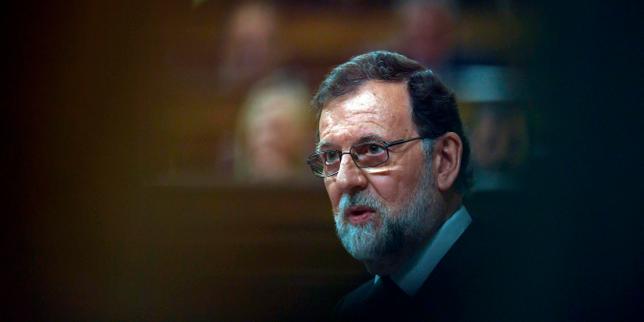
Former Spanish PM Mariano Rajoy makes racist remarks about France's football team
[Photo] JUST IN: 🇦🇷 Argentina officially advances to the FIFA World Cup semifinal after defeat [...]

Argentina's hero: "We are just two steps away from the goal"

How other outlets are covering this story
Compare narratives across 6 related reports from 6 sources. Real Narrative News aggregates the coverage spectrum so you can see who emphasises what — bias tags reflect the outlet, not the story.
Coverage bias distribution
6 sources
Left 17%
Center 33%
Right 50%
The Hill
· Jun 29, 2026
Supreme Court punts geofence case
{beacon} Technology Technology The Big Story Supreme Court sends back geofence warrant The Supreme Court ruled on Monday that an individual has a reasonable expectation of privacy when it comes to their cellphone location data, tossing out a ruling against a man convicted in a Virginia bank robbery case. © Natasha Kaiser The justices...
Engadget
· Jun 29, 2026
The US Supreme Court restricts use of geofence warrants
The US Supreme Court has surprisingly decided to restrict geofence warrants.
WyoFile
· Jun 25, 2026
Wyoming judges: We must protect the independence of our judiciary
An independent judiciary is a safeguard not for judges — but for every American citizen, writes U.S. District Court Judges Alan B. Johnson, Kelly H. Rankin and Scott W. Skavdahl. The post Wyoming judges: We must protect the independence of our judiciary appeared first on WyoFile .
Anadolu Agency
· Jun 30, 2026
Pentagon to appeal judge's order blocking escort requirement rule for journalists
'This ruling strips away reasonable security measures and will make it easier for sensitive and classified information to reach our adversaries,' says spokesman
National Review
· Jul 2, 2026
Your Phone Data Belongs to You
A Supreme Court ruling protects us from government surveillance but should have gone even farther.
Center for Equal Opportunity
· Apr 29, 2026
PRESS RELEASE: CEO Applauds SCOTUS Decision in Louisiana v. Callais
FOR IMMEDIATE RELEASEContact: Shawna Bray(410) 598-5388 Wednesday, April 29, 2026 WASHINGTON, D.C. – The Center for Equal Opportunity (CEO) today praised the U.S. Supreme Court’s decision in Louisiana v. Callais. CEO Chairman Linda Chavez applauded the ruling, noting that it is consistent with the colorblind, merit-based positions for which CEO has long advocated. In a majority opinion authored by Justice Alito, the Court held that Section 2 of the Voting Rights Act (VRA) “was designed to enforce the Constitution—not collide with it. Unfortunately, lower courts have sometimes applied this Court’s §2 precedents in a way that forces States to engage ... Read More
Topics:
Related coverage for "In major privacy win, Supreme Court rules geofence warrants are protected by privacy rights": The Hill — Supreme Court punts geofence case. Engadget — The US Supreme Court restricts use of geofence warrants. WyoFile — Wyoming judges: We must protect the independence of our judiciary. Anadolu Agency — Pentagon to appeal judge's order blocking escort requirement rule for journalists. National Review — Your Phone Data Belongs to You. Center for Equal Opportunity — PRESS RELEASE: CEO Applauds SCOTUS Decision in Louisiana v. Callais