Today in News History
On June 29, several notable moments in the history of News stand out. In 1170, A major earthquake hits Syria, badly damaging towns such as Hama and Shaizar and structures such as the Krak des Chevaliers and the cathedral of St. Peter in Antioch. In 1457, The Dutch city of Dordrecht is devastated by fire. In 1613, The Globe Theatre in London, built by William Shakespeare's playing company, the Lord Chamberlain's Men, burns to the ground. In 1864, At least 99 people, mostly German and Polish immigrants, are killed in Canada's worst railway disaster after a train fails to stop for an open drawbridge and plunges into the Rivière Richelieu near St-Hilaire, Quebec. In 1915, The North Saskatchewan River flood of 1915 is the worst flood in Edmonton history. In 1922, France grants "one square kilometer" at Vimy Ridge "freely, and for all time, to the Government of Canada, the free use of the land exempt from all taxes". In 1976, The Conference of Communist and Workers Parties of Europe convenes in East Berlin. In 1995, The Sampoong Department Store collapses in the Seocho District of Seoul, South Korea, killing 502 and injuring 937. In 2007, Joel Siegel, American journalist and critic (born 1943) passed away. In 2014, The Islamic State of Iraq and the Levant self-declares its caliphate in Syria and northern Iraq. Together, these milestones provide historical context for today's news news and ongoing narratives.
IDF strikes Hamas underground site in central Gaza
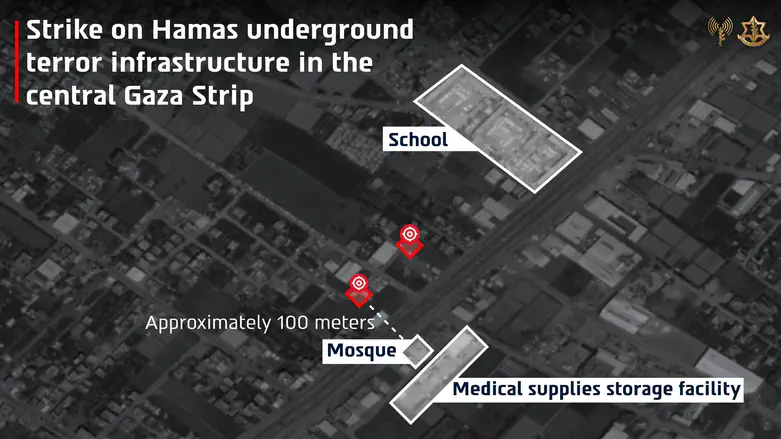
IDF strikes Hamas targets in underground infrastructure sites located near schools and international organizations.
Narrative Intelligence Brief
This article was published by Arutz Sheva, a source frequently categorized with a lean right bias based in Israel. Our narrative intelligence engine continuously monitors coverage from this outlet to track framing, bias, and rhetorical patterns. Our initial algorithmic scan of this specific piece did not flag high-confidence rhetorical techniques, suggesting a generally straightforward reporting style or neutral framing. By understanding the editorial perspective of Arutz Sheva, readers can better contextualize the information presented and compare it across our broader media matrix to find the real narrative.
More from Arutz Sheva
June 29, 2026
Israel to send aid and disaster response delegation to Venezuela
June 29, 2026
Report: US Adviser involved in talks met with Khalil al-Hayya
June 29, 2026
Father of car explosion victim calls on youth to return to religion instead of violence
June 29, 2026
Enjoying Hashem's world
June 29, 2026
Physical clash in Knesset between Ofir Katz and Ayman Odeh
Analysis Methodology
This narrative analysis was generated using the CoDataLab Global Intelligence Engine. Our proprietary AI scans thousands of cross-border sources to identify sentiment patterns, framing techniques, and potential media bias. While AI provides the data-driven foundation, our objective is to empower readers with additional context beyond the standard headline.The content displayed above is a structured summary designed for rapid information processing. For the full original report, please visit the source outlet.More Coverage
Discussion
"supreme court"
Samuel Alito’s outburst directed at Sonia Sotomayor is part of a troubling trend

The Supreme Court upholds Fed independence by saving Lisa Cook’s job—and also saves U.S. debt from a crisis

‘Irresponsible Escapade’: Alito Rips SCOTUS Majority in Ruling Involving Big Tech Data and a Bank Robbery