Today in News History
On June 27, several notable moments in the history of News stand out. In 1760, Anglo-Cherokee War: Cherokee warriors defeat British forces at the Battle of Echoee near present-day Otto, North Carolina. In 1899, Juan Trippe, American businessman, founded Pan American World Airways (died 1981) was born. In 1937, Joseph P. Allen, American physicist and astronaut was born. In 1941, World War II: German troops capture the city of Białystok during Operation Barbarossa. In 1967, Sylvie Fréchette, Canadian swimmer and coach was born. In 1984, Khloé Kardashian, American model, businesswoman, and radio host was born. In 1984, Aiden Blizzard, Australian cricketer was born. In 2005, Ray Holmes, English lieutenant and pilot (born 1914) passed away. In 2008, Sam Manekshaw, Indian field marshal (born 1914) passed away. In 2014, Violet Milstead, Canadian World War II aviator and bush pilot (born 1919) passed away. Together, these milestones provide historical context for today's news news and ongoing narratives.
'I trained with Wizz Air cabin crew for a day - there is a lot passengers don't know'
Narrative Analysis: Plain Folks
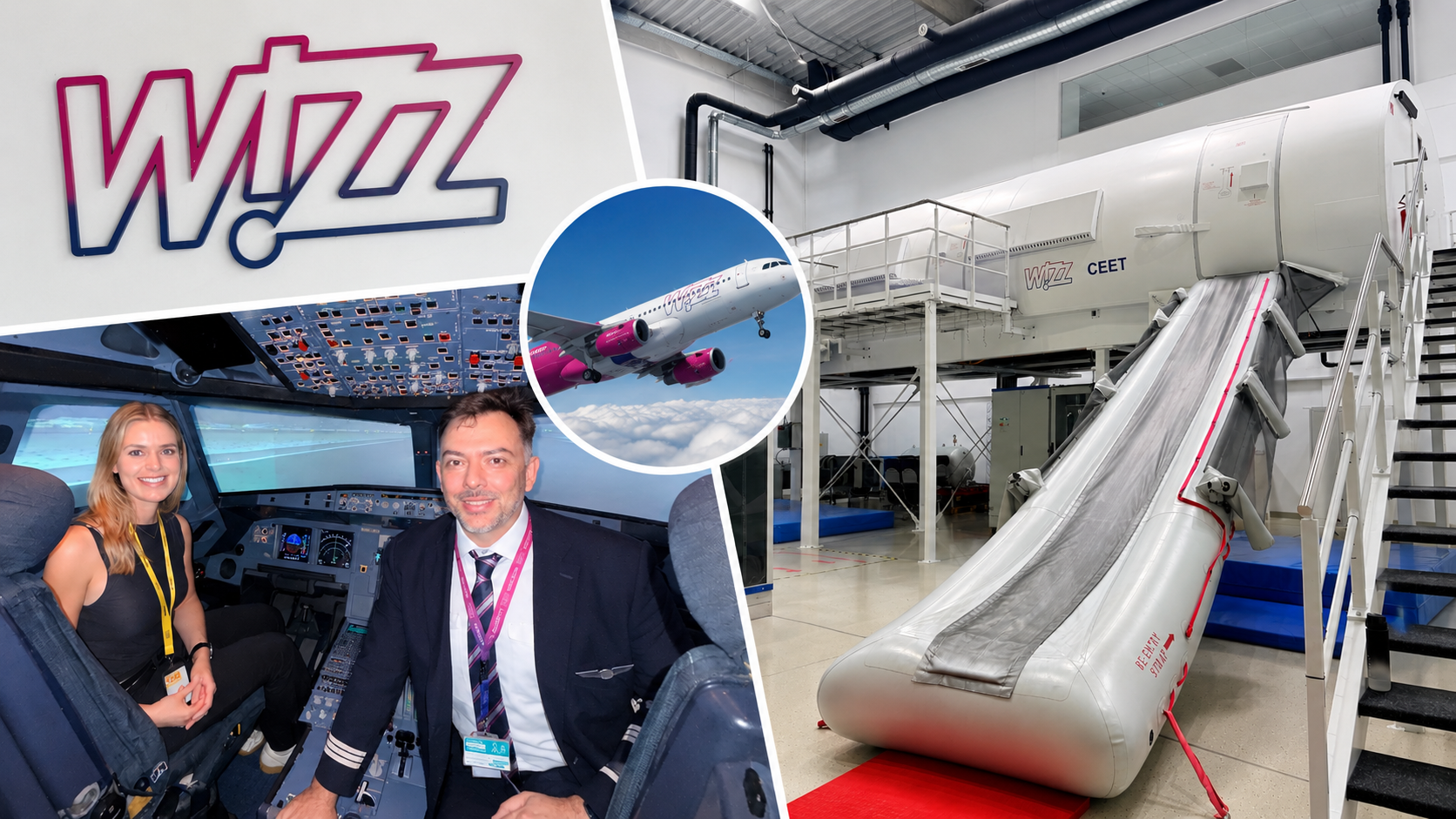
On the outskirts of Budapest - the city where Wizz Air was founded - is the cutting-edge training facility where nearly all of its cabin crew learn the ropes. The 3,800-square metre centre came with a 30million (£25.8million) price tag when it opened in 2018, and is kitted out with two full-flight simulators and a state-of-the-art cabin trainer.It can hold 300 trainees at full capacity, offering everything from classroom and ground training, to flight and cabin simulation exercises.I didn't quite know what to expect when Wizz Air opened the doors to us, but it wasn't long before I learned about the secret codes that cabin crew communicate to one another as passengers board, the growing threat of battery packs and how airlines are training staff to deal with fires in the sky, and the speed at which a full-scale evacuation must take place. TRENDING Stories Videos Your Say The behind-the-scenes tour was led by Wizz Air UK's Senior First Officer Thomas Copestake and Cabin Crew Instructor Gabriel Randone, who enthusiastically showed us around the training centre, discussed their roles and even shared an insider secret or two.On the day I tried my hand in a flight simulator, was taught to open both the emergency exit and main doors on a mock plane (for those sat in the emergency exit row, it is not as intimidating as you might think), and I learned the on-flight safety demonstration routine. Testing the evacuation slide was an experience I won't forget in a hurry. It put years of watching on-flight safety briefings to the test as I tried to remember to stay upright and cross my arms as I jumped onto the slide. I entered a mock flight deck for a flight simulation. There were a surprising number of buttons - all with a purpose, some pilots never hope to need - as well as several screens giving pilots information and real-life navigation data, and two control sticks for the Captain and First Officer.Of course, I didn't think it would be easy to fly a plane, but as I attempted to land at a replica of Milan airport during the simulation, I gained even more respect for the First Officer job. Copestake explained that, while it is a tough job, it comes with some amazing perks. Speaking of his personal highlights, Copestake said: We have an amazing panoramic view, and a lot of our destinations take us over the Alps, or just some incredible scenery. I'm privileged that I get to see that. The thing that always gets me every day I go flying is that there are bits of the earth down there that no one's ever walked on. That blows my mind.It's only in the last 40 years or so that aeroplanes have actually been going over the mountains. Until pressurised aircraft existed, they went around them.Even in the history of flight, not everybody has had the opportunity to see the cool stuff that we see. That's amazing. It's a privilege to have a cup of coffee staring at those views.TRAVEL INSPIRATIONWe visit hidden gem with 6,000-year-old winemaking tradition getting first direct flights from UKEuropean holiday spots where summer prices have dropped up to 30 on last year - flights from £91UK's cheapest cities for a summer staycation named, with northern spots dominating the listCopestake suggested everyone take a look at the window on their next flight - if you see any mountains down there, there is a good chance people haven't walked on them. Just think about that.The cockpit view also makes for a good sunset picture or two, I learned. To me, the training all felt very novel - sitting on board training planes and experiencing a fake emergency simulation was something I never expected I would do - but for the crew, it is much more than that. I discovered just how intensive the commitment to safety is; it is regarded as the most important part of the job and prioritised throughout cabin crew training. There are regular refreshers, with Copestake telling me he is back every six months to ensure he is best prepared for any emergency eventuality that might occur on board. Simulations are regularly updated with recent real-life situations, no matter which airline they happened on, to ensure everyone is best prepared for anything that could happen.It was all incredibly reassuring - staff are well-trained in a range of scenarios, and the safety of passengers starts from the moment you are welcomed on board. In fact, cabin crew are doing more than just saying 'hello' and pointing you to your seat when you step on board; they are scanning for threats and making sure everyone is fit to fly. This is when they start to assess if those sitting in the emergency rows are fit and healthy enough to help if the worst happens - there is even a secret acronym used to make the decision. I found out there are lots of hidden codes, abbreviations and acronyms used for different situations on board, but what those are remains a secret among staff.Randone said: When passengers look at crew members, most of them assume that we are customer service professionals, which is absolutely true. We are.But there is a lot happening in the background that people are not aware of. For example, we are trained to deal with in-flight emergencies, such as fires, first aid emergencies, and decompression [the loss of artificial cabin pressure on board].There is a lot that we need to know, and we always need to anticipate what's the worst that could happen in this specific phase of the flight.While crew members prepare for the most extreme scenarios, there are some more predictable threats challenging airlines. Fires relating to lithium batteries are a growing reality across all airlines, the team explained, with devices like phone chargers, smart watches and laptops becoming more prominent. This is why it is vital cabin crew are competent in tackling a blaze. I visited the fire safety centre to watch as Randone demonstrated how quickly and efficiently they can put out a fire. Time plays into a lot of the safety procedures on board. Pilots aim to have everyone out of the sky within 15 to 20 minutes in the event of any serious on-board emergencies. If there is an evacuation, crew must get everyone off the plane in just 90 seconds - this is why lights are dimmed during landing and takeoff, to help eyes adjust to the brightness outside.Beyond emergencies affecting the plane, cabin crew are also well-equipped to deal with nervous passengers. Randone told GB News: That happens all the time. And it is good practice to have a chat with them, and understand if there's anything that we can reasonably do to assist them. It's very common and sometimes people are scared of the things they don't really know or they're not familiar with. So it's always good to explain exactly how the flight's going to be and offer any kind of assistance when they need it.Before finishing up, the team had time to answer the question on the lips of many passengers - do they really need to use aeroplane mode? In short, yes. And it might matter more than you realise.Copestake said: Radio signals have changed as we went from 2G, to 3G, 4G, and 5G, and there are only so many bands of radio frequencies available in the usable spectrum. And just in case there happens to be any interference, we ask you to put it on flight mode.For example, 5G in America uses a different frequency band than 5G in Europe. And in America, there were some interference issues when 5G first came out over there. Bottom line, it is better to be safe than sorry.Overall, there was an overwhelming realisation that safety is taken very seriously - all the crew want the journey to be smooth and to get home safely too, so they won't do anything that could put you in harm's way.Copestake added it is always best to let them know if you are a nervous flyer so they can offer reassurance and check up throughout the flight. While not a nervous flyer, I did leave feeling more assured as I boarded my Wizz Air flight back to the UK, and with another level of respect for all the crew on board that flight. Our Standards: The GB News Editorial Charter
Narrative Intelligence Brief
This article was published by GB News, a source frequently categorized with a lean right bias based in United States of America. Our narrative intelligence engine continuously monitors coverage from this outlet to track framing, bias, and rhetorical patterns. In this specific piece, our systems detected the potential use of the "Plain Folks" technique. This narrative approach is often used to shape reader perception by highlighting specific emotional or rhetorical angles. By understanding the editorial perspective of GB News, readers can better contextualize the information presented and compare it across our broader media matrix to find the real narrative.
More from GB News
June 27, 2026
Iran captain launches astonishing attack on Fifa as World Cup branded 'a disaster'
June 27, 2026
Outrage as World Cup fans disrupt minute's silence for Venezuela earthquake victims
June 27, 2026
Kylian Mbappe involved in bizarre Michael Oliver moment during France World Cup win over Norway
June 27, 2026
World Cup star asks to be hooked at half-time after nightmare blunder
June 27, 2026
World Cup day 17: All the build-up to England and Panama clash