
Today in News History
On July 1, several notable moments in the history of News stand out. In 1863, American Civil War: The Battle of Gettysburg begins. In 1885, The United States terminates reciprocity and fishery agreement with Canada. In 1909, Emmett Toppino, American sprinter (died 1971) was born. In 1922, The Great Railroad Strike of 1922 begins in the United States. In 1931, United Airlines begins service (as Boeing Air Transport). In 1959, Specific values for the international yard, avoirdupois pound and derived units (e.g. inch, mile and ounce) are adopted after agreement between the US, the United Kingdom and other Commonwealth countries. In 1968, Formal separation of the United Auto Workers from the AFL-CIO in the United States. In 1975, Sean Colson, American basketball player and coach was born. In 1990, German reunification: East Germany accepts the Deutsche Mark as its currency, thus uniting the economies of East and West Germany. In 2002, Bashkirian Airlines Flight 2937, a Tupolev Tu-154, and DHL Flight 611, a Boeing 757, collide in mid-air over Überlingen, southern Germany, killing all 71 on board both planes. Together, these milestones provide historical context for today's news news and ongoing narratives.
I ordered the same meal at Freddy’s and Culver’s. Both offered value, but only one Midwest favorite dominated every category.
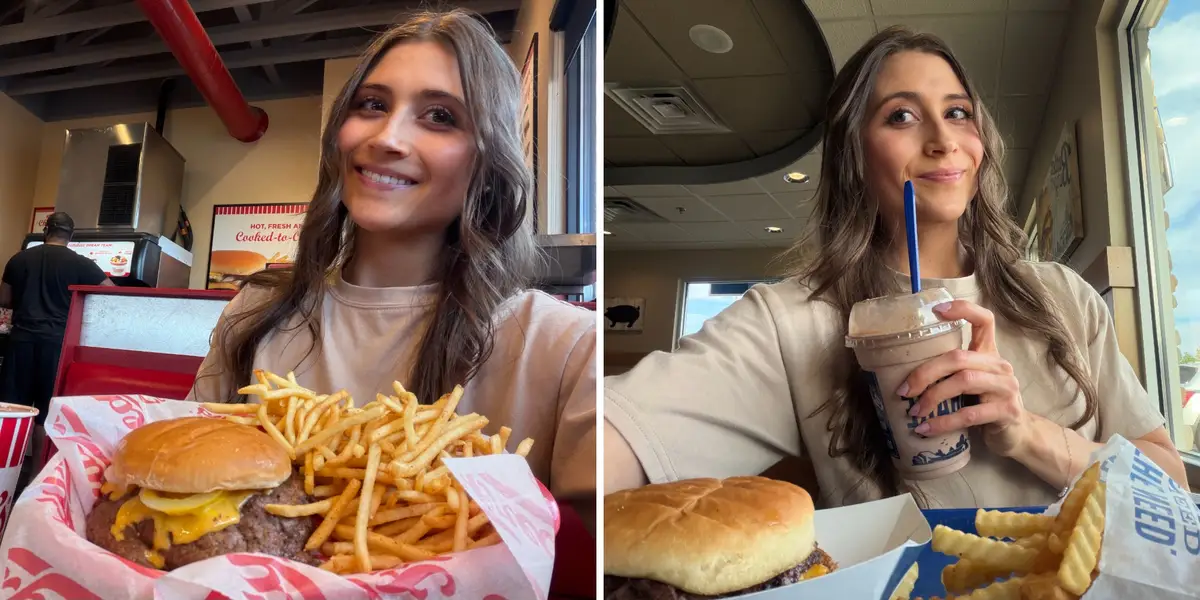
After comparing burgers, fries, and concretes at Freddy’s Frozen Custard Steakburgers and Culver’s, I found a winning chain. Savannah Born I ordered myself the same classic meal at Culver’s and Freddy’s Frozen Custard Steakburgers. Both meals cost around the same in the end, but the one at Culver’s felt like a better value. []
Narrative Intelligence Brief
This article was published by DNyuz, a source frequently categorized with a lean right bias based in Armenia. Our narrative intelligence engine continuously monitors coverage from this outlet to track framing, bias, and rhetorical patterns. Our initial algorithmic scan of this specific piece did not flag high-confidence rhetorical techniques, suggesting a generally straightforward reporting style or neutral framing. By understanding the editorial perspective of DNyuz, readers can better contextualize the information presented and compare it across our broader media matrix to find the real narrative.
More from DNyuz
July 1, 2026
Taylor Sheridan divulges final straw that made him quit ‘Sons of Anarchy’ — and ditch acting altogether
July 1, 2026
Zach Cregger, Brian Duffield to Adapt Internet Horror ‘Siren Head’ Feature for Warner Bros.
July 1, 2026
Worker in iconic photo kissing Statue of Liberty recalls death-defying perch: ‘One slip and it was over’
July 1, 2026
Legal correspondent Paula Reid expected to join MS NOW after CNN departure
July 1, 2026
Court sentences 7 more to prison over shooting at Texas immigration detention center
Analysis Methodology
This narrative analysis was generated using the CoDataLab Global Intelligence Engine. Our proprietary AI scans thousands of cross-border sources to identify sentiment patterns, framing techniques, and potential media bias. While AI provides the data-driven foundation, our objective is to empower readers with additional context beyond the standard headline.The content displayed above is a structured summary designed for rapid information processing. For the full original report, please visit the source outlet.More Coverage
Discussion
"trump"
Trump Goons Accidentally Bust New Grift Force One’s Fake Interior

US-Iran talks wobble as senior clerics call for assassination of ‘criminal’ Trump
Trump’s carrot-and-stick approach will win Iran conflict against corrupt regime
