
‘I hope this isn’t a marketing stunt.’ The destructive art of hacking attention—and what comes after
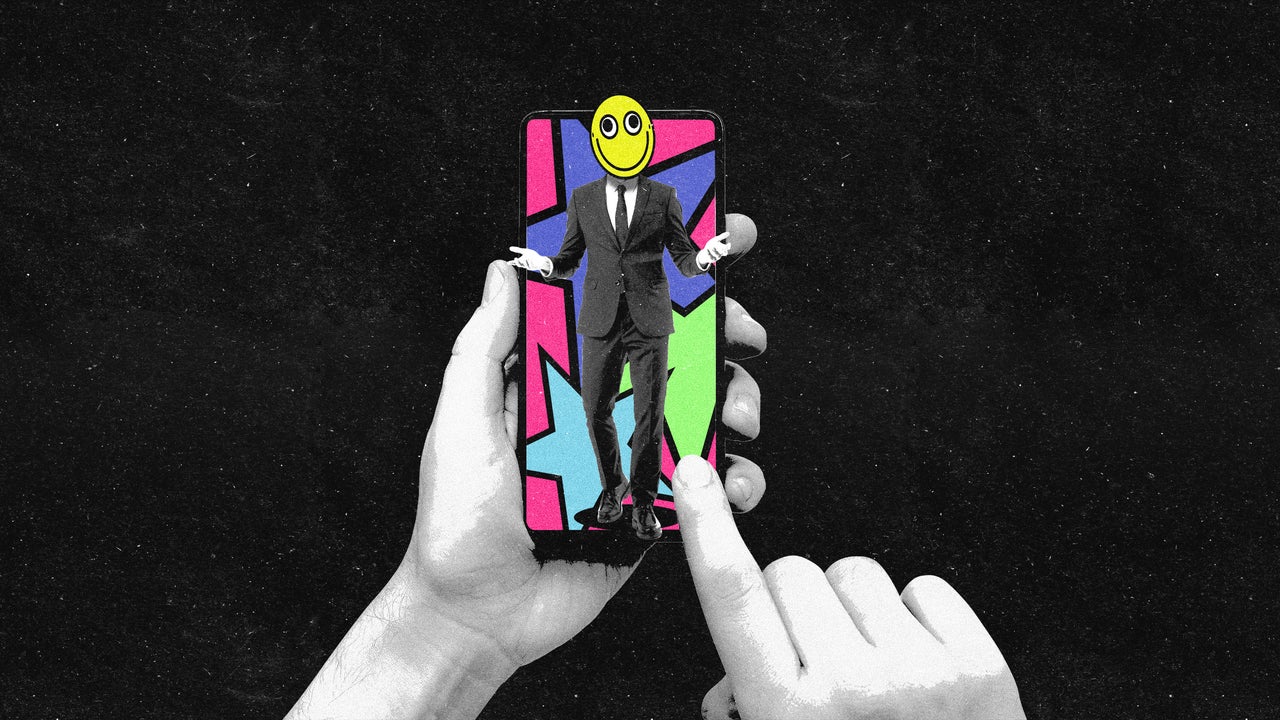
At first glance, it’s just a middle-aged man eating a mountain of steak chunks at Arby’s. Look closer, though, and you start to notice something strange about this already supremely strange scene. The video, posted last October, came from a group of pranking young dudes who call themselves the Arby’s Boys. The account has posted hundreds absurdist videos—a car filled with Arby’s curly fries (caption: “Idk what to do”); an Arby’s cashier taking an order while playing with a finger skateboard (33,000 likes)—all designed to look like user generated content from 20-something guys with an unusual sense of humor. In reality, Arby’s Boys is the work of Cousin Labs, an agency hired by the restaurant to create a social feed that effectively works like a slot machine for viral Arby’s content. According to Cousin Labs, the account has accumulated more than 100 million unpaid views in six months, despite only having around 45,000 followers. The realization that brands no longer need to build a loyal following to attract eyeballs has been a steroid needle in the buttock of marketers who are churning out social content. This turn towards “interest-based” algorithms (as opposed to follower-based) has created a social ecosystem of easily manufactured virality. It’s gotten to the point where nobody believes anything anymore. And they probably shouldn’t! View this post on Instagram In today’s social world, brands like Arby’s are encouraged to sidestep the main feed and mimic the user-generated content that tends to go viral. The result is short-term boosts in social content success, but this disingenuous virality has its long-term drawbacks. In an age of increasing AI slop and media manipulation, the waves of brand BS have created a suspicion economy, where no one really thinks anything is sincere. Now every time something cool happens in culture or a band becomes popular or a giant metallic monolith mysteriously appears in the desert—one of the first comments is inevitably, “I hope this isn’t a marketing stunt.” Nothing is real. Everything is advertising. But there’s a bifurcation taking place in the brand world, with some brands aiming to create more earnest content and experiences to rebuild trust, while others utilize the newest tools at their disposal to prioritize attention, even if it further erodes our collective trust and their ability to break through in future efforts. It’s a fight that will redefine how we build, play, and interact online, and determine the trajectory of our deteriorating relationship with truth and pop culture. In this Fast Company premium subscriber exclusive, read on to learn: How the erosion of audience trust by some brands has created a golden opportunity for others Why Cousin Labs’ Arby’s Boys strategy isn’t as diabolical as it seems What brands can do to build trust AND massive fan audiences No Surprise In the early 2000s, brands took pride in their ability to hack culture, convince people something was real, then pull the mask off Scooby-Doo style and say, “Surprise! It’s advertising!” And oh how the people laughed. In 2008, to prove its new line of pastas were legit, Pizza Hut created a fake Italian restaurant called Toscani’s and asked people for their reviews before revealing that it was really Pizza Hut pasta. That stunt, and subsequent copycats, inspired SNL’s hilarious 2018 Burger King coffee sketch starring Adam Driver. When a 310-foot-diameter crop circle appeared in a farmer’s barley field in Chualar, California, in late 2013, the internet was buzzing with theories of who made it, and what it meant. A few weeks later, it was revealed as a marketing stunt for Nvidia. At first, brands took advantage of easily distributed content by creating marketing stunts that were effectively entertainment (remember Devil Baby??). In the early days of social marketing there was less psychological manipulation at play, and people got a kick out of the playful tones and back-and-forth banter with brands like Wendy’s and Steak-Umm. The downside to that? It set the stage for this new breed of social stunt that feels a lot ickier. University of Michigan marketing professor Marcus Collins says that our lack of trust in brands has been brewing for decades. Think lead paint in children’s toys or knowingly marketing addictive cigarettes to kids. “The biggest Scooby-Doo reveal is that we find that marketing underwrites almost everything,” says Collins, author of the best-selling book, For The Culture. “So there’s almost no surprise to us that almost everything is an ad. Oh, what’s this orange blip that’s in the sky? What’s going on? Oh, it’s an ad for Marty Supreme. Got it. There are those who just accept that fact, but for others, they feel deceived. But both have a very hard scar tissue that fuels their skepticism.” However, the shift from a follower-based algorithm to interest-based, has only accelerated and deepened our skepticism. In a follower-based algorithm, you needed to follow an individual, group or brand in order to see the content they created. As a distribution channel, this controlled how much content any given feed was churning out—too much is annoying, too little is anonymous—and put the onus of finding an audience on the creators. With an interest-based algorithm, which TikTok pioneered with its For You feeds, users just get a steady stream of content curated by the algo based on what they like or spend the most time watching. No following necessary. The Suspicion Economy isn’t restricted to just brands, though brands have been its primary proponent. A recent story in Vulture (“The Feed Is Fake”) chronicled a company called Floodify, which at its peak operated 65,000 dummy social-media accounts used to drum up attention on behalf of paying clients, posting 50,000 videos daily across TikTok, Instagram, YouTube, and X, all of them designed to look like the unscripted output of ordinary users. Social media marketing consultant, and author of the popular Link in Bio newsletter, Rachel Karten says when the algo was more follower based, brands had to be more careful in terms of just how much they would post to their feeds in order not to annoy their followers. “But in these new-ish algorithms, there are some brands that will take more of that volume approach and treat the algorithms like a slot machine and pull the lever as many times as they want,” says Karten. That changes not only the frequency volume, but the type of content brands are posting—including content made to look like fan or user-generated content. The FTC instructs brands and influencers to make clear, prominent disclosures that are hard to miss, and verbally on video. Karten says that marketers used to more closely follow FTC guidelines when it comes to clearly labeling advertising, but that vigilance has significantly waned as enforcement has also dropped. “More so than ever, it’s on marketers to decide where that line is right now because the FTC is not paying attention to what’s happening,” she says. “It feels like a free for all and it’s on marketing teams to decide where they find their line, which is not a good thing.” Around the algo Before co-founding Cousin Labs in 2024, Paul Marvucic spent a decade managing creator marketing at platforms like YouTube, TikTok, and Patreon. He saw an opportunity for marketers to better exploit the differences between the content strategies of creators and brands. While creators were successfully building businesses around the algorithm, many brands were still treating social media as a mere distribution channel, often copy-and-pasting traditional TV commercials to their feeds. “That paradigm continues today where most brands still are thinking about organic (unpaid) social as a distribution channel,” says Marvucic. “Leading brands are inviting social into the room and building social-first campaigns, and the ones on the cutting edge are saying, ‘Hey, let’s build entertainment IP around our brand and let’s put it in the hands of creators who have cracked this and who have built their businesses around the algorithm.’” Marvucic doesn’t see content like Arby’s Boys as misleading; instead he says it’s authentic in its ability to entertain the audience. “If it feels like a brand understands culture, they’re showing up in the right way, and they’re providing value in the form of entertainment or education and are playing fair, I think trust goes up,” he says. The authenticity of the Arby’s Boys account is something of an open question. Its Instagram page is labeled as the “largest Arby’s fanpage,” and touts that Arby’s started following it in November. Which, even though each post has the hashtag “arbyspartner”, sounds a lot like a feed trying to convince you it’s a fan page created by, you know, fans. When I press Marvucic about it, he insists their work is clearly brand related. “Everything we do is with disclosure, we have all the right tags and we play by the book, not everybody plays by the book,” he says. Where Marvucic and I do find common ground is on the idea that social feeds should be audience-focused and brands should treat them as content RD. There’s often a giant chasm between what the audience cares about, and what the brand wants to say. Fan content is the best, or at least most common, way for a brand to resonate in a real way. “Often, you’ll find that the best brand content is often not even coming from the brands themselves,” says Marvucic. “So there is this enormous opportunity for brands to show up to different audience playgrounds and say, ‘Hey, we’re here to have fun, we’re here to exist inside your world.’” Back to reality In February, I wrote about how Burger King created a customer hotline that went directly to brand president Tom Curtis. Curtis committed to spending at least four hours a day over two weeks—including nights and weekends—taking unfiltered calls and texts from customers, hoping to hear their input about all things Burger King. Speaking to BarkleyOKRP, the agency behind it, it was clear this was a direct attempt to counter our inherent cynicism towards any piece of brand work. At first, I thought this was just another stunt meant to gain earned media love. But after talking to Curtis and the agency about the extent of the ongoing efforts beyond the initial campaign, it looked like the flame-grilled real deal. In fact, I first heard the term “suspicion economy” from BarkleyOKRP executive creative director Matt McNulty, who lamented the lack of sincerity in most brand work. BarkleyOKRP executive vice-president of strategy, Kevin Lilly, tells me that as brands have optimized and gamed the original promise of the internet—more transparency, through more access—our expectations have changed. The early internet first delivered information largely unfiltered by ad feeds and adaptive algorithms, which made consumers feel empowered, and brands became a bit more available, responsive, and transparent. You could tweet about a missed flight or a broken watch, and they’d respond! It was a new kind of connection with brands. But over time, Lilly says, brands and platforms figured out how to leverage that feeling of control. What started as empowerment became more engineered. Reviews and ratings made us feel like we could see the “truth” about brands, but those signals didn’t stay neutral for long, and brands started optimizing them, turning them into marketing channels. “As people got more savvy to this shift, trust became more conditional, and a mindset of ‘prove it’ became prevalent, making the gap between marketing claims and real experiences easier to expose,” says Lilly. “Today, we’ve moved beyond questioning claims to questioning intent. Interactions with brands and platforms are often assumed to be adversarial by default. The realization that ‘if you’re not paying for the product, you are the product’ is mainstream.” The effect has created a seismic shift in where people get their information. If people feel like their entire online existence is manufactured by brands, where do they go? They go inwards, to trusted sources that are not mediated by brands and selling. James Kirkham, founder and CEO of brand consultancy Iconic, says that trust hasn’t disappeared from culture completely, but has migrated mainly to dark social, group chats, trusted newsletters, the friend who sends you the link, or the small podcast with the core audience you chat to in the comments. “Private is real to most people, but big public is now seen by so many as performative, and therefore something to doubt,” says Kirkham. “The classic social feed has become both the place where brands buy the most coverage and so a place where audiences apply the most skepticism.” This is why more brands are investing in experiences, where people can touch, feel, and be surrounded by something real. A recent report from PQ Media found that experiential marketing spending grew 8.3 to 138.94 billion in 2025 and is on pace to grow by 10.3 this year. In fact, attention is no longer the most valuable metric. It’s connection. As 72andSunny international CEO Chris Kay wrote in Fast Company earlier this year, for Gen Z, “the linear marketing funnel is now obsolete, and that a real-life connection to a brand is the key weapon of choice for modern marketers.” What is the value of a view? As anyone who’s lost hours thumbing through their feeds knows, views can range from engaged passion to borderline white noise hypnosis. Increasingly for brands, the question isn’t whether the audience sees something, it’s whether they care. Collins says that the continued erosion of trust presents an opportunity for smart marketers who know that connection is more powerful than attention, especially in establishing and growing trust, particularly in the long-term. “Likes, attention, buzz, these things are fleeting,” says Collins. “If I were a CMO, I’m asking how do we connect with audiences based on the way that we see the world?”with audiences based on the way that we see the world?”
Narrative Intelligence Brief
This article was published by Fast Company, a source frequently categorized with a lean left bias based in United States of America. Our narrative intelligence engine continuously monitors coverage from this outlet to track framing, bias, and rhetorical patterns. Our initial algorithmic scan of this specific piece did not flag high-confidence rhetorical techniques, suggesting a generally straightforward reporting style or neutral framing. By understanding the editorial perspective of Fast Company, readers can better contextualize the information presented and compare it across our broader media matrix to find the real narrative.
Explore related topics: Stay informed with Real Narrative News as we track unfolding stories. Dive deeper into our coverage of pivotal topics including david hockney, elon musk, fifa cup, dies aged, spacex ipo, coupe monde, taylor swift, donald trump, white house, and artist david. Our intelligence streams continuously monitor these keywords to bring you unbiased analysis and real-time updates on topics like "‘I hope this isn’t a marketing stunt.’ The destructive art of hacking attention—and what comes after".
More from Fast Company
June 12, 2026
Meet the NASA crew who will keep Artemis III on track for its 2028 moon landing
June 12, 2026
Giant, beautiful soccer balls are popping up around New York City
June 12, 2026
13 career insurance policies every professional should have
June 12, 2026
The battery startup powering the laser-weapons race
June 12, 2026
Bruce Springsteen’s new center in New Jersey is a jewel box monument to his music
Analysis Methodology
This narrative analysis was generated using the CoDataLab Global Intelligence Engine. Our proprietary AI scans thousands of cross-border sources to identify sentiment patterns, framing techniques, and potential media bias. While AI provides the data-driven foundation, our objective is to empower readers with additional context beyond the standard headline.The content displayed above is a structured summary designed for rapid information processing. For the full original report, please visit the source outlet.More Coverage
Discussion