
Today in News History
On July 12, several notable moments in the history of News stand out. In 1527, Lê Cung Hoàng ceded the throne to Mạc Đăng Dung, ending the Lê dynasty and starting the Mạc dynasty. In 1913, Willis Lamb, American physicist and academic, Nobel Prize laureate (died 2008) was born. In 1928, Elias James Corey, American chemist and academic, Nobel Prize laureate was born. In 1935, Satoshi Ōmura, Japanese biochemist and academic, Nobel Prize laureate was born. In 1936, Frank Ryan, American football player and mathematician (died 2024) was born. In 1948, Walter Egan, American singer-songwriter and guitarist was born. In 1949, Douglas Hyde, Irish scholar and politician, 1st President of Ireland (born 1860) passed away. In 1973, A fire destroys the entire sixth floor of the National Personnel Records Center of the United States. In 1984, Michael McGovern, Northern Irish footballer was born. In 2012, A tank truck explosion kills more than 100 people in Okobie, Nigeria. Together, these milestones provide historical context for today's news news and ongoing narratives.
Human brains may have got bigger for no particular reason

Our brains are large compared with other animals, so it is tempting to assume there was an evolutionary advantage to them – but that may not be true at all
Narrative Intelligence Brief
This article was published by New Scientist, a source frequently categorized with a center bias based in United States of America. Our narrative intelligence engine continuously monitors coverage from this outlet to track framing, bias, and rhetorical patterns. Our initial algorithmic scan of this specific piece did not flag high-confidence rhetorical techniques, suggesting a generally straightforward reporting style or neutral framing. By understanding the editorial perspective of New Scientist, readers can better contextualize the information presented and compare it across our broader media matrix to find the real narrative.
More from New Scientist
July 10, 2026
UN space database aimed at easing global tensions is mysteriously down
July 10, 2026
Global warming already causing crop losses of over $20 billion a year
July 10, 2026
Mathematicians put AI to work on Fermat's last theorem
July 10, 2026
The sneaky maths trick for solving problems without answering them
July 10, 2026
2026 eclipse: 5 citizen science projects you can contribute to
Analysis Methodology
This narrative analysis was generated using the CoDataLab Global Intelligence Engine. Our proprietary AI scans thousands of cross-border sources to identify sentiment patterns, framing techniques, and potential media bias. While AI provides the data-driven foundation, our objective is to empower readers with additional context beyond the standard headline.The content displayed above is a structured summary designed for rapid information processing. For the full original report, please visit the source outlet.More Coverage
Discussion
"cup semifinal"
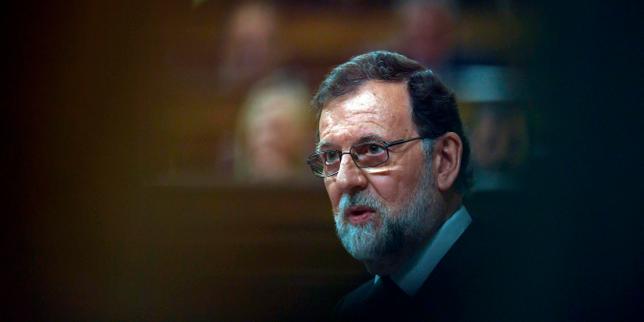
Former Spanish PM Mariano Rajoy makes racist remarks about France's football team
[Photo] JUST IN: 🇦🇷 Argentina officially advances to the FIFA World Cup semifinal after defeat [...]

Argentina's hero: "We are just two steps away from the goal"

How other outlets are covering this story
Compare narratives across 6 related reports from 6 sources. Real Narrative News aggregates the coverage spectrum so you can see who emphasises what — bias tags reflect the outlet, not the story.
Coverage bias distribution
6 sources
Left 33%
Center 67%
Right 0%
Inc.com
· Jul 6, 2026
Can’t Focus? Scientists Just Found the Ancient Brain Cells Responsible for Distracting You
A breakthrough study revealed a primitive brain region that acts as a built-in filter to block out a noisy world.
Science Daily
· Jun 21, 2026
Think human anatomy is finished? Scientists say think again
Despite centuries of study, scientists are still finding new details and even overlooked structures within the human body. As researchers explore anatomical differences between individuals, it’s becoming clear that the body is far more complex—and less fully understood—than textbooks suggest.
Ancient Pages
· Jul 9, 2026
Bigger Brains, Smaller Faces: Rethinking Human Evolution
Jan Bartek - AncientPages.com - A new study challenges established views on human skull evolution. Researchers suggest that brain growth and the reduction of the face and jaw may be less influenced by directed natural selection than previously thought. Findings from the University of Tennessee-Knoxville and the Senckenberg Centre for Human Evolution and Palaeoenvironment (SHEP) at []
mindbodygreen
· Jun 21, 2026
This Type Of Body Composition May Raise Cognitive Decline Risk, Study Finds
For brain health, losing this may matter more than weight gain.
Quartz
· Jun 22, 2026
25 things neuroscience has discovered about the brain in the last few decades
Neuroscience has learned more about the brain in the last 30 years than in all of human history before it. These are the findings that changed what we thought we knew
Irish Tech News
· Jun 29, 2026
Why Eleos AI Research and Anthropic haven’t solved AI consciousness
By David Stephen In the human brain, there is no difference between intelligence and consciousness. Or simply, the human brain has shown that if intelligence is somewhere, consciousness is — or could be — there. In the brain, what has been proven [by neuroscience] to mechanize functions are neurons and their electrical and chemical signals. []
Topics:
Related coverage for "Human brains may have got bigger for no particular reason": Inc.com — Can’t Focus? Scientists Just Found the Ancient Brain Cells Responsible for Distracting You. Science Daily — Think human anatomy is finished? Scientists say think again. Ancient Pages — Bigger Brains, Smaller Faces: Rethinking Human Evolution. mindbodygreen — This Type Of Body Composition May Raise Cognitive Decline Risk, Study Finds. Quartz — 25 things neuroscience has discovered about the brain in the last few decades. Irish Tech News — Why Eleos AI Research and Anthropic haven’t solved AI consciousness