Today in News History
On July 11, several notable moments in the history of News stand out. In 813, Byzantine emperor Michael I, under threat by conspiracies, abdicates in favor of his general Leo the Armenian, and becomes a monk (under the name Athanasius). In 1893, A revolution led by the liberal general and politician José Santos Zelaya takes over state power in Nicaragua. In 1899, Wilfrid Israel, German businessman and philanthropist (died 1943) was born. In 1921, Former president of the United States William Howard Taft is sworn in as 10th chief justice of the U.S. Supreme Court, becoming the only person ever to hold both offices. In 1957, Prince Karim Husseini Aga Khan IV inherits the office of Imamat as the 49th Imam of Shia Imami Ismai'li worldwide, after the death of Sir Sultan Mahommed Shah Aga Khan III. In 1970, Sajjad Karim, English lawyer and politician was born. In 1990, Oka Crisis: First Nations land dispute in Quebec begins. In 2003, Zahra Kazemi, Iranian-Canadian freelance photographer (born 1948) passed away. In 2011, Ninety-eight containers of explosives self-detonate killing 13 people in Zygi, Cyprus. In 2013, Emik Avakian, Iranian-American inventor (born 1923) passed away. Together, these milestones provide historical context for today's news news and ongoing narratives.
How the absence of Iran’s new supreme leader is becoming a liability for Tehran

After hostilities with the U.S. reignited, the role and health of Iranian Supreme Leader Mojtaba Khamenei are of critical — and growing — concern.
Narrative Intelligence Brief
This article was published by The Japan Times, a source frequently categorized with a center bias based in Japan. Our narrative intelligence engine continuously monitors coverage from this outlet to track framing, bias, and rhetorical patterns. Our initial algorithmic scan of this specific piece did not flag high-confidence rhetorical techniques, suggesting a generally straightforward reporting style or neutral framing. By understanding the editorial perspective of The Japan Times, readers can better contextualize the information presented and compare it across our broader media matrix to find the real narrative.
More from The Japan Times
July 11, 2026
Typhoon Bavi brings rains and wind to Okinawa as Taiwan evacuates thousands
July 11, 2026
Philippines rejects Chinese academics’ sovereignty claims to Batanes Islands
July 11, 2026
China again warns Russia not to use nuclear arms against Ukraine
July 10, 2026
Scare Force One? Security questions swirl over Trump’s new plane
July 10, 2026
Trump’s promise on Patriots will take time, leaving Ukraine facing tough choices
Analysis Methodology
This narrative analysis was generated using the CoDataLab Global Intelligence Engine. Our proprietary AI scans thousands of cross-border sources to identify sentiment patterns, framing techniques, and potential media bias. While AI provides the data-driven foundation, our objective is to empower readers with additional context beyond the standard headline.The content displayed above is a structured summary designed for rapid information processing. For the full original report, please visit the source outlet.More Coverage
Discussion
"trump"
Trump’s disastrous cycle of bad decisions continues as Iran ceasefire collapses

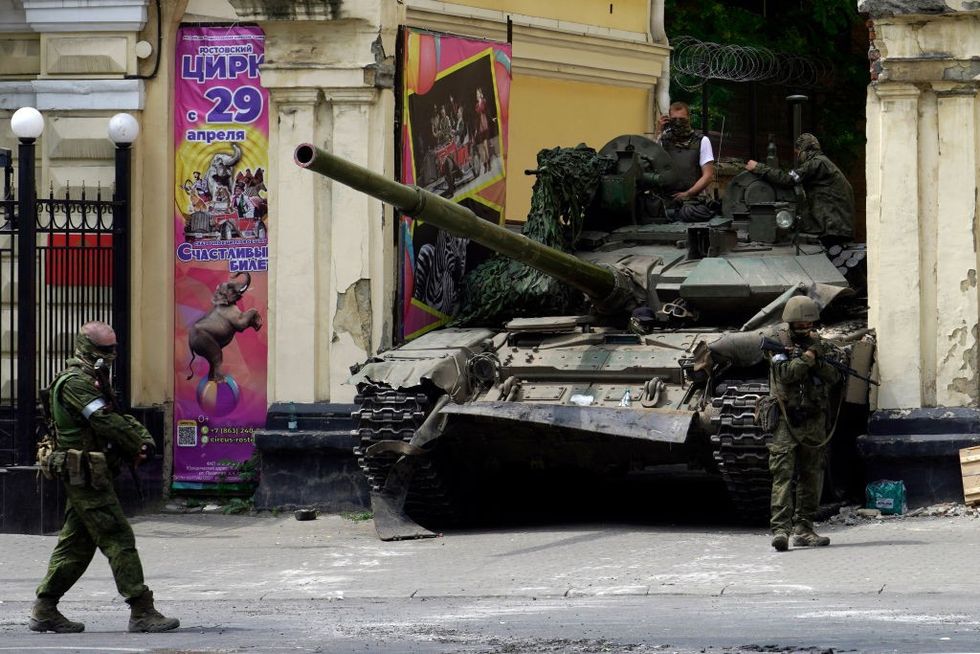
The Continued Myth of Russia’s Imminent Collapse: Lessons from Prigozhin’s Mutiny Three Years On
Soccer symbolizes Trump’s destructive effect