
0
How New York mayor Zohran Mamdani solved the city’s budget crisis
May 14, 2026
Posted 3 hours ago by
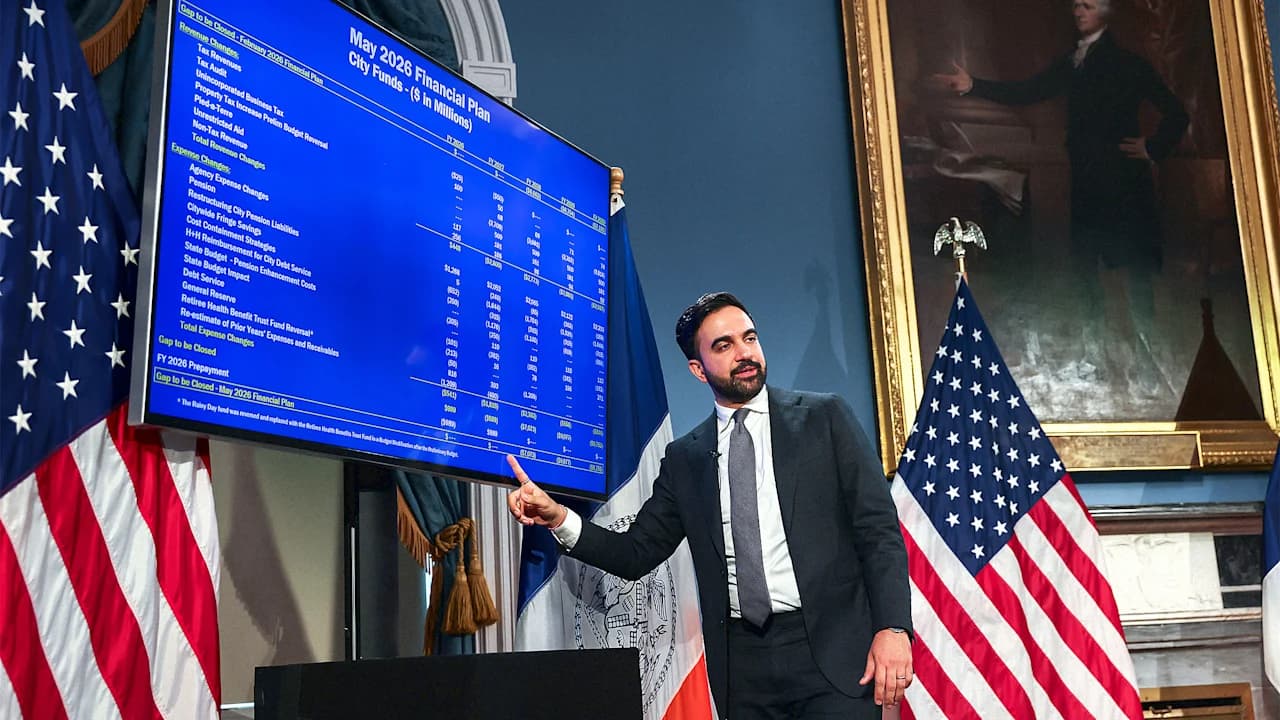
Zohran Mamdani, the 34-year-old mayor of New York City, who campaigned on making the city more affordable, is facing one of the hardest tests of leadership: delivering on ambitious promises despite facing a challenging landscape. After inheriting a 12 billion gap in the budget—the largest since the Great Recession—Mamdani just released his 124.7 billion budget proposal for the 2027 fiscal year.
Analysis Methodology
This narrative analysis was generated using the CoDataLab Global Intelligence Engine. Our proprietary AI scans thousands of cross-border sources to identify sentiment patterns, framing techniques, and potential media bias. While AI provides the data-driven foundation, our objective is to empower readers with additional context beyond the standard headline.The content displayed above is a structured summary designed for rapid information processing. For the full original report, please visit the source outlet.It includes important measures like funding for childcare, worker protections, and greater access to mental health care. It also includes some entirely new investments that focus on creating more affordable housing opportunities for low-income New Yorkers. In a video posted to social media, the mayor said that while critics claimed the only possible way to balance NYC’s budget would be to raise property taxes or slash city services, his team “rejected that idea” and still managed to bring the deficit down to zero. “We didn’t close the gap on the backs of working people,” Mamdani said in the video’s caption. “We closed it while funding parks, libraries, safer streets and making historic investments in public housing.” Where will the 124.7 billion budget come from? The balancing act is impressive, but how will it actually work? First, Mamdani and New York State Gov. Kathy Hochul worked together on assistance for NYC from the state. On Tuesday, they announced another 4 billion in financial assistance would be directed to NYC, increasing the amount to 8 billion over the next two years. “Today, we are fulfilling the promise to make free universal child care a reality, making significant investments in education, public safety, and infrastructure while providing the city the resources they need to continue to fund critical services for New Yorkers,”Hochul said in a statement on the increase in funds. While aid is a major piece of the puzzle, Mamdani has also been focused on reducing costs to the city. In order “to restore fiscal transparency,” the mayor ordered government agencies to appoint a Chief Savings Officer, which resulted in 1.77 billion in savings. Likewise, Mamdani is working to reduce the UBT (Unincorporated Business Tax) credit, a tax break for residents, estates, or trusts who pay the 4 UBT. That’s because the credit overwhelmingly benefits millionaires as it allows high-net-worth individuals to pay a lower tax rate than average workers. “Reducing the UBT tax credit will raise an additional 68 million,” the proposal explains. In addition to taxing the richest New Yorkers, Mamdani has also pitched major tax hikes on high-value properties. No shortage of critics While Mamdani seems to be appealing to his base by seeking to deliver on the affordability promises he campaigned on, he has no shortage of critics who say his proposals are anti-business. That tension reveals another major leadership challenge: making decisions that reinforce long-term priorities, even when they create resistance from influential groups. One of which is Citadel’s CEO Ken Griffin, who says he’s shifting expansion plans from NYC to Miami over the mayor’s “pied-à-terre” luxury tax, an annual surcharge on residential properties that are second homes (not the primary residence) and are valued at 5 million or more. Griffin says the firm is reconsidering its 6 billion development of 350 Park Avenue due to the proposed tax hike. Even Kathy Hochul weighed in on the debate recently, saying that rich New Yorkers leaving the city is not a good thing. “I need people who are high net worth to support the generous social programs that we want to have in our state,” she said at a forum in March. Still, while the mayor has received pushback on some campaign promises, specifically his plan to tax the rich at a higher rate, increasing the tax rate by two percentage points for those who earn 1 million per year or more could raise around 3 billion annually for New York City. So, while Mamdani might be ramping up his haters, he’s also doing exactly what he said he would do. Which may be a leadership lesson in itself.
Analysis Methodology
This narrative analysis was generated using the CoDataLab Global Intelligence Engine. Our proprietary AI scans thousands of cross-border sources to identify sentiment patterns, framing techniques, and potential media bias. While AI provides the data-driven foundation, our objective is to empower readers with additional context beyond the standard headline.The content displayed above is a structured summary designed for rapid information processing. For the full original report, please visit the source outlet.Narrative Intelligence Report
Our AI engine has processed this content to identify structural patterns, rhetorical techniques, and underlying sentiment.
Source Credibility
This article aligns with typical narrative patterns from its source. Our engine suggests evaluating this piece with awareness of its detected rhetorical framing.
Fast Company
Coverage and analysis from United States of America. All insights are generated by our AI narrative analysis engine.