
Today in News History
On July 12, several notable moments in the history of News stand out. In 981, Xue Juzheng, Chinese scholar-official and historian passed away. In 1682, Jean Picard, French priest and astronomer (born 1620) passed away. In 1804, Alexander Hamilton, American general, economist, and politician, 1st United States Secretary of the Treasury (born 1755) passed away. In 1944, Simon Blackburn, English philosopher and academic was born. In 1947, Richard C. McCarty, American psychologist and academic was born. In 1949, Douglas Hyde, Irish scholar and politician, 1st President of Ireland (born 1860) passed away. In 1959, Karl J. Friston, English psychiatrist and neuroscientist was born. In 1977, Neil Harris, English footballer and manager was born. In 2013, Amar Bose, American businessman, founded the Bose Corporation (born 1929) passed away. In 2014, Alfred de Grazia, American political scientist and author (born 1919) passed away. Together, these milestones provide historical context for today's news news and ongoing narratives.
How does your brain change when you become a father? | The Economist
Narrative Analysis: Glittering Generalities
It’s not just mums who experience so-called “baby brain”, fathers’ brains also change and adapt, preparing them for life as a parent. Explore how dads’ brains transform with our 3D model. #parenting #father #dad #science #biology #brain Read more: https://econ.st/3UHLnTJ Subscribe to The Economist: https://econ.st/3Mia0pz Download The Economist app: https://econ.st/4qdVVaA Follow us on X: https://x.com/TheEconomist Follow us on Instagram: https://www.instagram.com/theeconomist Follow us on Facebook: https://www.facebook.com/TheEconomist
Narrative Intelligence Brief
This article was published by The Economist, a source frequently categorized with a center bias based in United Kingdom. Our narrative intelligence engine continuously monitors coverage from this outlet to track framing, bias, and rhetorical patterns. In this specific piece, our systems detected the potential use of the "Glittering Generalities" technique. This narrative approach is often used to shape reader perception by highlighting specific emotional or rhetorical angles. By understanding the editorial perspective of The Economist, readers can better contextualize the information presented and compare it across our broader media matrix to find the real narrative.
More from The Economist
July 11, 2026
Will Vladimir Putin still be Russia’s president by 2030? | The Economist
July 10, 2026
Could this man change Russia? | The Economist
July 10, 2026
The man who would change Russia | The Economist
July 9, 2026
What happens if Netanyahu loses the election? | The Economist
July 9, 2026
What happens if Binyamin Netanyahu loses Israel’s next election? | The Economist
Reliability Insights
P
Technique: Glittering Generalities
System analysis detected use of specific narrative techniques in this piece.Analysis Methodology
This narrative analysis was generated using the CoDataLab Global Intelligence Engine. Our proprietary AI scans thousands of cross-border sources to identify sentiment patterns, framing techniques, and potential media bias. While AI provides the data-driven foundation, our objective is to empower readers with additional context beyond the standard headline.The content displayed above is a structured summary designed for rapid information processing. For the full original report, please visit the source outlet.More Coverage
Discussion
"cup semifinal"
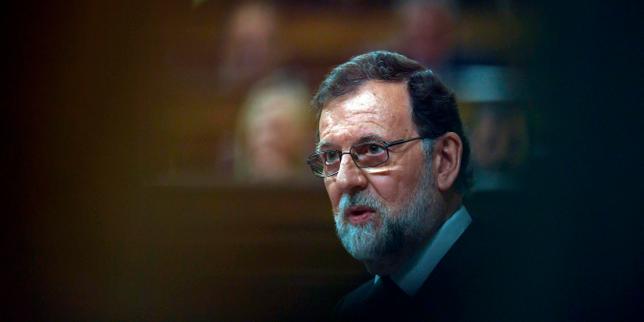
Former Spanish PM Rajoy makes racist remarks about France's football team
[Photo] JUST IN: 🇦🇷 Argentina officially advances to the FIFA World Cup semifinal after defeat [...]

Argentina's hero: "We are just two steps away from the goal"

How other outlets are covering this story
Compare narratives across 6 related reports from 6 sources. Real Narrative News aggregates the coverage spectrum so you can see who emphasises what — bias tags reflect the outlet, not the story.
Coverage bias distribution
6 sources
Left 33%
Center 33%
Right 17%
Portside
· Jun 23, 2026
How Becoming a Dad Changes Men’s Brains
How Becoming a Dad Changes Men’s Brains barry Mon, 06/22/2026 - 20:16
Scientific American
· Jun 21, 2026
How becoming a dad changes men’s brains
Fathers show changes in some of the same brain areas as mothers, but the effect of parenthood on dads isn’t nearly as well studied
New Scientist
· Jul 8, 2026
New Scientist recommends a vital look at the science of fatherhood
Dads are often overlooked when it comes to parenting science. Darby Saxbe's fascinating new book Dad Brain is out to change that, says Olivia Goldhill
The 74
· Jun 23, 2026
How Birth Order Determines Your Life
How Birth Order Determines Your Life
National Review
· Jun 27, 2026
A Golden Opportunity to Destabilize Planned Parenthood
Republicans should not squander it.
Fark
· Jun 29, 2026
Having children makes you smarter [Ironic]
[link] [12 comments]
Topics:
Related coverage for "How does your brain change when you become a father? | The Economist": Portside — How Becoming a Dad Changes Men’s Brains. Scientific American — How becoming a dad changes men’s brains. New Scientist — New Scientist recommends a vital look at the science of fatherhood. The 74 — How Birth Order Determines Your Life. National Review — A Golden Opportunity to Destabilize Planned Parenthood. Fark — Having children makes you smarter [Ironic]