
Today in News History
On June 20, several notable moments in the history of News stand out. In 930, Hucbald, Frankish monk and music theorist passed away. In 1597, Willem Barentsz, Dutch cartographer and explorer (born 1550) passed away. In 1840, Pierre Claude François Daunou, French historian and politician (born 1761) passed away. In 1861, Frederick Gowland Hopkins, English biochemist and academic, Nobel Prize laureate (died 1947) was born. In 1867, Leon Wachholz, Polish scientist and medical examiner (died 1942) was born. In 1875, Reginald Punnett, English geneticist, statistician, and academic (died 1967) was born. In 1954, Huda Zoghbi, American geneticist was born. In 1981, Brede Hangeland, Norwegian footballer was born. In 2002, Erwin Chargaff, Austrian-American biochemist and academic (born 1905) passed away. In 2010, Harry B. Whittington, English palaeontologist and academic (born 1916) passed away. Together, these milestones provide historical context for today's news news and ongoing narratives.
Horses originated in America and reached Europe through China, fossil DNA reveals
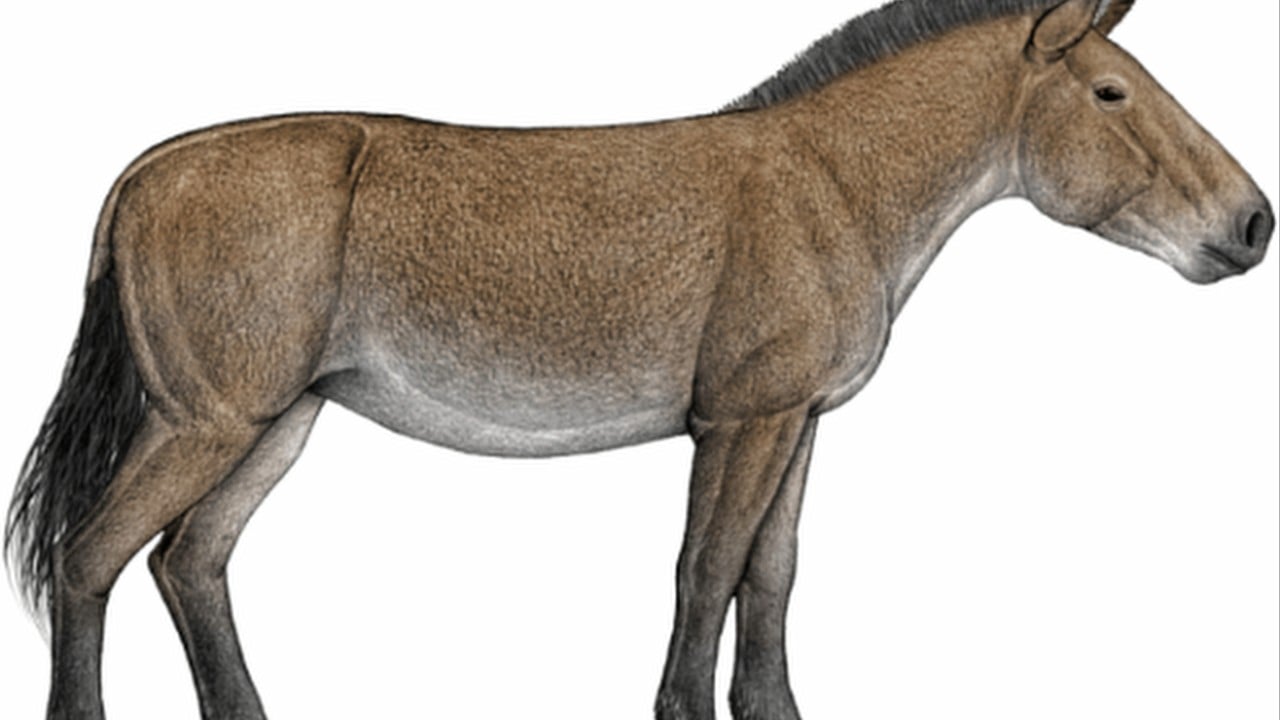
Everyone knows the story: when Spanish conquistadors rode into the New World, Native Americans were stunned by a towering, four-legged creature they had never seen before. Horses, the theory goes, were a European import to the Americas. But a new fossil DNA study indicates that horses actually originated in North America millions of years ago and only reached Europe thanks to an unexpected genetic middleman in China. An extinct lineage called the Dalian horse, once dismissed as a local oddity in...
Narrative Intelligence Brief
This article was published by South China Morning Post, a source frequently categorized with a lean left bias based in Hong Kong. Our narrative intelligence engine continuously monitors coverage from this outlet to track framing, bias, and rhetorical patterns. Our initial algorithmic scan of this specific piece did not flag high-confidence rhetorical techniques, suggesting a generally straightforward reporting style or neutral framing. By understanding the editorial perspective of South China Morning Post, readers can better contextualize the information presented and compare it across our broader media matrix to find the real narrative.
More from South China Morning Post
June 20, 2026
‘Tap your cultural foundation’, Shangri-La’s Kuok Hui Kwong tells Hong Kong tourism trade
June 20, 2026
‘Isn’t it hot?’: latex fan aims to stretch Malaysia’s conservative fashion norms
June 20, 2026
China puts world’s first smart squid fishing robot to the test
June 20, 2026
Australia reports first case of H5 bird flu, virus spreads to every continent
June 20, 2026
Germany blurs defence lines with bet on Philippines’ old US base
Analysis Methodology
This narrative analysis was generated using the CoDataLab Global Intelligence Engine. Our proprietary AI scans thousands of cross-border sources to identify sentiment patterns, framing techniques, and potential media bias. While AI provides the data-driven foundation, our objective is to empower readers with additional context beyond the standard headline.The content displayed above is a structured summary designed for rapid information processing. For the full original report, please visit the source outlet.More Coverage
Discussion
"matheus cunha"
Golazo de Matheus Cunha firma su doblete e ilusiona a Brasil ante Haití en Filadelfia

Matheus Cunha scores twice as rampant Brazil eliminate Haiti

Brazil vs Haiti - World Cup RECAP: Carlo Ancelotti's side surges to top of Group C after Vinicius Jr's first-half strike and a Matheus Cunha double
