
Today in News History
On July 12, several notable moments in the history of News stand out. In 1527, Lê Cung Hoàng ceded the throne to Mạc Đăng Dung, ending the Lê dynasty and starting the Mạc dynasty. In 1789, In response to the dismissal of the French finance minister Jacques Necker, the radical journalist Camille Desmoulins gives a speech which results in the storming of the Bastille two days later. In 1913, Serbian forces begin their siege of the Bulgarian city of Vidin; the siege is later called off when the war ends. In 1918, The Imperial Japanese Navy battleship Kawachi blows up at Shunan, western Honshu, Japan, killing at least 621. In 1943, World War II: Battle of Kursk: German and Soviet forces engage in the Battle of Prokhorovka, one of the largest armored engagements of all time. In 1967, Riots begin in Newark, New Jersey. In 2006, The 2006 Lebanon War begins. In 2007, U.S. Army Apache helicopters engage in airstrikes against armed insurgents in Baghdad, Iraq, where civilians are killed; footage from the cockpit is later leaked to the Internet. In 2012, Syrian Civil War: Government forces target the homes of rebels and activists in Tremseh and kill anywhere between 68 and 150 people. In 2012, A tank truck explosion kills more than 100 people in Okobie, Nigeria. Together, these milestones provide historical context for today's news news and ongoing narratives.
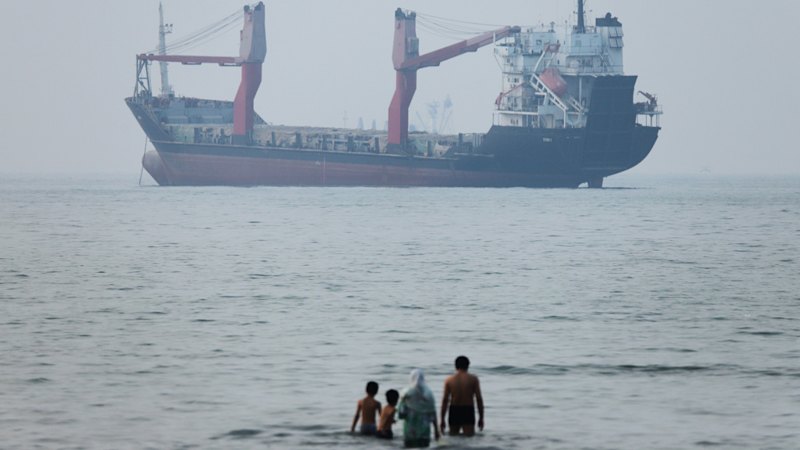
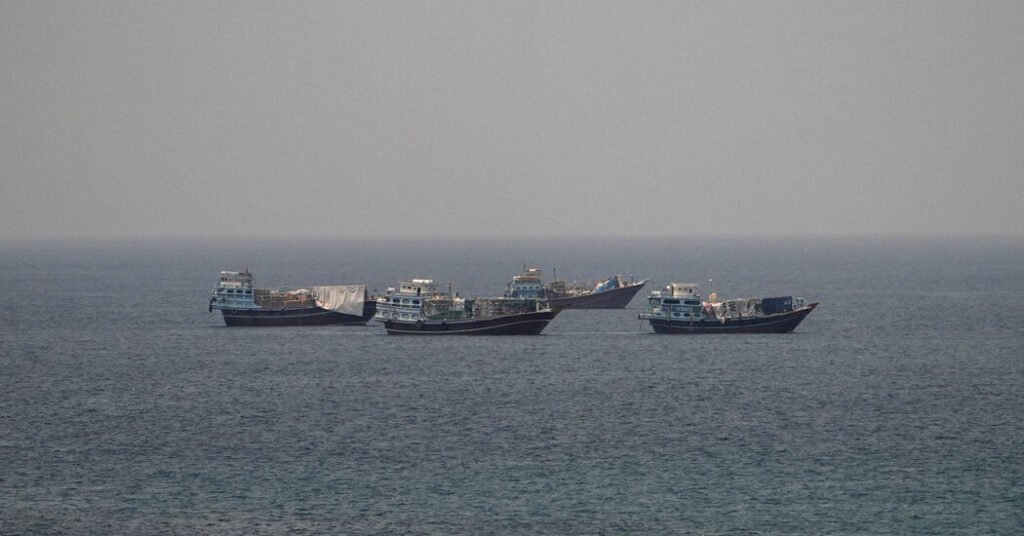
Hormuz Toll Dispute Turns on Words, Not War

The dispute over the Strait of Hormuz has [] The post Hormuz Toll Dispute Turns on Words, Not War appeared first on The Media Line.
Narrative Intelligence Brief
This article was published by The Media Line, a source frequently categorized with a right bias based in United States of America. Our narrative intelligence engine continuously monitors coverage from this outlet to track framing, bias, and rhetorical patterns. Our initial algorithmic scan of this specific piece did not flag high-confidence rhetorical techniques, suggesting a generally straightforward reporting style or neutral framing. By understanding the editorial perspective of The Media Line, readers can better contextualize the information presented and compare it across our broader media matrix to find the real narrative.
More from The Media Line
July 11, 2026
2 Polls Point to Jewish Safety Concerns
July 11, 2026
Police Arrest 4 Settlers Suspected of Attacking CNN Journalists in the West Bank
July 11, 2026
Police arrest 4 settlers suspected of attacking CNN journalists in the West Bank
July 11, 2026
President Trump, Khamenei Trade Threats Amid Dispute Over US-Iran Negotiations
July 10, 2026
SentinelOne Report Alleges China–, India–Linked Hackers Targeted Pakistan’s Police Networks
Analysis Methodology
This narrative analysis was generated using the CoDataLab Global Intelligence Engine. Our proprietary AI scans thousands of cross-border sources to identify sentiment patterns, framing techniques, and potential media bias. While AI provides the data-driven foundation, our objective is to empower readers with additional context beyond the standard headline.The content displayed above is a structured summary designed for rapid information processing. For the full original report, please visit the source outlet.More Coverage
Discussion
How other outlets are covering this story
Compare narratives across 6 related reports from 6 sources. Real Narrative News aggregates the coverage spectrum so you can see who emphasises what — bias tags reflect the outlet, not the story.
Coverage bias distribution
6 sources
Left 17%
Center 33%
Right 50%
Democracy Now!
· Jul 9, 2026
"A Disastrous Development": Trita Parsi on Breakdown of U.S.-Iran Ceasefire
We speak with political analyst Trita Parsi, executive vice president of the Quincy Institute for Responsible Statecraft, about the latest events in the Middle East. The United States has bombed Iran for multiple days after President Donald Trump declared the ceasefire between the countries to be “over.” Iran says it has retaliated by attacking U.S. military bases and other strategic sites in Bahrain, Kuwait and Qatar. Parsi says the renewal of fighting is “a disastrous development” for chances of a long-term peace and a reset in the U.S.-Iran relationship. “Both countries are in dire need of an end to this war.”
War on the Rocks
· Jul 9, 2026
Fraying Deals and Rising Strikes
Welcome to The Adversarial. Every other week, we’ll provide you with expert analysis on America’s greatest challengers: China, Russia, Iran, North Korea, and jihadists. Read more below.***IranThree weeks after it was signed, the memorandum of understanding between the United States and Iran seems to be quickly unravelling. The two sides skirmished after an April ceasefire and continued to do so after the memorandum of understanding was reached, but had managed to keep those tit-for-tat exchanges from escalating into a full-on return to hostilities. Their agreement nonetheless faced death by a thousand cuts over mutual claims of violations and bad faith.A string The post Fraying Deals and Rising Strikes appeared first on War on the Rocks.
Foreign Policy
· Jul 1, 2026
Trans-Atlanticism Isn’t Dead—It’s Being Renegotiated
Reports of NATO’s demise have been greatly exaggerated.
Modern Diplomacy
· Jun 22, 2026
Is This the End of the Gulf War?
This is not the end of the Gulf War—it is merely an intermission in a much longer struggle. The memorandum may have eased immediate tensions, but unresolved rivalries, strategic mistrust, and regional fault lines suggest that the conflict is far from over. “War does not determine who is right—only who is left” (Bertrand Russell). “Ships [] The post Is This the End of the Gulf War? appeared first on Modern Diplomacy.
Punching Bag Post
· Jun 28, 2026
Trump and Iran Trade Blows as Peace Talks Continue
A Ceasefire Becomes a Contest The new U.S.-Iran memorandum of understanding was never going to bring instant calm. It stopped the wider war, but it did not end the struggle for leverage. Instead, the latest round of attacks shows something more complicated: the United States and Iran are still negotiating, but they are doing it [] The post Trump and Iran Trade Blows as Peace Talks Continue appeared first on The Punching Bag Post.
Arutz Sheva
· Jun 22, 2026
Israel Ganz: 'Sovereignty is not a luxury. It’s a minimum guarantee for our future'
'We are no longer on the defense. We are on the offense now and we are not going back,' Governor of the Binyamin Regional Council, Israel Ganz, says to the JNS Policy Summit.
Topics:
Related coverage for "Hormuz Toll Dispute Turns on Words, Not War": Democracy Now! — "A Disastrous Development": Trita Parsi on Breakdown of U.S.-Iran Ceasefire. War on the Rocks — Fraying Deals and Rising Strikes. Foreign Policy — Trans-Atlanticism Isn’t Dead—It’s Being Renegotiated. Modern Diplomacy — Is This the End of the Gulf War?. Punching Bag Post — Trump and Iran Trade Blows as Peace Talks Continue. Arutz Sheva — Israel Ganz: 'Sovereignty is not a luxury. It’s a minimum guarantee for our future'