
Today in News History
On June 24, several notable moments in the history of News stand out. In 1398, Hongwu, Chinese emperor (born 1328) passed away. In 1880, Oswald Veblen, American mathematician and academic (g. 1960) was born. In 1882, Carl Diem, German businessman (died 1962) was born. In 1885, Olaf Holtedahl, Norwegian geologist (died 1975) was born. In 1893, Roy O. Disney, American businessman, co-founded The Walt Disney Company (died 1971) was born. In 1917, David Easton, Canadian-American political scientist and academic (died 2014) was born. In 1932, A bloodless revolution instigated by the People's Party ends the absolute power of King Prajadhipok of Siam (now Thailand). In 1946, Ellison Onizuka, American engineer, and astronaut (died 1986) was born. In 1955, Chris Higgins, English geneticist and academic was born. In 2001, Konstantin Gerchik, the second head of the world's first cosmodrome — "Baikonur" (1958-1961). passed away. Together, these milestones provide historical context for today's news news and ongoing narratives.
Hong Kong pioneers world’s first robotic living-donor liver transplant
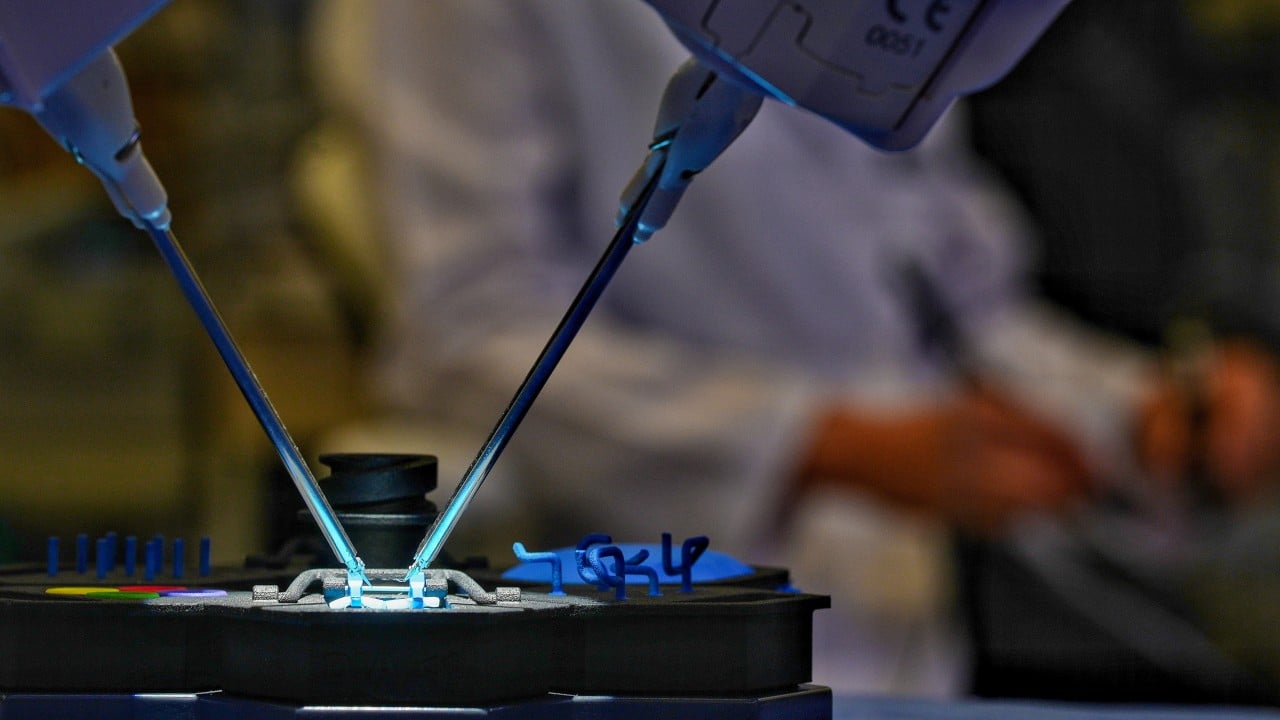
Hong Kong doctors have performed the world’s first robotic living-donor liver transplant as part of a pioneering microsurgery programme, researchers have revealed. Sharing results of the clinical trial on Wednesday, the University of Hong Kong (HKU) team said surgeons at Queen Mary Hospital had completed 48 procedures since June 2025, with no long-term or post-operative complications. Microsurgery, which requires surgeons to operate under high-powered magnification on structures as fine as 0.1...
Narrative Intelligence Brief
This article was published by South China Morning Post, a source frequently categorized with a lean left bias based in Hong Kong. Our narrative intelligence engine continuously monitors coverage from this outlet to track framing, bias, and rhetorical patterns. Our initial algorithmic scan of this specific piece did not flag high-confidence rhetorical techniques, suggesting a generally straightforward reporting style or neutral framing. By understanding the editorial perspective of South China Morning Post, readers can better contextualize the information presented and compare it across our broader media matrix to find the real narrative.
More from South China Morning Post
June 24, 2026
Reducing fire risk to zero would cost huge amount, Tai Po blaze inquiry hears
June 24, 2026
How Indonesia’s coal policies left its own citizens in the dark
June 24, 2026
China’s telecoms giants bet on ‘air-space-ground-sea’ networks for future AI needs
June 24, 2026
Ukraine drones knock out power in Russia-held Crimea’s biggest city
June 24, 2026
China targets face of international space cooperation in corruption crackdown
Analysis Methodology
This narrative analysis was generated using the CoDataLab Global Intelligence Engine. Our proprietary AI scans thousands of cross-border sources to identify sentiment patterns, framing techniques, and potential media bias. While AI provides the data-driven foundation, our objective is to empower readers with additional context beyond the standard headline.The content displayed above is a structured summary designed for rapid information processing. For the full original report, please visit the source outlet.More Coverage
Discussion
"amazon prime"
15 Best Prime Day Apple Deals Offering Up to 30% Off: iPad, Apple Watch, MacBooks, and More

Viture’s New Luma XR Glasses Just Got A Prime Day Price Cut

TV Fire Sticks are at their lowest price ever! Stream TNT Sports for less with £25 Amazon Prime Day deal before it sells out - after free to air coverage is banned
