Today in News History
On June 28, several notable moments in the history of News stand out. In 202, Yuan Shao, Chinese warlord passed away. In 1194, Xiao Zong, Chinese emperor (born 1127) passed away. In 1936, The Japanese puppet state of Mengjiang is formed in northern China. In 1940, Muhammad Yunus, Bangladeshi economist and academic, Nobel Prize laureate was born. In 1950, Korean War: Packed with its own refugees fleeing Seoul and leaving their 5th Division stranded, South Korean forces blow up the Hangang Bridge in an attempt to slow North Korea's offensive. The city falls later that day. In 1967, Zhong Huandi, Chinese runner was born. In 1971, Elon Musk, South African-born American entrepreneur was born. In 1972, Ngô Bảo Châu, Vietnamese-French mathematician and academic was born. In 1991, Kang Min-hyuk, South Korean singer, drummer, and actor was born. In 2005, Brenda Howard, American activist (born 1946) passed away. Together, these milestones provide historical context for today's news news and ongoing narratives.
Hong Kong can drive ‘China Opportunity 2.0’ push for global growth: Paul Chan
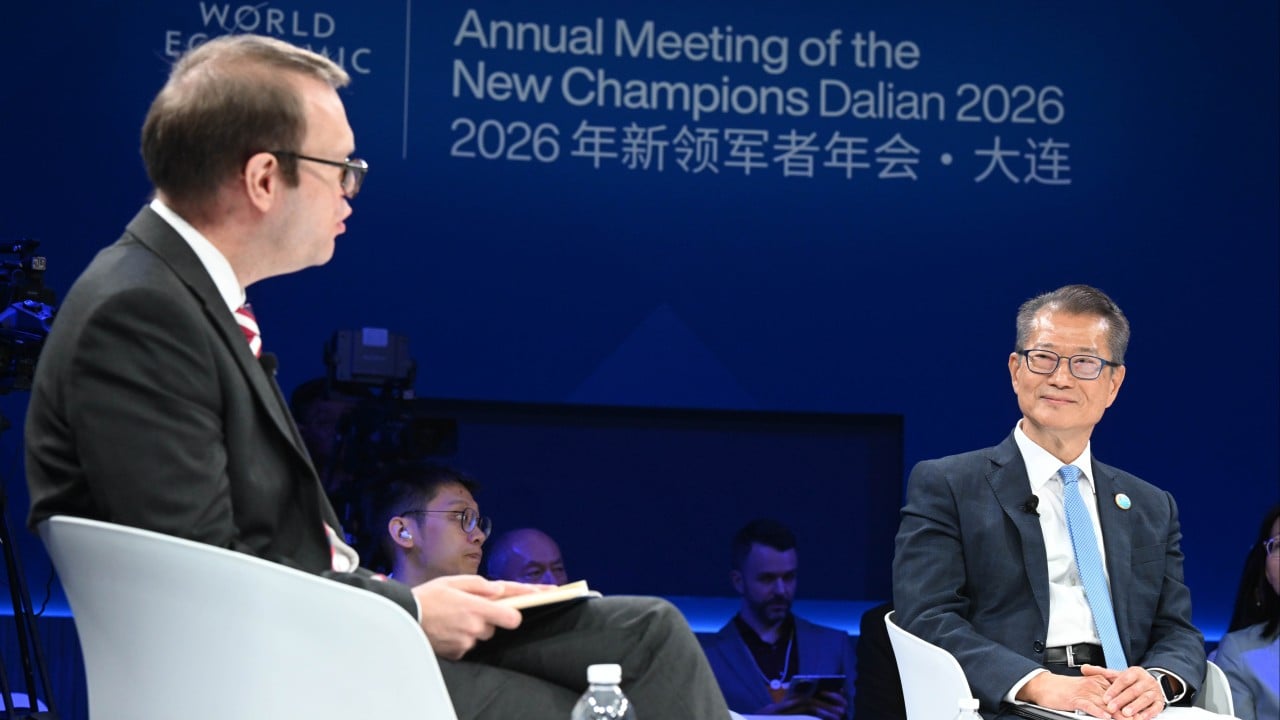
Hong Kong is uniquely positioned to add value to Beijing’s “China Opportunity 2.0” narrative, serving as a bridge and catalyst for the global expansion of mainland Chinese enterprises, the city’s finance chief has said. Financial Secretary Paul Chan Mo-po also named the Northern Metropolis megaproject in his weekly blog on Sunday as a destination that would empower Chinese firms to commercialise their research outcomes and deepen technological development of both sides. “In the face of the...
Narrative Intelligence Brief
This article was published by South China Morning Post, a source frequently categorized with a lean left bias based in Hong Kong. Our narrative intelligence engine continuously monitors coverage from this outlet to track framing, bias, and rhetorical patterns. Our initial algorithmic scan of this specific piece did not flag high-confidence rhetorical techniques, suggesting a generally straightforward reporting style or neutral framing. By understanding the editorial perspective of South China Morning Post, readers can better contextualize the information presented and compare it across our broader media matrix to find the real narrative.
More from South China Morning Post
June 28, 2026
Net result? How a Hong Kong dim sum restaurant went big on the World Cup
June 28, 2026
China fires up world’s biggest superconducting magnet for nuclear fusion project
June 28, 2026
Singapore’s Pritam Singh wins vote of no confidence by landslide
June 28, 2026
3 held as Hong Kong police seize HK$180m of suspected cocaine at typhoon shelter
June 28, 2026
France sees 1,000 excess deaths during record-breaking heatwave
Analysis Methodology
This narrative analysis was generated using the CoDataLab Global Intelligence Engine. Our proprietary AI scans thousands of cross-border sources to identify sentiment patterns, framing techniques, and potential media bias. While AI provides the data-driven foundation, our objective is to empower readers with additional context beyond the standard headline.The content displayed above is a structured summary designed for rapid information processing. For the full original report, please visit the source outlet.More Coverage
Discussion
"donald trump"
This nuclear message is built to stomp MAGA — and it isn't corruption

Trump says US hit Iranian targets after ‘ceasefire’ violation, warns ‘Iran will no longer exist’

Alexandria Ocasio-Cortez drops blistering warning on ‘political albatross’ Trump is facing