
Today in News History
On July 12, several notable moments in the history of News stand out. In 70, The armies of Titus attack the walls of Jerusalem after a six-month siege. Three days later they breach the walls, which enables the army to destroy the Second Temple. In 1918, The Imperial Japanese Navy battleship Kawachi blows up at Shunan, western Honshu, Japan, killing at least 621. In 1928, Alastair Burnet, English journalist (died 2012) was born. In 1961, Indian city Pune floods due to failure of the Khadakwasla and Panshet dams, killing at least two thousand people. In 1967, Riots begin in Newark, New Jersey. In 1969, Chantal Jouanno, French politician, French Minister of Youth Affairs and Sports was born. In 1973, A fire destroys the entire sixth floor of the National Personnel Records Center of the United States. In 1995, Chinese seismologists successfully predict the 1995 Myanmar-China earthquake, reducing the number of casualties to 11. In 2001, Space Shuttle program: Space Shuttle Atlantis is launched on mission STS-104, carrying the Quest Joint Airlock to the International Space Station. In 2007, U.S. Army Apache helicopters engage in airstrikes against armed insurgents in Baghdad, Iraq, where civilians are killed; footage from the cockpit is later leaked to the Internet. Together, these milestones provide historical context for today's news news and ongoing narratives.
Heat dome to bring dangerous temperatures. Here's how to stay safe
Narrative Analysis: Appeal to Fear
Narrative Intelligence Brief
This article was published by CBC News, a source frequently categorized with a lean left bias based in Canada. Our narrative intelligence engine continuously monitors coverage from this outlet to track framing, bias, and rhetorical patterns. In this specific piece, our systems detected the potential use of the "Appeal to Fear" technique. This narrative approach is often used to shape reader perception by highlighting specific emotional or rhetorical angles. By understanding the editorial perspective of CBC News, readers can better contextualize the information presented and compare it across our broader media matrix to find the real narrative.
More from CBC News
July 12, 2026
Several structures damaged after tornado passes through part of central Alberta hamlet
July 12, 2026
Conor McGregor suffers early knee injury in return, loses to Max Holloway at UFC 329
July 12, 2026
Alvarez's 112th-minute goal helps lift Argentina past Switzerland 3-1 and into World Cup semifinal
July 12, 2026
U.S. Republican Senator Lindsey Graham dead at 71
July 12, 2026
U.S. Republican Senator Lindsey Graham dies at 71
Reliability Insights
P
Technique: Appeal to Fear
System analysis detected use of specific narrative techniques in this piece.Analysis Methodology
This narrative analysis was generated using the CoDataLab Global Intelligence Engine. Our proprietary AI scans thousands of cross-border sources to identify sentiment patterns, framing techniques, and potential media bias. While AI provides the data-driven foundation, our objective is to empower readers with additional context beyond the standard headline.The content displayed above is a structured summary designed for rapid information processing. For the full original report, please visit the source outlet.More Coverage
Discussion
"wimbledon"
Back-To-Back! Jannik Sinner Keeps Hold of His Wimbledon Crown

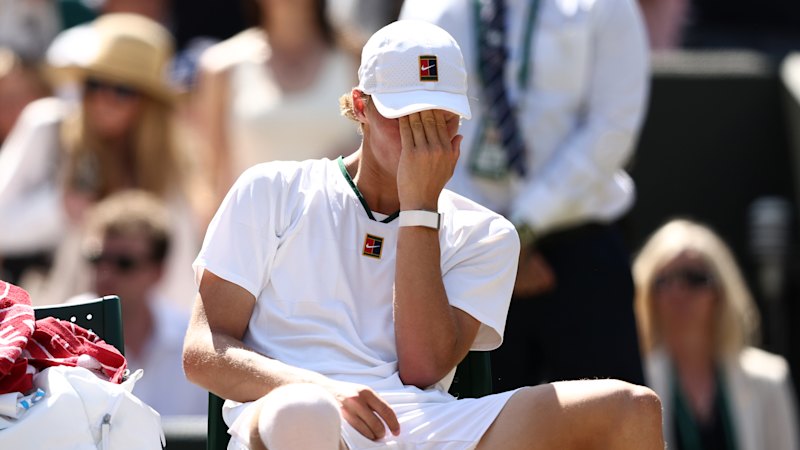
Heartbreak for Cruz Hewitt as teen loses Wimbledon boys’ final thriller
Jannik Sinner wins Wimbledon: Top seed beats Alexander Zverev in thrilling men's final to claim back-to-back titles

How other outlets are covering this story
Compare narratives across 6 related reports from 6 sources. Real Narrative News aggregates the coverage spectrum so you can see who emphasises what — bias tags reflect the outlet, not the story.
Coverage bias distribution
6 sources
Left 50%
Center 50%
Right 0%
CNET
· Jun 30, 2026
How to Keep Yourself Safe in an Extreme Heat Wave
Heat can be deadly. Here are ways to protect yourself during high temps.
Wired
· Jul 9, 2026
The 4 Best Home Air Conditioners to Buy Right Now
It's too hot. There, we said it. Protect your health and keep your home cool with one of these top-rated air conditioners.
Associated Press
· Jun 30, 2026
How to stay cool in a heat wave — even without air conditioning
Dangerous heat is gripping much of the U.S. and Europe. Here's what health experts recommend if you don't have air conditioning, from finding public cooling spaces to creating a "cool place" to sleep at home.
Al Jazeera
· Jul 6, 2026
Scorching heat worsens suffering in Gaza’s displacement camps
Scorching heat worsens suffering in Gaza's displacement camps
KSAT San Antonio
· Jun 30, 2026
How to stay cool in a heat wave even without air conditioning
Heat can be dangerous, but health experts say there are ways to manage the threat.
Fortune
· Jun 30, 2026
America’s getting a heat dome for July 4th — it won’t kill you at 2pm but might at 2am
Heat domes trap overnight temperatures too — and millions without air conditioning are facing this week's Eastern U.S. heat wave.
Topics:
Related coverage for "Heat dome to bring dangerous temperatures. Here's how to stay safe": CNET — How to Keep Yourself Safe in an Extreme Heat Wave. Wired — The 4 Best Home Air Conditioners to Buy Right Now. Associated Press — How to stay cool in a heat wave — even without air conditioning. Al Jazeera — Scorching heat worsens suffering in Gaza’s displacement camps. KSAT San Antonio — How to stay cool in a heat wave even without air conditioning. Fortune — America’s getting a heat dome for July 4th — it won’t kill you at 2pm but might at 2am