Today in News History
On June 28, several notable moments in the history of News stand out. In 202, Yuan Shao, Chinese warlord passed away. In 1194, Xiao Zong, Chinese emperor (born 1127) passed away. In 1884, Lamina Sankoh, Sierra Leonean banker and politician (died 1964) was born. In 1936, The Japanese puppet state of Mengjiang is formed in northern China. In 1940, Muhammad Yunus, Bangladeshi economist and academic, Nobel Prize laureate was born. In 1950, Korean War: Packed with its own refugees fleeing Seoul and leaving their 5th Division stranded, South Korean forces blow up the Hangang Bridge in an attempt to slow North Korea's offensive. The city falls later that day. In 1950, Korean War: The Korean People's Army kills almost a thousand doctors, nurses, inpatient civilians and wounded soldiers in the Seoul National University Hospital massacre. In 1967, Zhong Huandi, Chinese runner was born. In 1972, Ngô Bảo Châu, Vietnamese-French mathematician and academic was born. In 1991, Kang Min-hyuk, South Korean singer, drummer, and actor was born. Together, these milestones provide historical context for today's news news and ongoing narratives.
‘Heart of Kwun Tong’: hundreds say goodbye to old Yue Man Square in Hong Kong
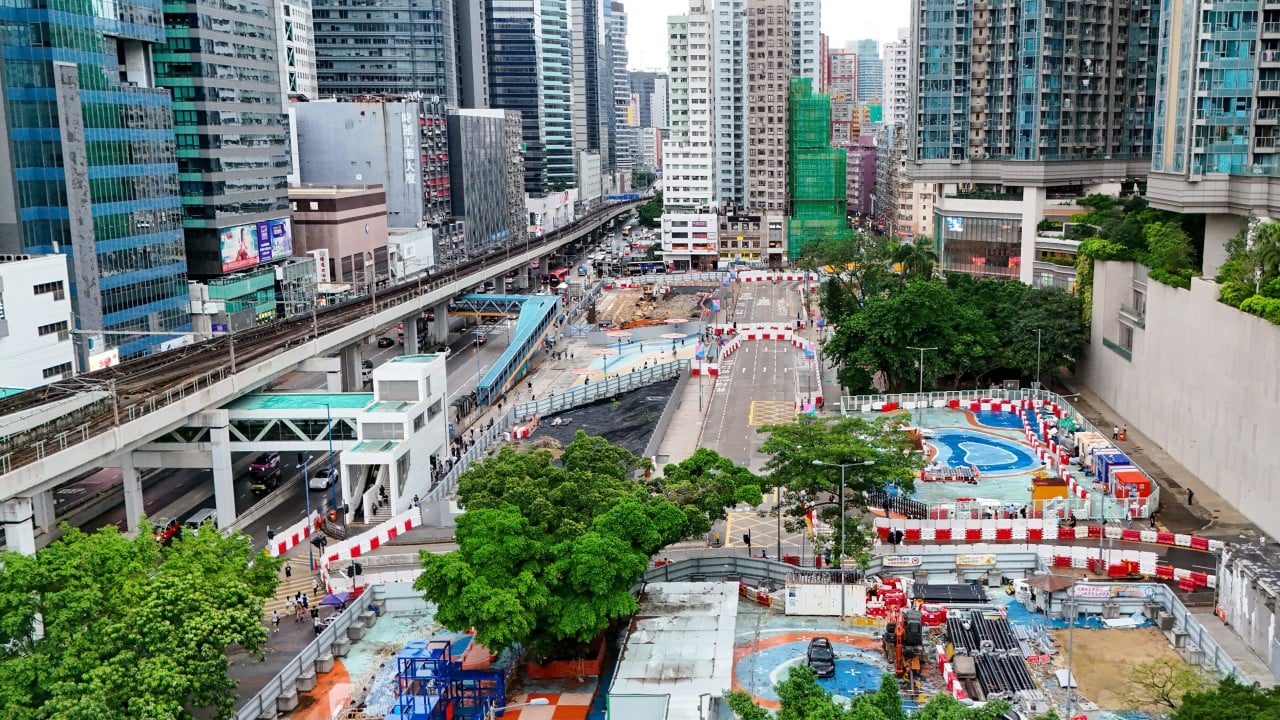
Hundreds of Hongkongers gathered in Kwun Tong overnight on Saturday to bid farewell to the streets around a historic town centre before they faded into history, with many stopping to capture one last photograph of a neighbourhood that had been part of their lives for decades. Families, couples and former residents queued beneath the Yue Man Square and Tung Yan Street signs, while others lingered at the busy junction to watch traffic pass through the last time before the roads were permanently...
Narrative Intelligence Brief
This article was published by South China Morning Post, a source frequently categorized with a lean left bias based in Hong Kong. Our narrative intelligence engine continuously monitors coverage from this outlet to track framing, bias, and rhetorical patterns. Our initial algorithmic scan of this specific piece did not flag high-confidence rhetorical techniques, suggesting a generally straightforward reporting style or neutral framing. By understanding the editorial perspective of South China Morning Post, readers can better contextualize the information presented and compare it across our broader media matrix to find the real narrative.
More from South China Morning Post
June 28, 2026
China isn’t Europe’s real problem
June 28, 2026
UK man arrested after woman’s body found in suitcase in Colombia
June 28, 2026
Saudi Aramco helicopter crash kills 14
June 28, 2026
‘I see hope’: how mindset shifts help Hong Kong cancer patients cope with diagnosis
June 28, 2026
China leads in GPS-style, reconnaissance and anti-satellite abilities, US report says
Analysis Methodology
This narrative analysis was generated using the CoDataLab Global Intelligence Engine. Our proprietary AI scans thousands of cross-border sources to identify sentiment patterns, framing techniques, and potential media bias. While AI provides the data-driven foundation, our objective is to empower readers with additional context beyond the standard headline.The content displayed above is a structured summary designed for rapid information processing. For the full original report, please visit the source outlet.More Coverage
Discussion
"cup"
Spain’s Nico Williams hits out at ‘completely unnecessary’ Uruguay tackle that injured him

LA reporter’s ignorant joke about Bosnia in the World Cup lands her in hot water

Iran’s World Cup Elimination Ends a Politically Charged Odyssey