
Today in News History
On June 26, several notable moments in the history of News stand out. In 1941, World War II: Soviet planes bomb Kassa, Hungary (now Košice, Slovakia), giving Hungary the impetus to declare war the next day. In 1944, World War II: San Marino, a neutral state, is mistakenly bombed by the RAF based on faulty information, leading to 35 civilian deaths. In 1948, Cold War: The first supply flights are made in response to the Berlin Blockade. In 1960, Madagascar gains its independence from France. In 1960, The former British Protectorate of British Somaliland gains its independence as Somaliland. In 1989, Howard Charles Green, Canadian lawyer and politician, 27th Canadian Minister of Public Works (born 1895) passed away. In 1991, Yugoslav Wars: The Yugoslav People's Army begins the Ten-Day War in Slovenia. In 2006, Mari Alkatiri, the first Prime Minister of East Timor, resigns after weeks of political unrest. In 2007, Pope Benedict XVI reinstates the traditional laws of papal election in which a successful candidate must receive two-thirds of the votes. In 2015, Five different terrorist attacks in France, Tunisia, Somalia, Kuwait, and Syria occurred on what was dubbed Bloody Friday by international media. Upwards of 750 people were either killed or injured in these uncoordinated attacks. Together, these milestones provide historical context for today's news news and ongoing narratives.
Governments are losing control of the systems they depend on
Narrative Analysis: Name Calling

When Russian forces invaded Ukraine, some of the most strategically important communications systems were operated not by a government, but by private companies. Through Starlink, millions of people gained access to a network that proved critical for military coordination, civilian connectivity, and national resilience. This flashpoint highlighted a broader transformation that extends far beyond a []
Narrative Intelligence Brief
This article was published by Washington Examiner, a source frequently categorized with a lean right bias based in United States of America. Our narrative intelligence engine continuously monitors coverage from this outlet to track framing, bias, and rhetorical patterns. In this specific piece, our systems detected the potential use of the "Name Calling" technique. This narrative approach is often used to shape reader perception by highlighting specific emotional or rhetorical angles. By understanding the editorial perspective of Washington Examiner, readers can better contextualize the information presented and compare it across our broader media matrix to find the real narrative.
More from Washington Examiner
June 26, 2026
‘All men are created equal’ turns 250
June 26, 2026
John Bolton pleads guilty to one count of mishandling classified information
June 26, 2026
‘Why did they fight?’ The Korean War and an earlier time in American life
June 26, 2026
Thomas Massie complains GOP is ‘wasting’ control of Congress and White House with focus on Save America Act
June 26, 2026
California’s billionaire tax proposal heads to voters as Newsom pushes national wealth tax
Reliability Insights
P
Technique: Name Calling
System analysis detected use of specific narrative techniques in this piece.Analysis Methodology
This narrative analysis was generated using the CoDataLab Global Intelligence Engine. Our proprietary AI scans thousands of cross-border sources to identify sentiment patterns, framing techniques, and potential media bias. While AI provides the data-driven foundation, our objective is to empower readers with additional context beyond the standard headline.The content displayed above is a structured summary designed for rapid information processing. For the full original report, please visit the source outlet.More Coverage
Discussion
"venezuela"
More than 30,000 missing and 188 dead after Venezuela’s worst earthquake in a century
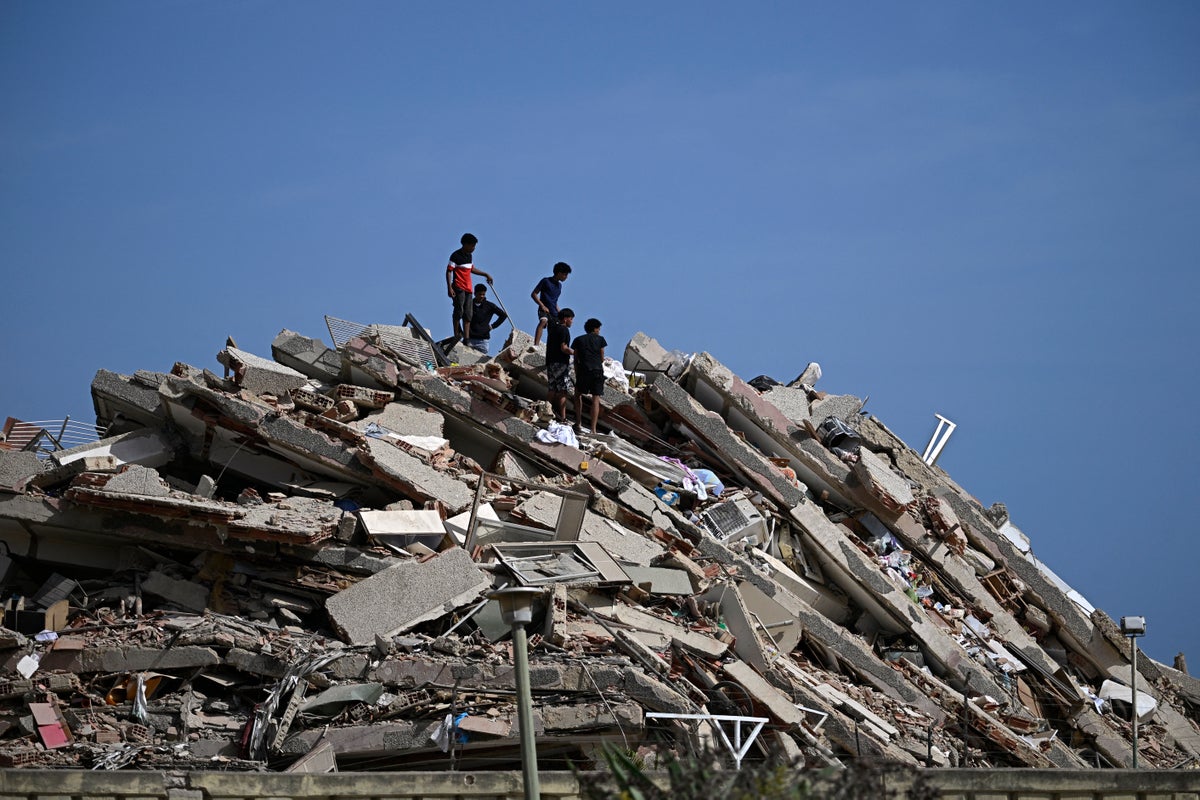
Forty seconds of chaos that wrecked Venezuela’s comeback

Desperate Search For Quake Survivors in Venezuela’s La Guaira
