Today in News History
On July 8, several notable moments in the history of News stand out. In 1909, Ike Petersen, American football player (died 1995) was born. In 1917, J. F. Powers, American novelist and short story writer (died 1999) was born. In 1921, John Money, New Zealand psychologist and sexologist, known for his research on gender identity, and responsible for controversial involuntary sex reassignment of David Reimer (died 2006) was born. In 1961, Ces Drilon, Filipino journalist was born. In 1972, Ghassan Kanafani, Palestinian writer and politician (born 1936) passed away. In 1982, A failed assassination attempt against Iraqi president Saddam Hussein results in the Dujail Massacre over the next several months. In 1994, Kim Jong Il begins to assume supreme leadership of North Korea upon the death of his father, Kim Il Sung. In 1994, Kim Il Sung, North Korean commander and politician, President of North Korea (born 1912) passed away. In 1997, Bryce Love, American football player was born. In 2014, Israel launches an offensive on Gaza amid rising tensions following the kidnapping and murder of three Israeli teenagers. Together, these milestones provide historical context for today's news news and ongoing narratives.
Gay Man Speaks Out After Chilling Photo Captured Him Surrounded By White Nationalists
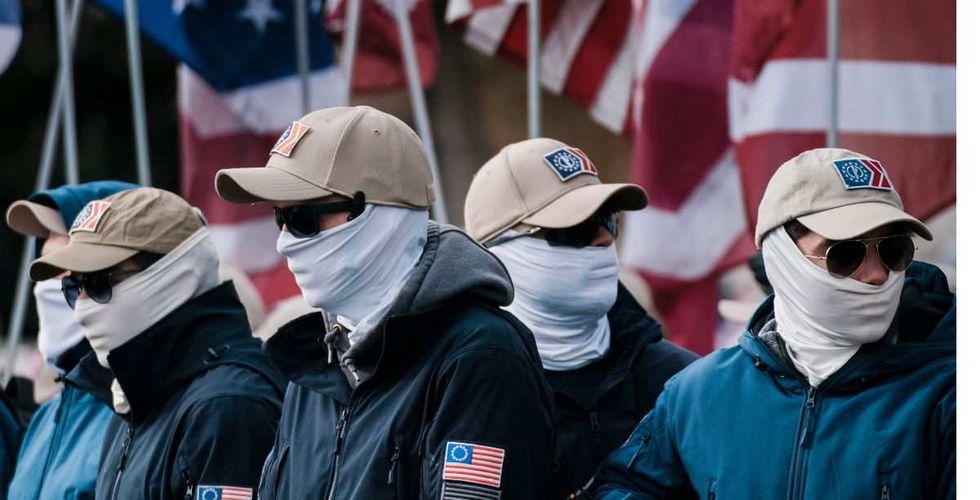
As Americans gathered in Washington, D.C., to celebrate the Fourth of July holiday weekend, Roswell Encina found himself witnessing a very different vision of the country.The gay Filipino American civic leader and president and CEO of the US Capitol Historical Society was photographed aboard a Metro train surrounded by masked members of Patriot Front after the white nationalist group marched through the capital, chanting, Reclaim America.The striking image, captured by Getty Images photographer Finn Gomez, quickly spread online. Patriot Front, described by the Southern Poverty Law Center as a white nationalist hate group, emerged from Vanguard America after the deadly 2017 Unite the Right rally in Charlottesville.Reflecting on the viral image, Encina wrote:“I came to this country as an infant and became a U.S. citizen. So sitting there, on the Fourth of July, I couldn’t help but think about the promise of America and the work still required to protect it.”Encina's reaction was shaped in part by his own story. After coming to the United States from the Philippines as an infant, he became a U.S. citizen and grew up in a military family after his father served in the U.S. Navy. In many ways, his journey reflects a version of the American dream.That's what made the moment feel especially jarring.Rather than focus on the encounter itself, Encina used the viral photograph to reflect on the country's complicated history and the ongoing struggle over who gets to belong.He wrote:“Our history has never been simple. It is a story of extraordinary achievement and expanding freedom, but also of exclusion, prejudice, and people determined to decide who belongs.”His concerns echo a broader trend. According to the Sandra Day O'Connor Institute, civic education has steadily declined in American schools since the 1960s, receiving less emphasis than it once did.Encina argued that understanding that history is part of moving the country closer to its founding ideals: “Yet generation after generation, Americans have pushed our nation closer to its founding ideals. The words 'all are created equal' were not a description of who we were in 1776. They were a challenge to every generation that followed.”The message eventually returned to a theme that appeared throughout his post: civic engagement.Emphasizing the role of education, Encina added:“Moments like this remind me why civic education matters. Democracy is strongest when we understand it, participate in it, and reject the hatred that threatens it. That’s work worth doing every day.”Encina later said he identified the group from their patches and texted friends so someone knew where he was.You can view the post here: See on Instagram Although Encina appeared composed in the viral photograph, he later told NBC News that he was terrified during the encounter because he had no way of knowing the group's intentions.That experience ultimately reinforced his belief that democracy depends on an informed and engaged public:One thing I realized is that democracy is very fragile ... We need to stay engaged with history and civics and education. Doris Kearns Goodwin likes to say that there is hope in history. I really believe that's how we can get through this.Readers took the conversation to social media: @marybubala/Instagram @dswartz/Instagram @sabrinastew/Instagram @noraydahumphrey/Instagram @truthteller999999/Instagram @eva_gannett/Instagram @interesting_magician/Instagram @debrobertsabc/Instagram @anntracyart/Instagram @jbrownedianis/Instagram @lynnielovestahoe/Instagram @ninaseavey/InstagramEncina was not the only person whose image became emblematic of the holiday weekend.A Reuters photograph showing Bernita Bowlding seated on a Metro train surrounded by masked Patriot Front members also spread widely online. Her brother, Paul Bowlding, later expressed concern about the attention it brought.View the photo below: See on Instagram Taken together, the photographs captured two Americans from very different backgrounds—a gay Filipino American civic leader and a Black woman—sitting quietly as masked white nationalists filled the train around them.All of it unfolded during a weekend dedicated to celebrating an imperfect nation still striving toward its highest ideals. Neither image showed a confrontation. Yet both became powerful symbols of a country caught between competing visions of itself, and the ongoing struggle over who belongs within it.
Narrative Intelligence Brief
This article was published by Comic Sands, a source frequently categorized with a left bias based in United States of America. Our narrative intelligence engine continuously monitors coverage from this outlet to track framing, bias, and rhetorical patterns. Our initial algorithmic scan of this specific piece did not flag high-confidence rhetorical techniques, suggesting a generally straightforward reporting style or neutral framing. By understanding the editorial perspective of Comic Sands, readers can better contextualize the information presented and compare it across our broader media matrix to find the real narrative.
More from Comic Sands
July 8, 2026
Gabby Giffords Had The Perfect Response After Laura Loomer Tried To Accuse Mark Kelly Of 'Getting Handsy' With Another Woman
July 8, 2026
Trump Sparks Outrage After Saying He Knows Migrants Are 'Trouble' Just By 'Looking At Them'—And Everyone's Thinking The Same Thing
July 8, 2026
John Oliver Finally Gets His Wish To Be Slapped on 'General Hospital' Cameo—And Fans Are Obsessed
July 8, 2026
Gavin Newsom Trolls 'Wandering' Trump With Joke About Turkey's President Being His 'Caretaker' On Recent Trip
July 8, 2026
Frankie Grande Shares Gnarly Injury Photos After Prop Accident Causes Concussion During Broadway Show
Analysis Methodology
This narrative analysis was generated using the CoDataLab Global Intelligence Engine. Our proprietary AI scans thousands of cross-border sources to identify sentiment patterns, framing techniques, and potential media bias. While AI provides the data-driven foundation, our objective is to empower readers with additional context beyond the standard headline.The content displayed above is a structured summary designed for rapid information processing. For the full original report, please visit the source outlet.More Coverage
Discussion
"cup"
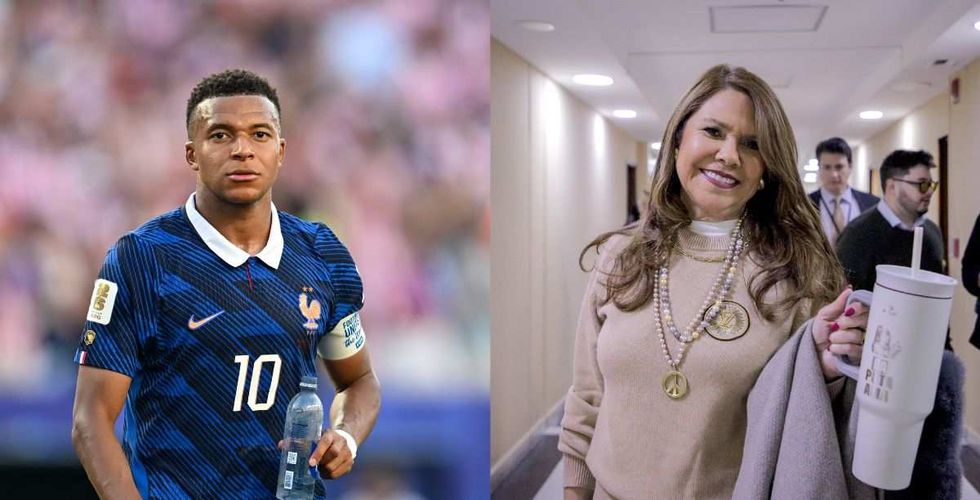
French Soccer Star Kylian Mbappé Perfectly Rips Paraguayan Senator After Her Vile Racist Post Attacking Him
Dana White Stars In History’s Worst Truck Ad
Egypt press FIFA complaint against referee after World Cup loss