
Today in News History
On June 19, several notable moments in the history of News stand out. In 1933, Viktor Patsayev, Kazakh engineer and astronaut (died 1971) was born. In 1947, Pan Am Flight 121 crashes in the Syrian Desert near Mayadin, Syria, killing 15 and injuring 21. In 1951, Ayman al-Zawahiri, Egyptian terrorist (died 2022) was born. In 1972, Ilya Markov, Russian race walker was born. In 1977, Ali Shariati, Iranian sociologist and philosopher (born 1933) passed away. In 1986, Lázaro Borges, Cuban pole vaulter was born. In 1990, George Addes, American trade union leader, co-founded United Automobile Workers (born 1911) passed away. In 2007, Ze'ev Schiff, Israeli journalist and author (born 1932) passed away. In 2007, The al-Khilani Mosque bombing in Baghdad leaves 78 people dead and another 218 injured. In 2012, WikiLeaks founder Julian Assange requests asylum in London's Ecuadorian Embassy for fear of extradition to the US after publication of previously classified documents including footage of civilian killings by the US army. Together, these milestones provide historical context for today's news news and ongoing narratives.
G7 rare earths, US-Iran peace deal, Summer Davos
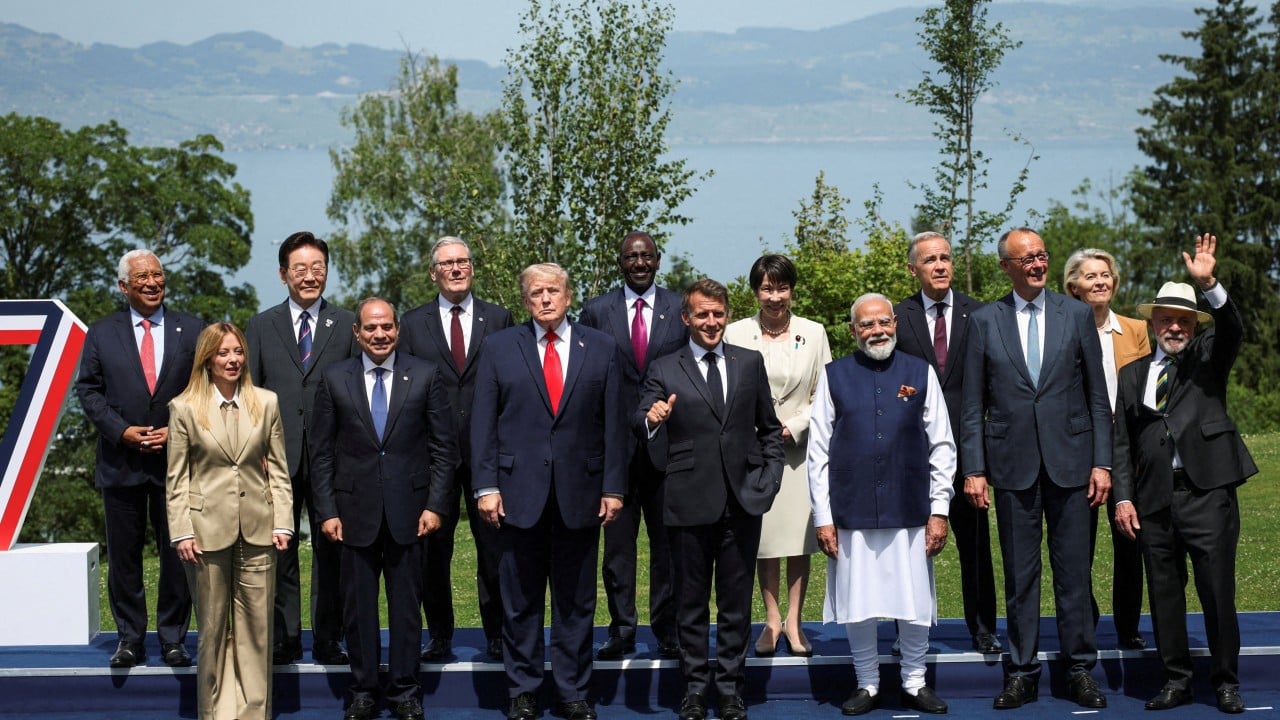
The Group of Seven nations this week agreed to pare their reliance on China for vital raw materials, while European leaders struggled to reach a consensus on how to respond to a flood of low-cost Chinese imports. No single country should supply more than 60 per cent of the G7 nations’ rare earths and permanent magnets by 2030, their leaders agreed during a summit in Evian, France. The nations will subsequently aim for a 50 per cent limit as quickly as possible. Targets for other critical...
Narrative Intelligence Brief
This article was published by South China Morning Post, a source frequently categorized with a lean left bias based in Hong Kong. Our narrative intelligence engine continuously monitors coverage from this outlet to track framing, bias, and rhetorical patterns. Our initial algorithmic scan of this specific piece did not flag high-confidence rhetorical techniques, suggesting a generally straightforward reporting style or neutral framing. By understanding the editorial perspective of South China Morning Post, readers can better contextualize the information presented and compare it across our broader media matrix to find the real narrative.
More from South China Morning Post
June 19, 2026
University town framework unlikely to be unveiled before five-year plan released
June 19, 2026
Ukrainian, Romanian jailed in UK over Starmer arson plot ordered by mystery Russian
June 19, 2026
Myanmar’s Aung San Suu Kyi at 81: son pays tribute to mother’s spirit that ‘cannot be caged’
June 19, 2026
China’s private-jet market finding level flight path after sell-offs: source
June 19, 2026
AI has been known to hallucinate. So have financial markets
Analysis Methodology
This narrative analysis was generated using the CoDataLab Global Intelligence Engine. Our proprietary AI scans thousands of cross-border sources to identify sentiment patterns, framing techniques, and potential media bias. While AI provides the data-driven foundation, our objective is to empower readers with additional context beyond the standard headline.The content displayed above is a structured summary designed for rapid information processing. For the full original report, please visit the source outlet.More Coverage
Discussion
"die"
11 soldiers and 2 civilians dead as gunmen attack airport in Niger’s capital

Mine pit tragedy: Bosome Freho Assembly orders owner’s arrest after woman, child die

‘Evil monster’ will die in prison for sex abuse and murder of adopted baby
