Today in News History
On June 17, several notable moments in the history of News stand out. In 1958, Sam Hamad, Syrian-Canadian academic and politician was born. In 1966, Mohammed Ghazy Al-Akhras, Iraqi journalist and author was born. In 1969, Paul Tergat, Kenyan runner was born. In 1971, U.S. President Richard Nixon in a televised press conference called drug abuse "America's public enemy number one", starting the War on drugs. In 1984, Si Tianfeng, Chinese race walker was born. In 1985, Space Shuttle program: STS-51-G mission: Space Shuttle Discovery launches carrying Sultan bin Salman bin Abdulaziz Al Saud, the first Arab and first Muslim in space, as a payload specialist. In 1992, A "joint understanding" agreement on arms reduction is signed by U.S. President George Bush and Russian President Boris Yeltsin (this would be later codified in START II). In 2012, Rodney King, American victim of police brutality (born 1965) passed away. In 2013, Michael Baigent, New Zealand-English theorist and author (born 1948) passed away. In 2020, Jean Kennedy Smith, American activist, humanitarian, author and diplomat (United States Ambassador to Ireland, 1993-1998) (born 1928) passed away. Together, these milestones provide historical context for today's news news and ongoing narratives.
G7 leaders pledge stronger action against migrant smuggling, human trafficking networks
Narrative Analysis: Bandwagon
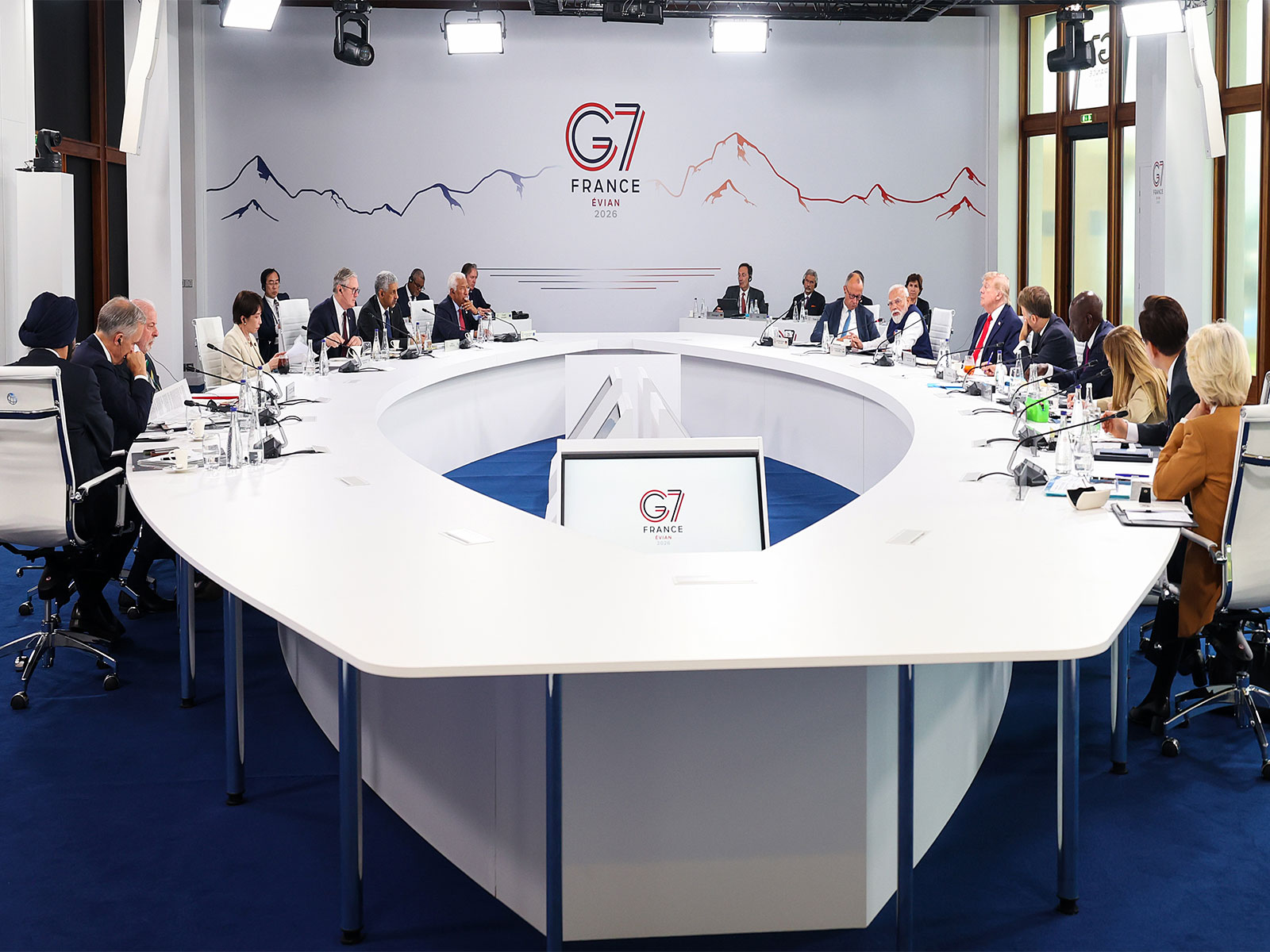
G7 leaders on Wednesday pledged stronger international action against migrant smuggling and human trafficking networks, reaffirming their commitment to dismantling organised criminal groups that profit from illegal migration and related cross-border crimes.
Narrative Intelligence Brief
This article was published by The Tribune, a source frequently categorized with a center bias based in India. Our narrative intelligence engine continuously monitors coverage from this outlet to track framing, bias, and rhetorical patterns. In this specific piece, our systems detected the potential use of the "Bandwagon" technique. This narrative approach is often used to shape reader perception by highlighting specific emotional or rhetorical angles. By understanding the editorial perspective of The Tribune, readers can better contextualize the information presented and compare it across our broader media matrix to find the real narrative.
More from The Tribune
June 17, 2026
Vance outlines three pillars of Iran peace framework: No nuclear weapon, open Hormuz, conditional relief
June 17, 2026
India-South Korea eye expanding ties on economic, cultural, social fronts
June 17, 2026
US drops ‘Indian Ocean’ reference from name of largest military command
June 17, 2026
US Indo-Pacific Command (USINDOPACOM) restores name to US Pacific Command (USPACOM)
June 17, 2026
Strait of Hormuz belongs to Iran, its management to remain our responsibility: First Vice President Mohammad Reza Aref