
Today in News History
On July 12, several notable moments in the history of News stand out. In 1789, In response to the dismissal of the French finance minister Jacques Necker, the radical journalist Camille Desmoulins gives a speech which results in the storming of the Bastille two days later. In 1909, Herbert Zim, American naturalist, author, and educator (died 1994) was born. In 1948, Elias Khoury, Lebanese intellectual, playwright and novelist (died 2024) was born. In 1961, Indian city Pune floods due to failure of the Khadakwasla and Panshet dams, killing at least two thousand people. In 1995, Chinese seismologists successfully predict the 1995 Myanmar-China earthquake, reducing the number of casualties to 11. In 2006, The 2006 Lebanon War begins. In 2010, Pius Njawé, Cameroonian journalist (born 1957) passed away. In 2012, A tank truck explosion kills more than 100 people in Okobie, Nigeria. In 2012, Syrian Civil War: Government forces target the homes of rebels and activists in Tremseh and kill anywhere between 68 and 150 people. In 2015, Chenjerai Hove, Zimbabwean journalist, author, and poet (born 1956) passed away. Together, these milestones provide historical context for today's news news and ongoing narratives.
From Tragedy to Triumph: Ghana’s path to flood resilience (A Story of Lessons Learned, Global Inspiration, and a Collective Commitment to a Better Future)
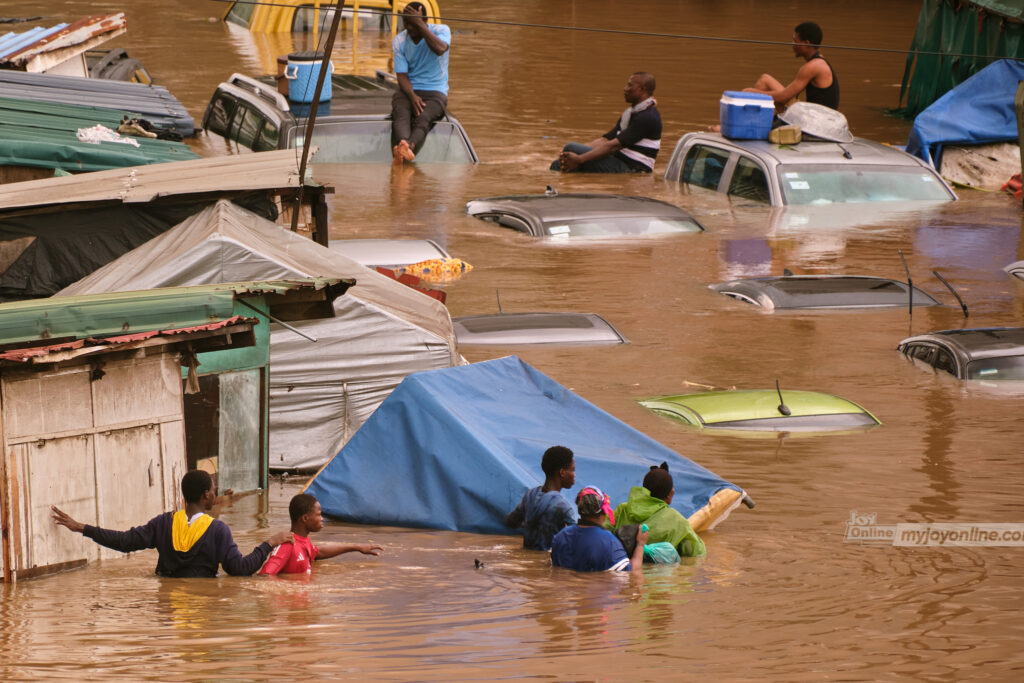
The floods of June 2026 displaced thousands, destroyed property, and claimed lives. They were not a natural disaster they were a human-made one. But here is the hopeful truth: what humans have broken, humans can fix. The path forward is clear. The tools are available. The examples exist. What remains is the will the collective will of a nation that refuses to accept tragedy as inevitable that demands accountability from its leaders, and that commits to building a future where no Ghanaian has to climb a tree or a rooftop to escape rising waters.
Narrative Intelligence Brief
This article was published by MyJoyOnline, a source frequently categorized with a center bias based in Ghana. Our narrative intelligence engine continuously monitors coverage from this outlet to track framing, bias, and rhetorical patterns. Our initial algorithmic scan of this specific piece did not flag high-confidence rhetorical techniques, suggesting a generally straightforward reporting style or neutral framing. By understanding the editorial perspective of MyJoyOnline, readers can better contextualize the information presented and compare it across our broader media matrix to find the real narrative.
More from MyJoyOnline
July 12, 2026
Fourth-Time Candidate Eugene Boakye Danquah wins Atwima Nwabiagya South NPP Chairmanship
July 12, 2026
ASEC2026: Push for African-led security solutions through innovation and inclusion – Major General Kotia
July 12, 2026
NPP alleges arrest of Dennis Miracles Aboagye by EOCO, demands his immediate release
July 12, 2026
T-bills auction: Government exceeds target by 77%; but to pay more for one-year bill at maturity
July 12, 2026
A competent government leads with systems, not brooms
Analysis Methodology
This narrative analysis was generated using the CoDataLab Global Intelligence Engine. Our proprietary AI scans thousands of cross-border sources to identify sentiment patterns, framing techniques, and potential media bias. While AI provides the data-driven foundation, our objective is to empower readers with additional context beyond the standard headline.The content displayed above is a structured summary designed for rapid information processing. For the full original report, please visit the source outlet.More Coverage
Discussion
"wimbledon"
Back-To-Back! Jannik Sinner Keeps Hold of His Wimbledon Crown

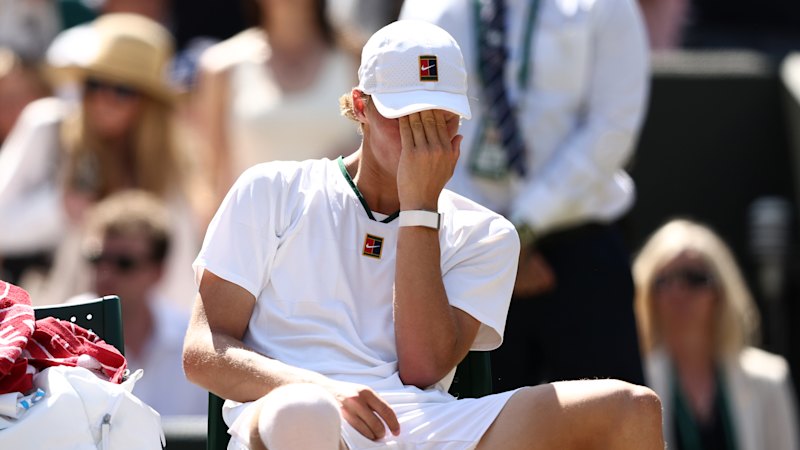
Heartbreak for Cruz Hewitt as teen loses Wimbledon boys’ final thriller
Jannik Sinner wins Wimbledon: Top seed beats Alexander Zverev in thrilling men's final to claim back-to-back titles

How other outlets are covering this story
Compare narratives across 2 related reports from 2 sources. Real Narrative News aggregates the coverage spectrum so you can see who emphasises what — bias tags reflect the outlet, not the story.
Coverage bias distribution
2 sources
Left 0%
Center 100%
Right 0%
MyJoyOnline
· Jul 3, 2026
Accountability or submergence: Why Ghana’s flooding crisis demands radical behavioural and legal shifts
Every rainy season, the narrative remains tragically identical. Streets transform into raging rivers, properties worth millions of Cedis are destroyed, and precious lives are cut short. As first responders at the Ghana National Fire Service, our personnel are routinely deployed to rescue citizens trapped by rising waters. Yet, as I have consistently maintained across numerous media engagements, the devastating floods we witness today are largely not acts of God—they are the direct consequences of human indiscretion.
Ghanaian Times
· Jul 8, 2026
A national call to compassion, accountability, and lasting solutions after the June 29, 2026 flood disaster
On Monday, June 29, 2026, Ghana, particularly the Greater Accra Region and parts of southern Ghana, experienced one of the most devastating rainstorms in recent years. What began as a heavy downpour quickly turned into a national tragedy, leaving behind a trail of destruction that has disrupted thousands of lives and livelihoods. Families watched helplessly The post A national call to compassion, accountability, and lasting solutions after the June 29, 2026 flood disaster appeared first on Ghanaian Times.
Topics:
Related coverage for "From Tragedy to Triumph: Ghana’s path to flood resilience (A Story of Lessons Learned, Global Inspiration, and a Collective Commitment to a Better Future)": MyJoyOnline — Accountability or submergence: Why Ghana’s flooding crisis demands radical behavioural and legal shifts. Ghanaian Times — A national call to compassion, accountability, and lasting solutions after the June 29, 2026 flood disaster