Today in News History
On July 7, several notable moments in the history of News stand out. In 1848, Francisco de Paula Rodrigues Alves, Brazilian politician, 5th President of Brazil (died 1919) was born. In 1917, Fidel Sánchez Hernández, Salvadoran general and politician, President of El Salvador (died 2003) was born. In 1941, John Fru Ndi, Cameroonian politician (died 2023) was born. In 1978, The Solomon Islands becomes independent from the United Kingdom. In 1985, Marc Stein, German footballer was born. In 1990, Cazuza, Brazilian singer and songwriter (born 1958) passed away. In 2012, Ronaldo Cunha Lima, Brazilian poet and politician (born 1936) passed away. In 2019, The United States women's national soccer team defeated the Netherlands 2-0 at the 2019 FIFA Women's World Cup Final in Lyon, France. In 2021, Jovenel Moïse, Haitian entrepreneur and politician, President of Haiti (born 1968) passed away. In 2022, Boris Johnson announces his resignation as leader of the Conservative Party following days of pressure from the Members of Parliament (MPs) during the July 2022 United Kingdom government crisis. Together, these milestones provide historical context for today's news news and ongoing narratives.
FIFA World Cup 2026 as it happened: Belgium eliminate the United States with thumping 4-1 victory; Spain end Ronaldo’s World Cup career with 1-0 victory against Portugal
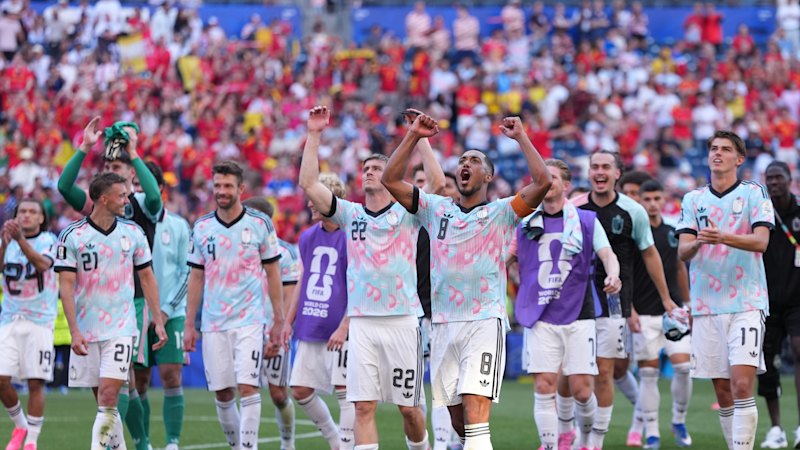
No host nations remain in the 2026 World Cup after the United States suffered a shocking 4-1 loss to Belgium, who will now play Spain in the quarter-finals after they defeated Portugal 1-0, ending Cristiano Ronaldo’s World Cup career.
Narrative Intelligence Brief
This article was published by Brisbane Times, a source frequently categorized with a center bias based in Australia. Our narrative intelligence engine continuously monitors coverage from this outlet to track framing, bias, and rhetorical patterns. Our initial algorithmic scan of this specific piece did not flag high-confidence rhetorical techniques, suggesting a generally straightforward reporting style or neutral framing. By understanding the editorial perspective of Brisbane Times, readers can better contextualize the information presented and compare it across our broader media matrix to find the real narrative.
More from Brisbane Times
July 7, 2026
Supergirl is tanking at the box office ... but it isn’t the heroine’s fault
July 7, 2026
‘Still at war with their bodies’: How the anti-ageing obsession is hurting older women
July 7, 2026
Finally, we see the Dior wedding dress. But is it Taylor Swift’s?
July 7, 2026
FIFA’s history makes it a perfect receptacle for phone calls from a ‘boss man’
July 7, 2026
My agent and I are no longer talking. The problem with selling a house in these crazy times
Analysis Methodology
This narrative analysis was generated using the CoDataLab Global Intelligence Engine. Our proprietary AI scans thousands of cross-border sources to identify sentiment patterns, framing techniques, and potential media bias. While AI provides the data-driven foundation, our objective is to empower readers with additional context beyond the standard headline.The content displayed above is a structured summary designed for rapid information processing. For the full original report, please visit the source outlet.More Coverage
Discussion
"donald trump"
Newsom Trolls Trump With Brutal ‘Self-Awareness’ Jab

Zelenskyy says ‘battle in the sky’ will decide outcome of war with Russia

A Sharp Response: Tehran Slams White House Following Trump's Latest Threats of War