Today in News History
On June 21, several notable moments in the history of News stand out. In 1622, The Battle of Höchst takes place during the Thirty Years' War. In 1787, Oliver Ellsworth moves at the Federal Convention to call the government the 'United States'. In 1840, Samuel Morse receives the patent for the telegraph. In 1870, Jules de Goncourt, French historian and author (born 1830) passed away. In 1941, Ulf Merbold, German physicist and astronaut was born. In 1945, The United States Secretary of State approves the transfer of Wernher von Braun and his team of Nazi rocket scientists to the U.S. under Operation Paperclip. In 1969, Misha Verbitsky, Russian mathematician and academic was born. In 1972, Watergate scandal: An .mw-parser-output .frac{white-space:nowrap}.mw-parser-output .frac .num,.mw-parser-output .frac .den{font-size:80%;line-height:0;vertical-align:super}.mw-parser-output .frac .den{vertical-align:sub}.mw-parser-output .sr-only{border:0;clip:rect(0,0,0,0);clip-path:polygon(0px 0px,0px 0px,0px 0px);height:1px;margin:-1px;overflow:hidden;padding:0;position:absolute;width:1px}18+1⁄2-minute gap appears in the tape recording of the conversations between U.S. President Richard Nixon and his advisers regarding the recent arrests of his operatives while breaking into the Watergate complex. In 2005, Larry Collins, American journalist, historian, and author (born 1929) passed away. In 2012, Andrew Sarris, American critic (born 1928) passed away. Together, these milestones provide historical context for today's news news and ongoing narratives.
Fed's Warsh Says He Doesn't Think Submitting Dots Is Helpful
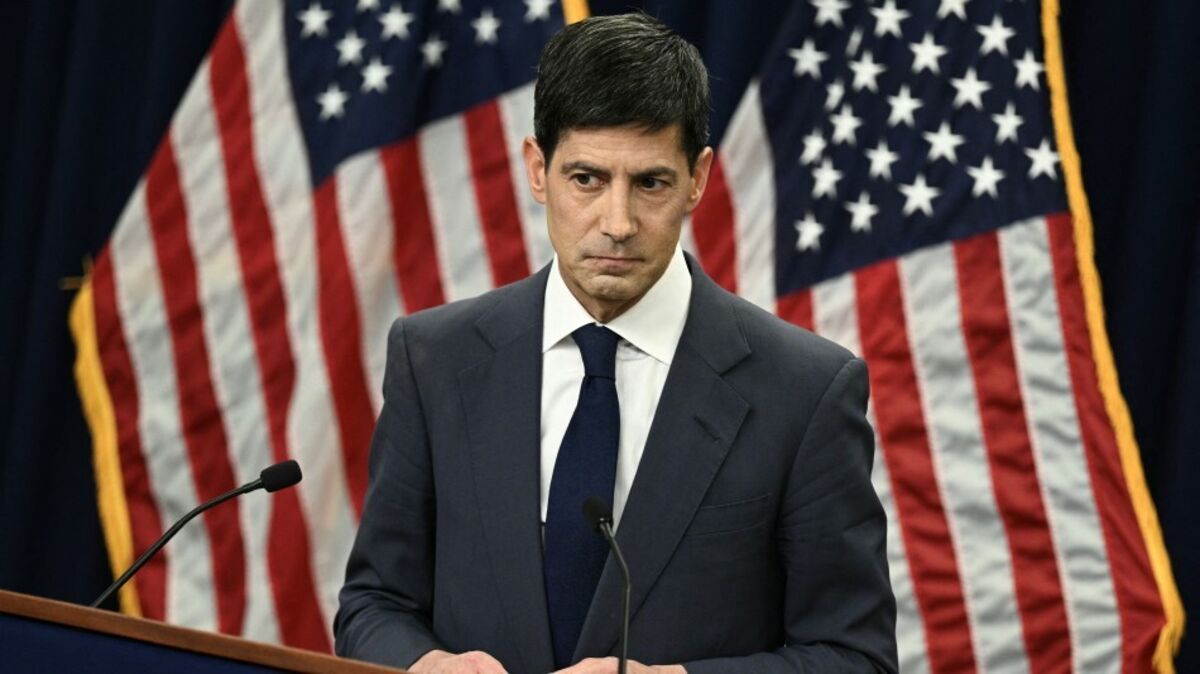
Federal Reserve Chair Kevin Warsh says his colleagues have been very open about changes during a news conference after the Fed decided to leave rate unchanged. (Source: Bloomberg)
Narrative Intelligence Brief
This article was published by Bloomberg, a source frequently categorized with a lean left bias based in United States of America. Our narrative intelligence engine continuously monitors coverage from this outlet to track framing, bias, and rhetorical patterns. Our initial algorithmic scan of this specific piece did not flag high-confidence rhetorical techniques, suggesting a generally straightforward reporting style or neutral framing. By understanding the editorial perspective of Bloomberg, readers can better contextualize the information presented and compare it across our broader media matrix to find the real narrative.
More from Bloomberg
June 21, 2026
Swiss Voters Set to Reject Stricter Neutrality, Early Poll Shows
June 20, 2026
Brazil’s Lula Holds Lead Against Bolsonaro After Bank Scandal
June 21, 2026
A Stock Trader’s Guide to Navigating a Rare ‘Super El Niño’
June 20, 2026
Fed’s Favorite Gauge Is Seen Showing Faster Inflation
June 20, 2026
Pointed News Quiz | Bonds, Streaming, Yogurt
Analysis Methodology
This narrative analysis was generated using the CoDataLab Global Intelligence Engine. Our proprietary AI scans thousands of cross-border sources to identify sentiment patterns, framing techniques, and potential media bias. While AI provides the data-driven foundation, our objective is to empower readers with additional context beyond the standard headline.The content displayed above is a structured summary designed for rapid information processing. For the full original report, please visit the source outlet.More Coverage
Discussion
"trump"
Trump Sycophant’s Devastating True Opinion of Boss Exposed

Rahm Emanuel says Trump ‘got schooled’ by Iran in bad ceasefire deal

Trump lets loose new details on Reflecting Pool damage: ‘Many people have been arrested’