Today in News History
On July 8, several notable moments in the history of News stand out. In 1730, An estimated magnitude 8.7 earthquake causes a tsunami that damages more than 1,000 km (620 mi) of Chile's coastline. In 1864, Ikedaya Incident: The Choshu Han shishi's planned Shinsengumi sabotage on Kyoto, Japan at Ikedaya. In 1908, V. K. R. Varadaraja Rao, Indian economist, politician, professor and educator (died 1991) was born. In 1914, Jyoti Basu, Indian politician, 6th Chief Minister of West Bengal (died 2010) was born. In 1947, Reports are broadcast that a UFO crash-landed in Roswell, New Mexico in what became known as the Roswell UFO incident. In 1949, Y. S. Rajasekhara Reddy, Indian politician, 14th Chief Minister of Andhra Pradesh (died 2009) was born. In 1988, The Island Express train travelling from Bangalore to Kanyakumari derails on the Peruman bridge and falls into Ashtamudi Lake, Kerala in India killing 105 passengers and injuring over 200 more. In 2007, Chandra Shekhar, Indian lawyer and politician, 9th Prime Minister of India (born 1927) passed away. In 2013, Sundri Uttamchandani, Indian author (born 1924) passed away. In 2014, Israel launches an offensive on Gaza amid rising tensions following the kidnapping and murder of three Israeli teenagers. Together, these milestones provide historical context for today's news news and ongoing narratives.
Explained: Why Landslides Keep Devastating India's Most Vulnerable Regions
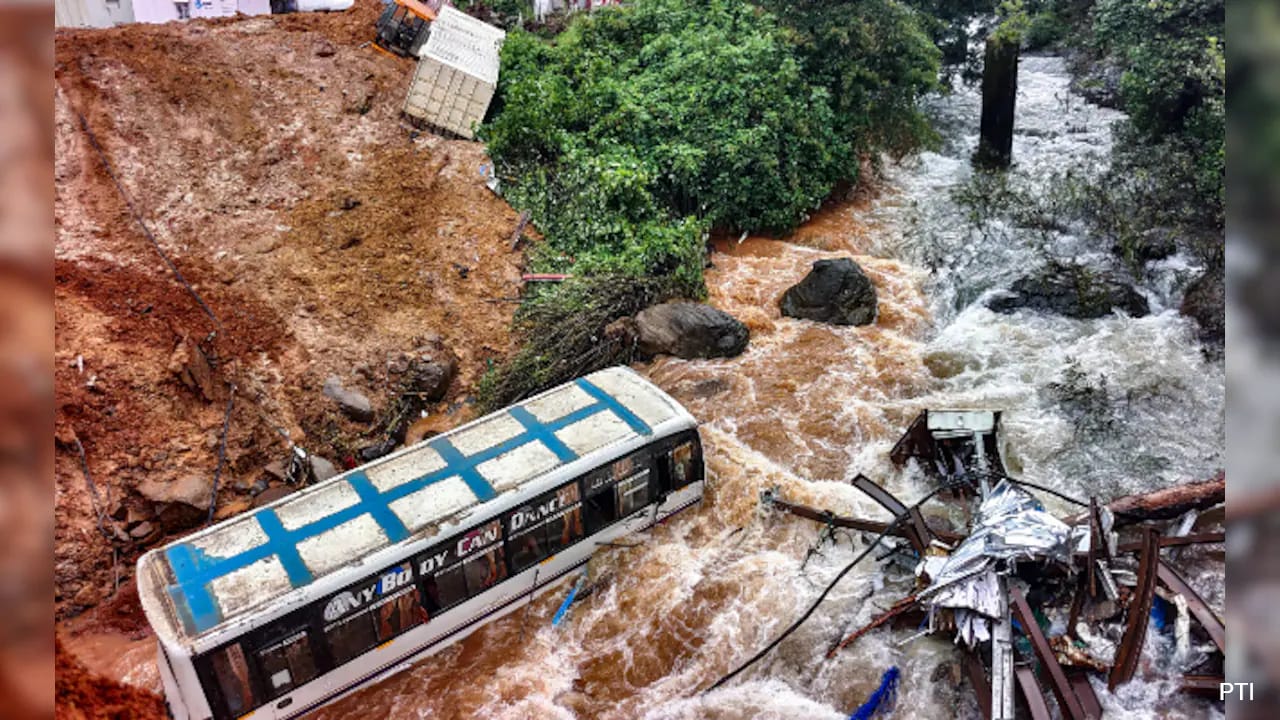
The biggest catalyst for landslides in India is considered to be the Southwest Monsoon, which mostly spans the period from June to September.
Narrative Intelligence Brief
This article was published by NDTV, a source frequently categorized with a lean right bias based in India. Our narrative intelligence engine continuously monitors coverage from this outlet to track framing, bias, and rhetorical patterns. Our initial algorithmic scan of this specific piece did not flag high-confidence rhetorical techniques, suggesting a generally straightforward reporting style or neutral framing. By understanding the editorial perspective of NDTV, readers can better contextualize the information presented and compare it across our broader media matrix to find the real narrative.
More from NDTV
July 8, 2026
Wall Street Set For Iran Jolt: Nasdaq Futures Crash Over 1%, S&P 500 Futures, Dow In Red
July 8, 2026
Upto Rs 2,00,00,000 Salary, Equity: OpenAI Opens Investment Banker Role - Check Details
July 8, 2026
Internet, Computer Access In Schools Improves Over The Years: Report
July 8, 2026
Ground Report: 4 Rescue Zones And Race Against Time In Landslide-Hit Wayanad
July 8, 2026
Gold Falls By Rs 2,000, Silver Slumps Rs 7,000 After Trump Says Iran Ceasefire Is Over
Analysis Methodology
This narrative analysis was generated using the CoDataLab Global Intelligence Engine. Our proprietary AI scans thousands of cross-border sources to identify sentiment patterns, framing techniques, and potential media bias. While AI provides the data-driven foundation, our objective is to empower readers with additional context beyond the standard headline.The content displayed above is a structured summary designed for rapid information processing. For the full original report, please visit the source outlet.More Coverage
Discussion
"trump"
Another deadly ICE shooting renews questions about Trump’s immigration crackdown
Trump says interim accord to end war is ‘over’ after Iranian strikes

Court crushes Trump ICE’s detention of new mother as agency refuses to defend arrest