Today in News History
On June 22, several notable moments in the history of News stand out. In 1767, Wilhelm von Humboldt, German philosopher, academic, and politician, Interior Minister of Prussia (died 1835). was born. In 1869, Hendrikus Colijn, Dutch Politician and Prime Minister of the Netherlands (died 1944) was born. In 1913, Sándor Weöres, Hungarian poet and author (died 1989) was born. In 1918, Yeoh Ghim Seng, Singaporean politician, acting President of Singapore (died 1993) was born. In 1919, Henri Tajfel, Polish social psychologist (died 1982) was born. In 1931, Armand Fallières, French politician, 9th President of France (born 1841) passed away. In 1935, Szymon Askenazy, Polish historian and diplomat (born 1866) passed away. In 1947, Bruno Latour, French philosopher, anthropologist and sociologist (died 2022) was born. In 1964, Havank, Dutch journalist and author (born 1904) passed away. In 1979, Thomas Voeckler, French cyclist was born. Together, these milestones provide historical context for today's news news and ongoing narratives.
European Central Bank’s President Lagarde urges talks on yuan undervaluation
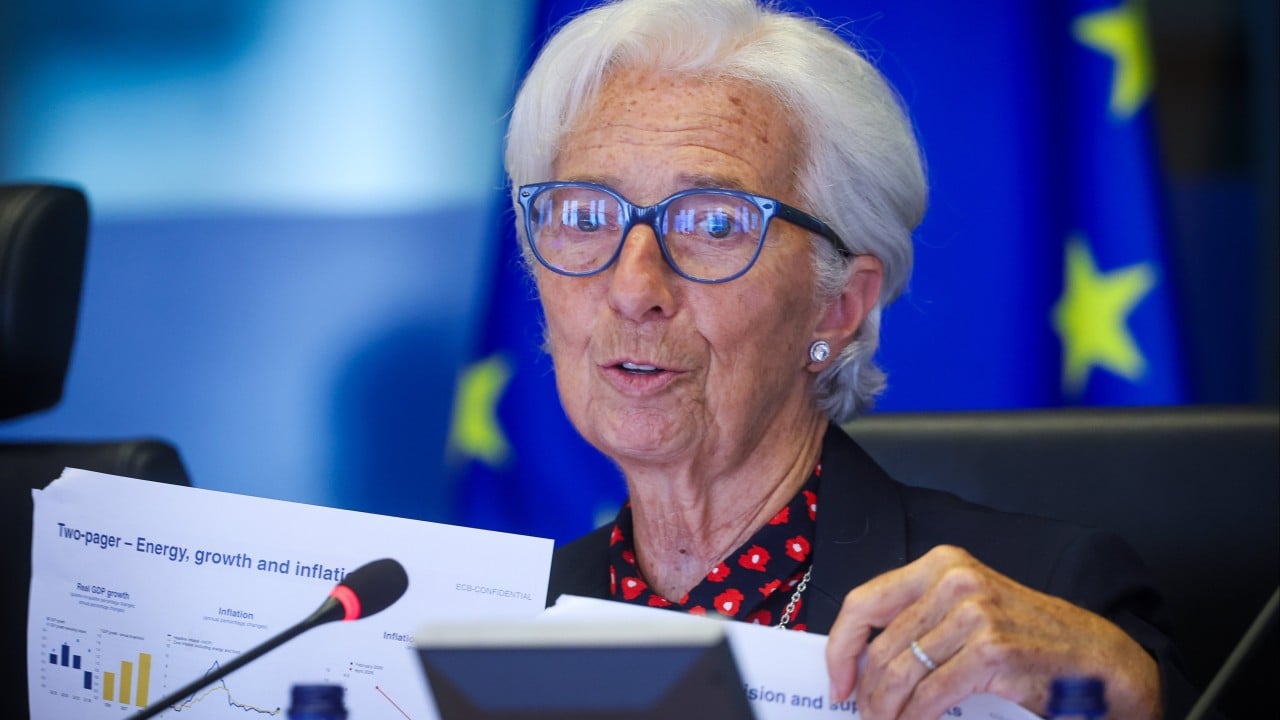
European Central Bank President Christine Lagarde on Monday urged global leaders to discuss undervaluation of the Chinese currency as a facet of the imbalances endangering the global economy. China has consistently denied that it manipulates its currency for trade advantage but its surging trade surpluses are one of several macroeconomic mismatches worrying leaders of the Group of Seven (G7) nations who met last week in France, along with chronic US deficits and Europe’s...
Narrative Intelligence Brief
This article was published by South China Morning Post, a source frequently categorized with a lean left bias based in Hong Kong. Our narrative intelligence engine continuously monitors coverage from this outlet to track framing, bias, and rhetorical patterns. Our initial algorithmic scan of this specific piece did not flag high-confidence rhetorical techniques, suggesting a generally straightforward reporting style or neutral framing. By understanding the editorial perspective of South China Morning Post, readers can better contextualize the information presented and compare it across our broader media matrix to find the real narrative.
More from South China Morning Post
June 22, 2026
Shooting in Montreal, Canada leaves 3 dead including suspect
June 22, 2026
China closing in but US leads in biotech quality and commercial reach, survey finds
June 22, 2026
US-China rare earth clash 2.0? Fragile truce tested as tit-for-tat moves return
June 22, 2026
2 young children found dead in locked car during France heatwave
June 22, 2026
China signals openness to Colombia’s Trump-backed president-elect despite US tilt
Analysis Methodology
This narrative analysis was generated using the CoDataLab Global Intelligence Engine. Our proprietary AI scans thousands of cross-border sources to identify sentiment patterns, framing techniques, and potential media bias. While AI provides the data-driven foundation, our objective is to empower readers with additional context beyond the standard headline.The content displayed above is a structured summary designed for rapid information processing. For the full original report, please visit the source outlet.More Coverage
Discussion
"lionel messi"
Argentina reacciona a su victoria contra Austria y el récord histórico de Messi

Argentina’s Lionel Messi achieves landmark goals while setting unwanted record at 2026 World Cup

Lionel Scaloni on Argentina's win over Austria: 'When Messi switches on, everyone switches on'