
Today in News History
On June 17, several notable moments in the history of News stand out. In 1900, Boxer Rebellion: Western Allied and Japanese forces capture the Taku Forts in Tianjin, China. In 1940, World War II: The British Army's 11th Hussars assault and take Fort Capuzzo in Libya, Africa from Italian forces. In 1940, The three Baltic states of Estonia, Latvia and Lithuania fall under the occupation of the Soviet Union. In 1953, Cold War: East Germany Workers Uprising: In East Germany, the Soviet Union orders a division of troops into East Berlin to quell a rebellion. In 1963, A day after South Vietnamese President Ngô Đình Diệm announced the Joint Communiqué to end the Buddhist crisis, a riot involving around 2,000 people breaks out. One person is killed. In 1967, Nuclear weapons testing: China announces a successful test of its first thermonuclear weapon. In 1984, Si Tianfeng, Chinese race walker was born. In 1985, Özge Akın, Turkish sprinter was born. In 1992, A "joint understanding" agreement on arms reduction is signed by U.S. President George Bush and Russian President Boris Yeltsin (this would be later codified in START II). In 2012, Stéphane Brosse, French mountaineer (born 1971) passed away. Together, these milestones provide historical context for today's news news and ongoing narratives.
Europe rallies around tough new China strategy ahead of key summit
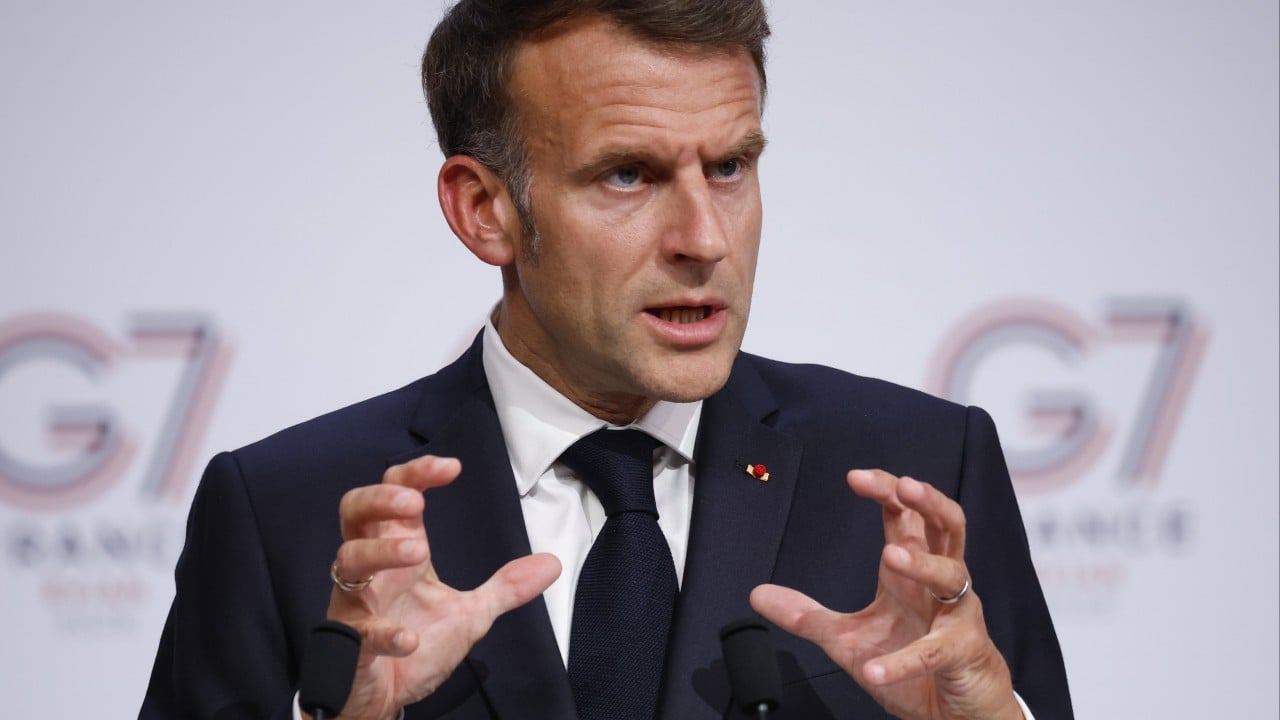
From free marketeers to long-term interventionists, EU countries of all stripes are converging on the need for urgent action to prevent a Chinese-driven European deindustrialisation ahead of a key summit in Brussels, multiple sources said on Wednesday. A broad coalition of members now support the development of a tough new trade strategy that could involve multiple new instruments and a more rapid-fire, strategic use of existing weapons. One of the tools could be modelled on US President Donald...
Narrative Intelligence Brief
This article was published by South China Morning Post, a source frequently categorized with a lean left bias based in Hong Kong. Our narrative intelligence engine continuously monitors coverage from this outlet to track framing, bias, and rhetorical patterns. Our initial algorithmic scan of this specific piece did not flag high-confidence rhetorical techniques, suggesting a generally straightforward reporting style or neutral framing. By understanding the editorial perspective of South China Morning Post, readers can better contextualize the information presented and compare it across our broader media matrix to find the real narrative.
More from South China Morning Post
June 17, 2026
New York’s Gilgo Beach serial killer Rex Heuermann sentenced to life in prison
June 17, 2026
Trump shows no regret over deaths of 3 Indian sailors in meeting with Modi
June 17, 2026
Luigi Mangione plans psychiatric defence at CEO murder trial
June 17, 2026
Trump sells still-secret Iran deal as lasting peace
June 17, 2026
Iranians find little cause for celebration in US peace deal: ‘99% in survival mode’
Analysis Methodology
This narrative analysis was generated using the CoDataLab Global Intelligence Engine. Our proprietary AI scans thousands of cross-border sources to identify sentiment patterns, framing techniques, and potential media bias. While AI provides the data-driven foundation, our objective is to empower readers with additional context beyond the standard headline.The content displayed above is a structured summary designed for rapid information processing. For the full original report, please visit the source outlet.More Coverage
Discussion
"cup"
Ange Postecoglou is putting the World Cup’s awful pundits to shame

Failure to beat Panama in World Cup group stage will be disappointing – Ghanaian fans to Black Stars

Women and children in abusive settings face ‘more sinister’ World Cup kick-off
