
Today in News History
On July 12, several notable moments in the history of News stand out. In 1335, Pope Benedict XII issues the papal bull Fulgens sicut stella matutina to reform the Cistercian Order. In 1730, Josiah Wedgwood, English potter, founded the Wedgwood Company (died 1795) was born. In 1850, Otto Schoetensack, German anthropologist and academic (died 1912) was born. In 1904, Pablo Neruda, Chilean poet and diplomat, Nobel Prize laureate (died 1973) was born. In 1926, Gertrude Bell, English archaeologist and spy (born 1868) passed away. In 1928, Elias James Corey, American chemist and academic, Nobel Prize laureate was born. In 1931, Nathan Söderblom, Swedish archbishop, Nobel Prize laureate (born 1866) passed away. In 2001, Space Shuttle program: Space Shuttle Atlantis is launched on mission STS-104, carrying the Quest Joint Airlock to the International Space Station. In 2010, Harvey Pekar, American author and critic (born 1939) passed away. In 2012, Syrian Civil War: Government forces target the homes of rebels and activists in Tremseh and kill anywhere between 68 and 150 people. Together, these milestones provide historical context for today's news news and ongoing narratives.
Earth’s Underground Fungi Networks Need Urgent Protection: Study
The underground fungi networks that help sustain Earth’s ecosystems are in need of urgent conservation action, according to researchers from the Society for the Protection of Underground Networks (SPUN). The scientists found that 90 percent of mycorrhizal fungi biodiversity hotspots were located in unprotected ecosystems, the loss of which could lead to lower carbon emissions [] The post Earth’s Underground Fungi Networks Need Urgent Protection: Study appeared first on EcoWatch.
Narrative Intelligence Brief
This article was published by EcoWatch, a source frequently categorized with a lean left bias based in United States of America. Our narrative intelligence engine continuously monitors coverage from this outlet to track framing, bias, and rhetorical patterns. Our initial algorithmic scan of this specific piece did not flag high-confidence rhetorical techniques, suggesting a generally straightforward reporting style or neutral framing. By understanding the editorial perspective of EcoWatch, readers can better contextualize the information presented and compare it across our broader media matrix to find the real narrative.
More from EcoWatch
August 5, 2025
Methane 101: Understanding the Second Most Important Greenhouse Gas
August 4, 2025
New York Finalizes Rule for New Buildings to Be Electric
August 1, 2025
Mass Die-Off of Western Monarch Butterflies Linked to Pesticides, Study Finds
August 1, 2025
Deepest-Known Animal Communities Found Almost Six Miles Below Sea Level
July 31, 2025
Pristine Forest and Endangered Gorilla Habitat at Risk as Half of DRC Opened to Bids for Oil and Gas Drilling: Report
Analysis Methodology
This narrative analysis was generated using the CoDataLab Global Intelligence Engine. Our proprietary AI scans thousands of cross-border sources to identify sentiment patterns, framing techniques, and potential media bias. While AI provides the data-driven foundation, our objective is to empower readers with additional context beyond the standard headline.The content displayed above is a structured summary designed for rapid information processing. For the full original report, please visit the source outlet.More Coverage
Discussion
"cup semifinal"
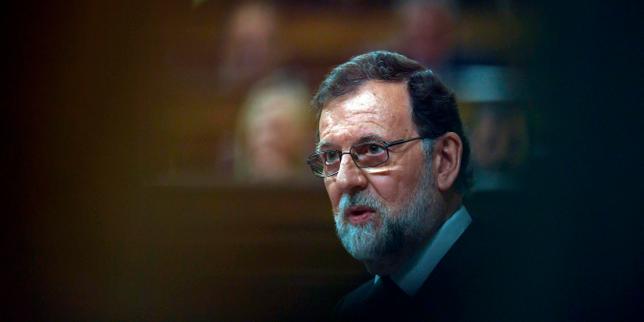
Former Spanish PM Mariano Rajoy makes racist remarks about France's football team
[Photo] JUST IN: 🇦🇷 Argentina officially advances to the FIFA World Cup semifinal after defeat [...]

Argentina's hero: "We are just two steps away from the goal"

How other outlets are covering this story
Compare narratives across 6 related reports from 6 sources. Real Narrative News aggregates the coverage spectrum so you can see who emphasises what — bias tags reflect the outlet, not the story.
Coverage bias distribution
6 sources
Left 33%
Center 50%
Right 17%
Anadolu Agency
· Jun 29, 2026
Global fungal networks stretch 1 billion times Earth-Sun distance, study finds
First global map reveals underground fungal networks span around 110 quadrillion kilometers and play key role in storing carbon
Canada's National Observer
· Jun 23, 2026
AI could help vital plants win ‘race against extinction’: botanists
Tech is helping to identify and save new specimens and could open a ‘genomic goldmine’ of fungi data.
Global News
· Jun 22, 2026
Parks Canada working to curb spread of deadly white-nose syndrome in Alberta bats
Parks Canada crews are at work in Alberta's bat caves, spreading a blend of bacteria to try to save the flying night mammals from a deadly, and accelerating, fungal infection.
CNN
· Jun 22, 2026
Toxic caterpillars infest Berlin's parks
Toxic caterpillars have spread across Berlin's parks and green spaces, causing painful rashes and prompting a major cleanup effort. CNN's Sebastian Shukla reports.
Gary Taubes
· Apr 24, 2024
Substack 8: How do you stop bad scientists? Hope they committed fraud.
This is a post I’ve wanted to write for years. We read about scientific misconduct regularly. Fraud is news. Institutions investigate it. The media covers it. But garden-variety bad science is the far more insidious problem. There is no institutional immune response. No one investigates, nothing is exposed. Bad science can persist indefinitely, infecting entire...Read More »
Earth911
· Jun 29, 2026
Soil Your Undies … To Find Out How Healthy Your Soil Is
“Soil Your Undies” sounds like the latest, grossest internet challenge to make the social media... The post Soil Your Undies To Find Out How Healthy Your Soil Is appeared first on Earth911.
Topics:
Related coverage for "Earth’s Underground Fungi Networks Need Urgent Protection: Study": Anadolu Agency — Global fungal networks stretch 1 billion times Earth-Sun distance, study finds. Canada's National Observer — AI could help vital plants win ‘race against extinction’: botanists. Global News — Parks Canada working to curb spread of deadly white-nose syndrome in Alberta bats. CNN — Toxic caterpillars infest Berlin's parks. Gary Taubes — Substack 8: How do you stop bad scientists? Hope they committed fraud.. Earth911 — Soil Your Undies … To Find Out How Healthy Your Soil Is