
Today in News History
On July 11, several notable moments in the history of News stand out. In 1798, The United States Marine Corps is re-established; they had been disbanded after the American Revolutionary War. In 1836, The Fly-fisher's Entomology is published by Alfred Ronalds. The book transformed the sport and went to many editions. In 1897, Bull Connor, American police officer (died 1973) was born. In 1903, Sidney Franklin, American bullfighter (died 1976) was born. In 1916, Gough Whitlam, Australian lieutenant, lawyer, and politician, 21st Prime Minister of Australia (died 2014) was born. In 1971, John W. Campbell, American journalist and author (born 1910) passed away. In 1978, Massimiliano Rosolino, Italian swimmer was born. In 1983, A TAME airline Boeing 737-200 crashes near Cuenca, Ecuador, killing all 119 passengers and crew on board. In 2011, Ninety-eight containers of explosives self-detonate killing 13 people in Zygi, Cyprus. In 2021, Richard Branson becomes the first civilian to be launched into space via his Virgin Galactic spacecraft. Together, these milestones provide historical context for today's news news and ongoing narratives.
Drones are detecting more sharks at US beaches but do they make public safer?
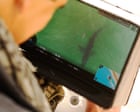
Increase in sightings may not reflect increase in sharks with little evidence that threat to swimmers has risenExperts say that despite recent increased investment in drones to monitor for sharks in states like New York, the machines have limited usefulness as a public safety tool and there does not appear to be evidence that the threat to swimmers from sharks has increased.There have, however, been more reports of sharks around local beaches. Continue reading...
Narrative Intelligence Brief
This article was published by Animals | The Guardian, a source frequently categorized with a lean left bias based in United Kingdom. Our narrative intelligence engine continuously monitors coverage from this outlet to track framing, bias, and rhetorical patterns. Our initial algorithmic scan of this specific piece did not flag high-confidence rhetorical techniques, suggesting a generally straightforward reporting style or neutral framing. By understanding the editorial perspective of Animals | The Guardian, readers can better contextualize the information presented and compare it across our broader media matrix to find the real narrative.
More from Animals | The Guardian
July 11, 2026
World Cup 2026: Norway v England buildup, Kane’s round of golf with Trump, Germany close on Klopp – live
July 11, 2026
South Africa World Cup midfielder Jayden Adams dies aged 25
July 11, 2026
Football Daily | Belgium and the End Of The Golden Generation Klaxon
July 11, 2026
Tunnel vision: candid photos of World Cup 2026 stars
July 11, 2026
Safe from AI: which jobs will help you thrive in the future?
Analysis Methodology
This narrative analysis was generated using the CoDataLab Global Intelligence Engine. Our proprietary AI scans thousands of cross-border sources to identify sentiment patterns, framing techniques, and potential media bias. While AI provides the data-driven foundation, our objective is to empower readers with additional context beyond the standard headline.The content displayed above is a structured summary designed for rapid information processing. For the full original report, please visit the source outlet.More Coverage
Discussion
"trump"
Trump’s disastrous cycle of bad decisions continues as Iran ceasefire collapses

Trump threatens Iran after calls for his killing at Ali Khamenei’s funeral

US projects hard power and ‘doesn’t know’ what to do when it's unsuccessful
