Today in News History
On July 1, several notable moments in the history of News stand out. In 1841, Thomas Lempriere and James Clark Ross carve a marker on the Isle of the Dead in Van Diemen's Land to measure tidal variations, one of the earliest surviving benchmarks for sea level rise. In 1908, SOS is adopted as the international distress signal. In 1925, Art McNally, American football referee (died 2023) was born. In 1935, Regina, Saskatchewan, police and Royal Canadian Mounted Police ambush strikers participating in the On-to-Ottawa Trek. In 1947, Kazuyoshi Hoshino, Japanese race car driver was born. In 1961, Malcolm Elliott, English cyclist was born. In 1962, Andre Braugher, American actor (died 2023) was born. In 1989, Daniel Ricciardo, Australian race car driver was born. In 2002, Bashkirian Airlines Flight 2937, a Tupolev Tu-154, and DHL Flight 611, a Boeing 757, collide in mid-air over Überlingen, southern Germany, killing all 71 on board both planes. In 2006, Robert Lepikson, Estonian race car driver and politician, Estonian Minister of the Interior (born 1952) passed away. Together, these milestones provide historical context for today's news news and ongoing narratives.
Drivers urged to be cautious as South West road fatalities double the number recorded in first half of 2025

A South West crime inspector is reminding motorists to drive safe as more than half of last year’s total number of road fatalities is recorded to date
Narrative Intelligence Brief
This article was published by The West Australian, a source frequently categorized with a lean right bias based in Australia. Our narrative intelligence engine continuously monitors coverage from this outlet to track framing, bias, and rhetorical patterns. Our initial algorithmic scan of this specific piece did not flag high-confidence rhetorical techniques, suggesting a generally straightforward reporting style or neutral framing. By understanding the editorial perspective of The West Australian, readers can better contextualize the information presented and compare it across our broader media matrix to find the real narrative.
More from The West Australian
July 1, 2026
Taylor Swift, Travis Kelce set to wed in NYC in days
July 1, 2026
Deposits in the egg and sperm bank to safeguard koalas
July 1, 2026
Aussie link to FIFA concussion test that takes minutes
July 1, 2026
How cops unravelled Sydney childcare worker David William James’ sexual abuse
July 1, 2026
Krejcikova scores win as Wimbledon ignores World Cup
Analysis Methodology
This narrative analysis was generated using the CoDataLab Global Intelligence Engine. Our proprietary AI scans thousands of cross-border sources to identify sentiment patterns, framing techniques, and potential media bias. While AI provides the data-driven foundation, our objective is to empower readers with additional context beyond the standard headline.The content displayed above is a structured summary designed for rapid information processing. For the full original report, please visit the source outlet.More Coverage
Discussion
"harry kane"
Harry Kane’s quickfire double saves England from World Cup humiliation

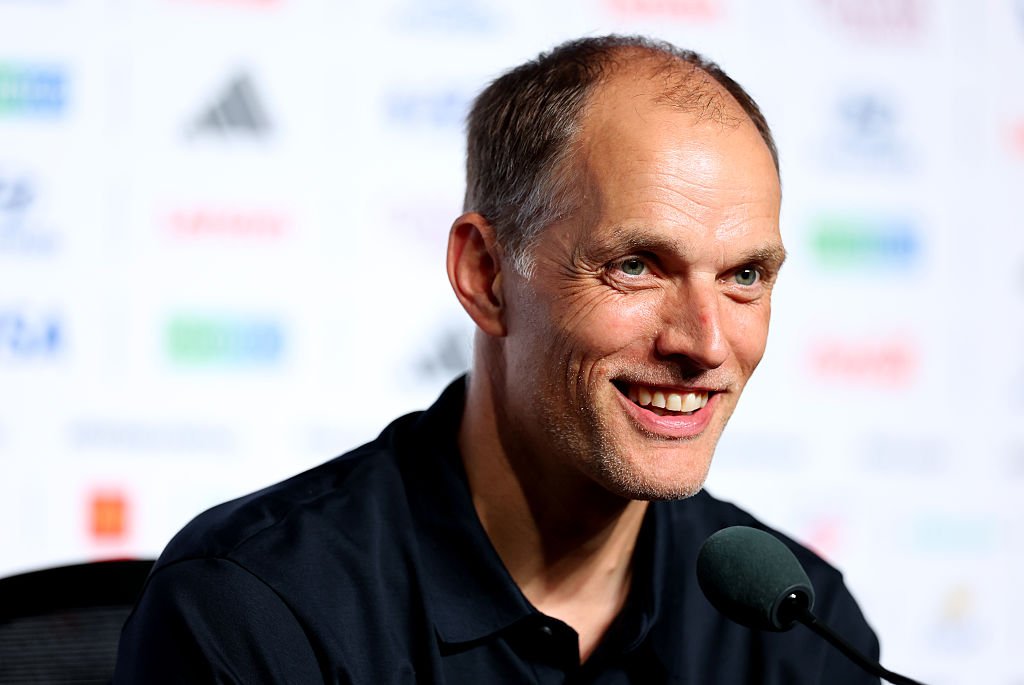
Thomas Tuchel saw no pressure holding England players back in epic comeback win

Thomas Tuchel praises players' belief after stunning comeback win against DR Congo