
Today in News History
On July 12, several notable moments in the history of News stand out. In 981, Xue Juzheng, Chinese scholar-official and historian passed away. In 1909, Herbert Zim, American naturalist, author, and educator (died 1994) was born. In 1966, D. T. Suzuki, Japanese philosopher and author (born 1870) passed away. In 1979, Maya Kobayashi, Japanese journalist was born. In 1995, Chinese seismologists successfully predict the 1995 Myanmar-China earthquake, reducing the number of casualties to 11. In 2013, Takako Takahashi, Japanese author (born 1932) passed away. In 2014, Jamil Ahmad, Pakistani author (born 1931) passed away. In 2015, Cheng Siwei, Chinese engineer, economist, and politician (born 1935) passed away. In 2015, Chenjerai Hove, Zimbabwean journalist, author, and poet (born 1956) passed away. In 2015, Tenzin Delek Rinpoche, Tibetan monk and activist (born 1950) passed away. Together, these milestones provide historical context for today's news news and ongoing narratives.
Dr. Ayub Mukisa: Climate Change: How the Karimojong Contribute the Least but Suffer the Most
For decades, we have been told to stay in our lanes. In this piece, I do exactly that as a climate change scholar. There is broad agreement among global experts that climate change is one of the greatest challenges of our time. Yet one aspect of this crisis deserves greater attention. The people of Karamoja [] The post Dr. Ayub Mukisa: Climate Change: How the Karimojong Contribute the Least but Suffer the Most appeared first on Watchdog Uganda.
Narrative Intelligence Brief
This article was published by Watchdog Uganda, a source frequently categorized with a center bias based in Uganda. Our narrative intelligence engine continuously monitors coverage from this outlet to track framing, bias, and rhetorical patterns. Our initial algorithmic scan of this specific piece did not flag high-confidence rhetorical techniques, suggesting a generally straightforward reporting style or neutral framing. By understanding the editorial perspective of Watchdog Uganda, readers can better contextualize the information presented and compare it across our broader media matrix to find the real narrative.
More from Watchdog Uganda
July 7, 2026
The Untold Story Behind Why Some UHRC Commissioners Turned Against Their Chairperson
July 7, 2026
The Rise of Union Transport Alliance: What Drives Ssenoga’s Vision for Uganda’s Transport Sector?
July 7, 2026
From Smugglers’ Route to Healthcare Hub: How Busia’s Sh1.3bn Sofia Health Centre III is Transforming Border Care
July 6, 2026
‘I narrowly survived Anita Among’s killer hand’ – How an investigative journalist Ivan Okuda escaped the powerful politician’s wrath
July 7, 2026
Hope is not the silver bullet: Why believing in yourself must be accompanied by Action
Analysis Methodology
This narrative analysis was generated using the CoDataLab Global Intelligence Engine. Our proprietary AI scans thousands of cross-border sources to identify sentiment patterns, framing techniques, and potential media bias. While AI provides the data-driven foundation, our objective is to empower readers with additional context beyond the standard headline.The content displayed above is a structured summary designed for rapid information processing. For the full original report, please visit the source outlet.More Coverage
Discussion
"jude bellingham"
Tuchel angry at 'lucky' and 'sloppy' England – can 'mentality' be enough?

Tuchel angry at 'lucky' and 'sloppy' England – can 'mentality' be enough?

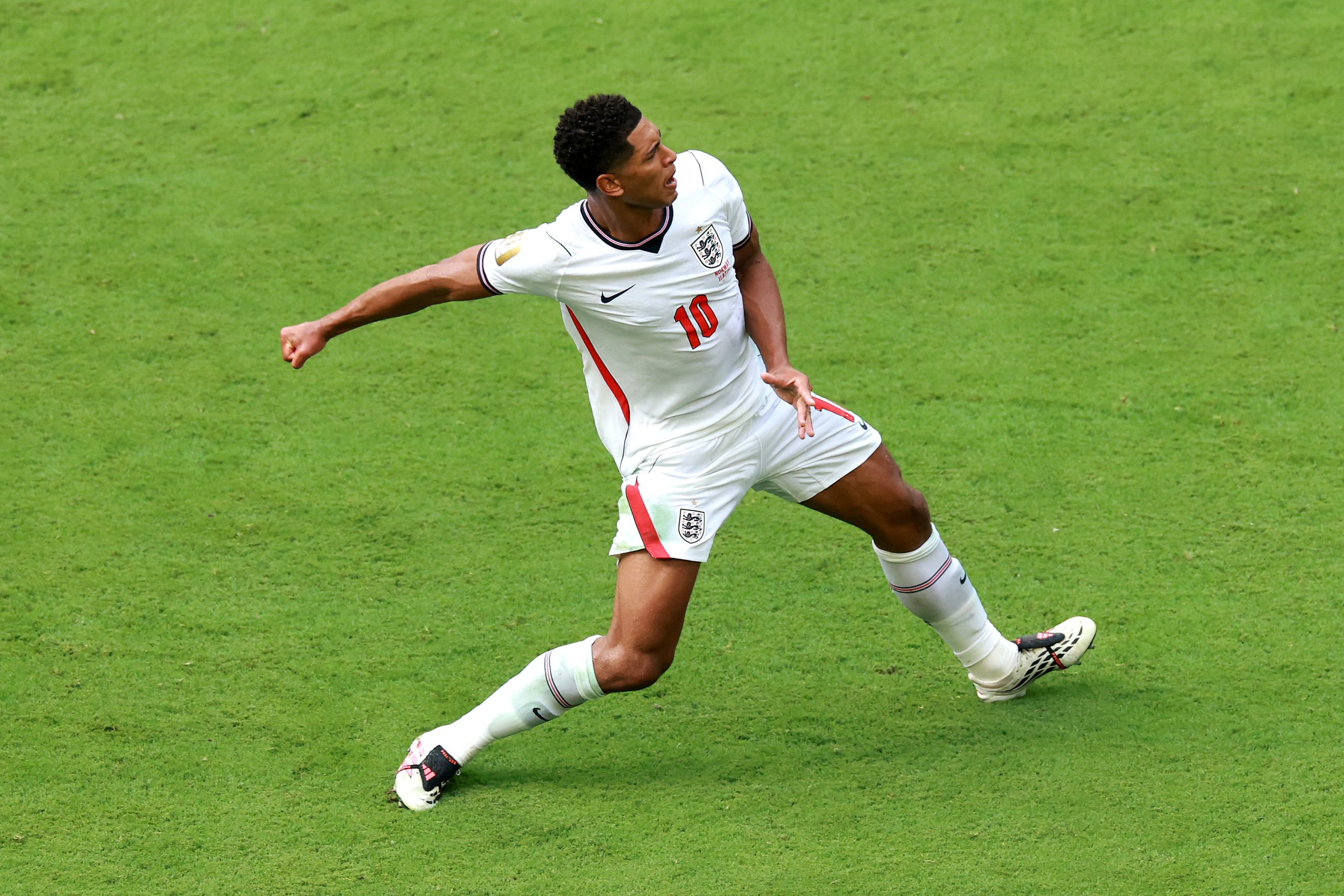
2026 World Cup Golden Boot Odds: Jude Bellingham Skyrockets After Brace
How other outlets are covering this story
Compare narratives across 5 related reports from 5 sources. Real Narrative News aggregates the coverage spectrum so you can see who emphasises what — bias tags reflect the outlet, not the story.
Coverage bias distribution
5 sources
Left 0%
Center 60%
Right 20%
Watchdog Uganda
· Jun 23, 2026
Dr. Ayub Mukisa: Karamoja and Climate Change: Why Existing Responses Are Failing
To understand the current climate change crisis, particularly the steadily increasing temperatures and how they are directly threatening the livelihoods of the Karimojong people, it is important to consider existing research and the realities on the ground. Chaplin (2017) argued that although the Karamoja region suffers from unfavorable weather conditions, little is known about the [] The post Dr. Ayub Mukisa: Karamoja and Climate Change: Why Existing Responses Are Failing appeared first on Watchdog Uganda.
Anadolu Agency
· Jun 21, 2026
WHO expects stronger focus on link between climate crisis and human health at COP31
'Health is one of the strongest and most tangible arguments for climate action because people experience climate change first through its impact on their lives, wellbeing, and communities,' WHO head of office in Türkiye tells Anadolu
Sada Elbalad
· Jun 26, 2026
Ecological cooperation between Uzbekistan and the United States elevated to the level of a strategic partnership
Today, environmental challenges such as climate change, desertification, biodiversity loss and air pollution are driving countries around the world toward closer cooperation. Uzbekistan has likewise identified environmental protection and climate change adaptation as key priorities of its state policy. In this context, the development of international partnerships, particularly with the United States, is of special importance.
Nepal News
· Jul 9, 2026
कालिकोटमा कालाजारको बिरामी देखियो
कालिकोट। हिमाली जिल्लामा पनि लामखुट्टेको टोकाइबाट लाग्ने रोगका बिरामी देखिन थालेका छन्। कालिकोटमा लामाखुट्टेको टोकाइबाट लाग्ने रोग डेंगी, औलो र कालाजारका बिरामी भेटिन थालेका हुन्। विगतमा तराई र पहाडका जिल्लामा मात्र देखिने गरेको लामखुट्टेका कारणले लाग्ने रोग केही वर्षयता हिमाली जिल्लामा देखिन थालेको छ। जिल्लामा आर्थिक २०८२/ ८३ मा लामखुट्टेको टोकाइबाट लाग्ने डेंगी, औलो र []
ANTARA News
· Jun 26, 2026
Energy transition strategic imperative to cut import burden: ministry
The transition from fossil fuels to new and renewable energy is a strategic imperative to reduce Indonesia's import ...
Topics:
Related coverage for "Dr. Ayub Mukisa: Climate Change: How the Karimojong Contribute the Least but Suffer the Most": Watchdog Uganda — Dr. Ayub Mukisa: Karamoja and Climate Change: Why Existing Responses Are Failing. Anadolu Agency — WHO expects stronger focus on link between climate crisis and human health at COP31. Sada Elbalad — Ecological cooperation between Uzbekistan and the United States elevated to the level of a strategic partnership. Nepal News — कालिकोटमा कालाजारको बिरामी देखियो. ANTARA News — Energy transition strategic imperative to cut import burden: ministry