Today in News History
On June 18, several notable moments in the history of News stand out. In 1939, Brooks Firestone, American businessman and politician was born. In 1948, Britain, France and the United States announce that on June 21, the Deutsche Mark will be introduced in western Germany and West Berlin. Over the next six days, Communists increasingly restrict access to Berlin. In 1950, Mike Johanns, American lawyer and politician, 28th United States Secretary of Agriculture was born. In 1951, Mohammed Al-Sager, Kuwaiti journalist and politician was born. In 1951, Ian Hargreaves, English-Welsh journalist and academic was born. In 1955, Ed Fast, Canadian lawyer and politician was born. In 1989, I. F. Stone, American journalist and author (born 1907) passed away. In 2013, Michael Hastings, American journalist and author (born 1980) passed away. In 2013, Brent F. Anderson, American engineer and politician (born 1932) passed away. In 2015, Allen Weinstein, American historian and academic (born 1937) passed away. Together, these milestones provide historical context for today's news news and ongoing narratives.
'Does it?' Wall Street Journal editors raise questions over key issue in Trump's Iran deal
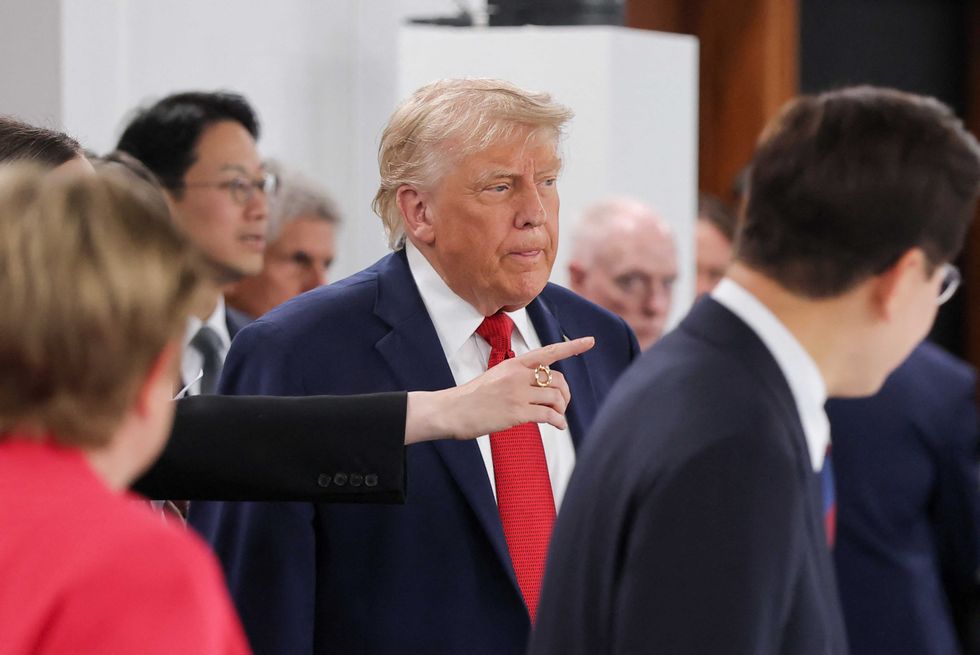
The conservative editorial board of the Wall Street Journal raised questions about a key term included in the Memorandum of Understanding struck by President Donald Trump's administration and the Iranian regime over the weekend. On Sunday, Trump announced that he had agreed to a deal to reopen the Strait of Hormuz immediately and for 60 days thereafter, as the administration and the Iranians continue negotiating to end the war. The Strait of Hormuz has been closed since the war began in late February, roiling the global economy and fueling inflation in the U.S. However, a close reading of the document reveals that reopening the Strait of Hormuz may not be as straightforward as Trump is making it seem, the WSJ editors warned. The regime held Hormuz hostage during the war, the editors wrote in a new editorial. The danger here is in formalizing the extortion into a new, worse status quo. The deal also empowers Iran to 'define the future administration' of Hormuz in dialogue with obsequious Oman. This is a recipe for the surrender of the Strait to the dictates of Iranian foreign policy.One sales pitch for the MOU has been that 'at least it gets Hormuz open.' Does it? they added.
Narrative Intelligence Brief
This article was published by Raw Story, a source frequently categorized with a left bias based in United States of America. Our narrative intelligence engine continuously monitors coverage from this outlet to track framing, bias, and rhetorical patterns. Our initial algorithmic scan of this specific piece did not flag high-confidence rhetorical techniques, suggesting a generally straightforward reporting style or neutral framing. By understanding the editorial perspective of Raw Story, readers can better contextualize the information presented and compare it across our broader media matrix to find the real narrative.
More from Raw Story
June 18, 2026
'Dumbest man in the Senate' torched online for stunning act of self-sabotage
June 18, 2026
MAGA senator clowned for parroting one of Trump's most baffling lines
June 18, 2026
Ex-MAGA insider warns Trump headed for 'five-stage denialism' after his biggest flop yet
June 18, 2026
Trump buried in mockery over plan that could cost Republicans everything in Georgia
June 18, 2026
MAGA billionaire's secret society list looks a lot like Epstein files: columnist
Analysis Methodology
This narrative analysis was generated using the CoDataLab Global Intelligence Engine. Our proprietary AI scans thousands of cross-border sources to identify sentiment patterns, framing techniques, and potential media bias. While AI provides the data-driven foundation, our objective is to empower readers with additional context beyond the standard headline.The content displayed above is a structured summary designed for rapid information processing. For the full original report, please visit the source outlet.More Coverage
Discussion