Today in News History
On June 24, several notable moments in the history of News stand out. In 972, Battle of Cedynia, the first documented victory of Polish forces, takes place. In 1210, Count Floris IV of Holland (died 1234) was born. In 1254, Floris V, Count of Holland (died 1296) was born. In 1340, Hundred Years' War: Battle of Sluys: The French fleet is almost completely destroyed by the English fleet commanded in person by King Edward III. In 1777, John Ross, Scottish commander and explorer (died 1856) was born. In 1797, Paweł Edmund Strzelecki, Polish geologist and explorer (died 1873) was born. In 1821, Guillermo Rawson, Argentinian physician and politician (died 1890) was born. In 1914, Jan Karski, Polish-American activist and academic (died 2000) was born. In 2013, Mick Aston, English archaeologist and academic (born 1946) passed away. In 2021, The Champlain Towers South condominium in Surfside, Florida suffers a sudden partial collapse, killing 98 people inside. Together, these milestones provide historical context for today's news news and ongoing narratives.
Divers stunned as untouched piece of history rises from Mediterranean seabed after 1,000 years
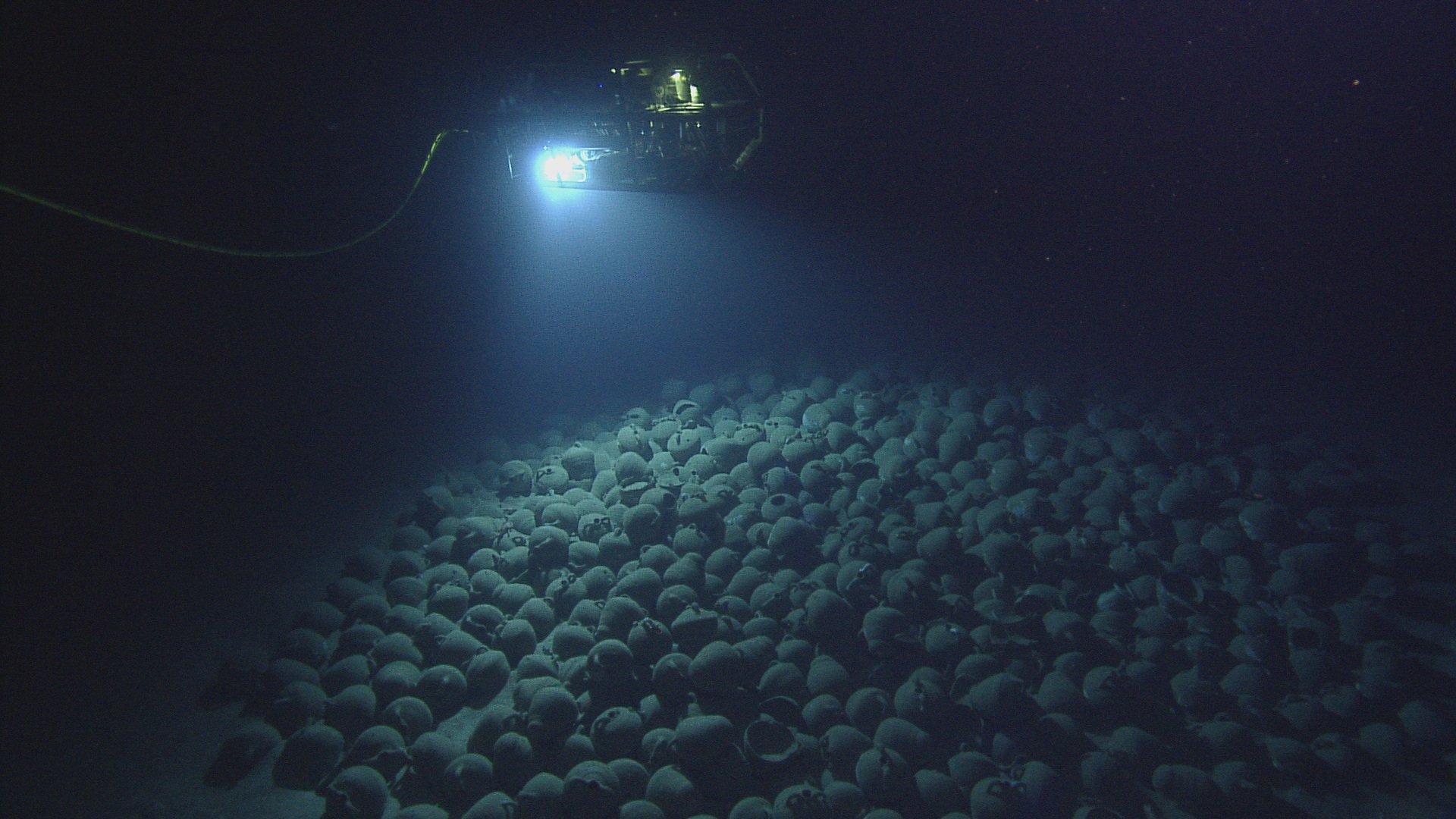
Divers have discovered a remarkable hoard below the Mediterranean Sea which could offer a crucial glimpse into the past.Three shipwrecks have been found lying between 400 and 418 metres below the surface off the coast of Turkey - and are now helping archeaologists piece together the history of Byzantine trade.Named after the ancient port city they were found near, the vessels have been dubbed Knidos F, Knidos L, and Knidos N.The three vessels mostly contain amphorae - large clay jars used to transport goods such as wine, oil and food products. TRENDING Stories Videos Your Say Knidos F may be one of the most well-preserved Byzantine shipwrecks found in the area - containing a pile of largely intact jars.The arrangement of the jars - scientifically named as Gunsenin Type I - suggests the ship settled upright on the seabed.The jars date back to the 10th and 12th centuries and traditionally have short necks, rounded bodies, and ribbed surfaces.Knidos L, meanwhile, contains at least 116 examples of amphorae.Most of that vessel's jars have also been classified as Gunsenin Type Is - though divers also came across rarer variants typically seen at only a few Byzantine sites.Neither of the two ships show evidence of interference by modern fishing vessels.The third shipwreck, Knidos N, contains 95 amphorae and includes two distinct type of jars unlike others which have been recorded before.Researchers believe this type of jar dates to the 13th century.MORE ARCHAEOLOGICAL BREAKTHROUGHS:History of iconic British treasure could be rewritten after shock new evidence emerges from soilMetal detectorist flabbergasted after uncovering 17th-century gold ring with mysterious motifSecret 'second Stonehenge' discovered just miles away from world-famous landmarkKnidos F and L come from the 10th century, when Byzantine trade was still growing.It was then when the empire regained control of important sea routes after years of conflict in the eastern Mediterranean.Trade expanded between Constantinople, the Aegean, southern Anatolia, the Levant, and Egypt.The Gunsenin Type I amphorae has appeared throughout Egypt, the eastern Mediterranean, the Black Sea and northern Europe, being recorded at around 100 hundred sites.The spread of the jar indicates strong commercial links across Byzantine shipping networks, with merchants moving good between ports large and small.But regular maritime traffic decreased by the time Knidos N was making its way over the waves in the 13th century.Byzantine influence over Mediterranean trade had by this time weakened, with the likes of Venice, Genoa and Pisa growing into a larger role.Knidos N shows that ships continued to travel the Carian coast route, which linked the Aegean Sea, southern Anatolia, and ports further east along the Levantine coast. Our Standards: The GB News Editorial Charter
Narrative Intelligence Brief
This article was published by GB News, a source frequently categorized with a lean right bias based in United States of America. Our narrative intelligence engine continuously monitors coverage from this outlet to track framing, bias, and rhetorical patterns. Our initial algorithmic scan of this specific piece did not flag high-confidence rhetorical techniques, suggesting a generally straightforward reporting style or neutral framing. By understanding the editorial perspective of GB News, readers can better contextualize the information presented and compare it across our broader media matrix to find the real narrative.
More from GB News
June 24, 2026
Airports admit hated EU border system is NOT working just weeks before summer holidays begin
June 24, 2026
Andy Burnham could have free run at No10 as Darren Jones confirms he won't stand to replace Keir Starmer
June 24, 2026
Murder probe launched as man's body found at 4,000-year-old stone circle after summer solstice
June 24, 2026
GB News Daily Reflection — Wednesday 24th June 2026
June 24, 2026
Sadiq Khan blames Donald Trump for '2000% increase in death threats' against him
Analysis Methodology
This narrative analysis was generated using the CoDataLab Global Intelligence Engine. Our proprietary AI scans thousands of cross-border sources to identify sentiment patterns, framing techniques, and potential media bias. While AI provides the data-driven foundation, our objective is to empower readers with additional context beyond the standard headline.The content displayed above is a structured summary designed for rapid information processing. For the full original report, please visit the source outlet.More Coverage
Discussion