Today in News History
On June 27, several notable moments in the history of News stand out. In 1499, Amerigo Vespucci sights what is now Amapá State in Brazil. In 1806, British forces take Buenos Aires during the first of the British invasions of the River Plate. In 1885, Pierre Montet, French historian and academic (died 1966) was born. In 1898, The first solo circumnavigation of the globe is completed by Joshua Slocum from Briar Island, Nova Scotia. In 1901, Merle Tuve, American geophysicist and academic (died 1982) was born. In 1920, Fernando Riera, Chilean football player and manager (died 2010) was born. In 1943, Ravi Batra, Indian-American economist and academic was born. In 1944, World War II: Mogaung is the first place in Burma to be liberated from the Japanese by British Chindits, supported by the Chinese. In 1980, Hugo Campagnaro, Argentinian footballer was born. In 1988, Villa Tunari massacre: Bolivian anti-narcotics police kill nine to 12 and injure over a hundred protesting coca-growing peasants. Together, these milestones provide historical context for today's news news and ongoing narratives.
Discovery of fish-eating raptor in Argentina points to prehistoric links with China
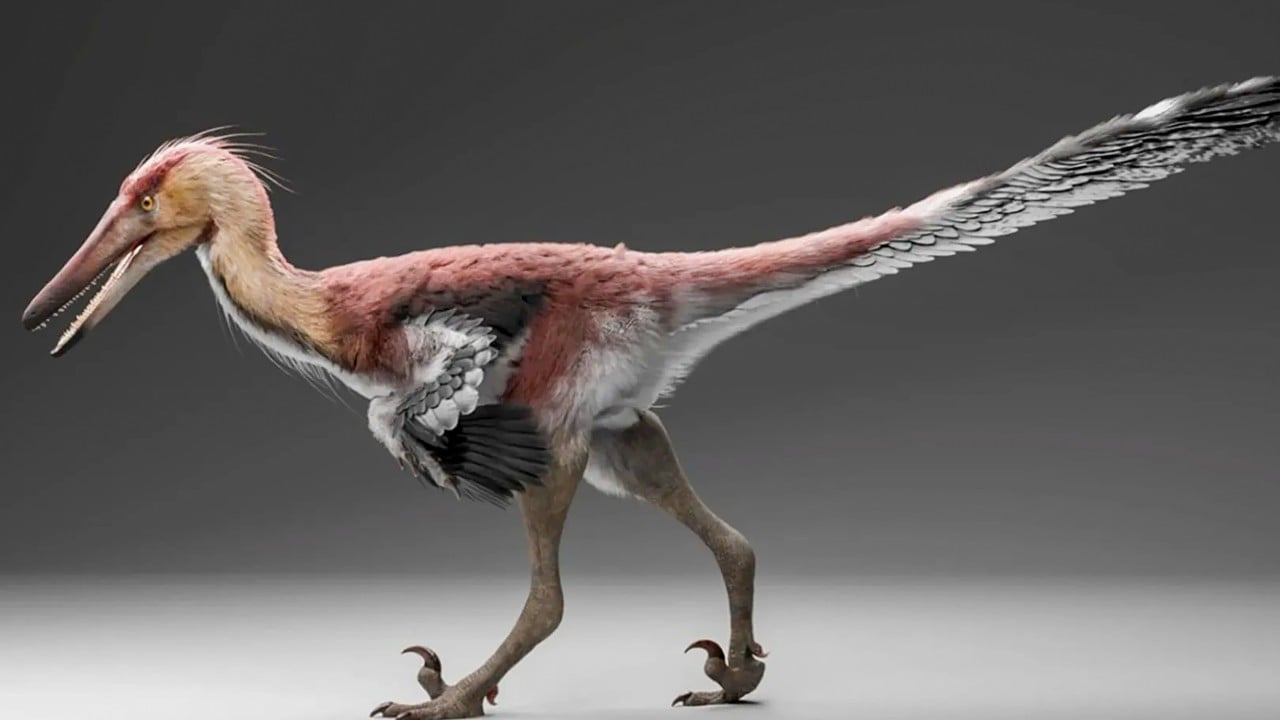
Scientists have uncovered a new species of raptor in Argentina that sports the same telltale curved claw as the velociraptors found in China, some 19,000km (11,800 miles) away. Though they were found on opposite ends of the world, these two dinosaurs were close kin – tracing back to a common ancestor from an era when the continents were knitted together to form one big land mass. This discovery, published late last month in the Journal of Vertebrate Paleontology, has prompted scientists to...
Narrative Intelligence Brief
This article was published by South China Morning Post, a source frequently categorized with a lean left bias based in Hong Kong. Our narrative intelligence engine continuously monitors coverage from this outlet to track framing, bias, and rhetorical patterns. Our initial algorithmic scan of this specific piece did not flag high-confidence rhetorical techniques, suggesting a generally straightforward reporting style or neutral framing. By understanding the editorial perspective of South China Morning Post, readers can better contextualize the information presented and compare it across our broader media matrix to find the real narrative.
More from South China Morning Post
June 27, 2026
Boy dies after suspected heatstroke at Tseung Kwan O Sports Ground in Hong Kong
June 27, 2026
‘This is an unhealthy environment’: Arctic researcher Li Xueke leaves the US for Hong Kong
June 27, 2026
Rise in elite civil servants leaving prompts calls for hiring rethink
June 27, 2026
China urges easing of travel barriers as Apec tourism ministers meet in Macau
June 27, 2026
US ally Bahrain claims Iran attacked navy base as Hormuz closed
Analysis Methodology
This narrative analysis was generated using the CoDataLab Global Intelligence Engine. Our proprietary AI scans thousands of cross-border sources to identify sentiment patterns, framing techniques, and potential media bias. While AI provides the data-driven foundation, our objective is to empower readers with additional context beyond the standard headline.The content displayed above is a structured summary designed for rapid information processing. For the full original report, please visit the source outlet.More Coverage
Discussion
"trump"
ICE Barbie’s Scandal-Hit Deportation Contractor Handed $200M Extension Despite Criminal Probe

John Bolton pleads guilty in classified documents prosecution

Refurbished £26m crown court adjourns criminal sentences during heat while Britons still troop into work