
Today in News History
On June 28, several notable moments in the history of News stand out. In 1797, French troops disembark in Corfu, beginning the French rule in the Ionian Islands. In 1938, Leon Panetta, American lawyer and politician, 23rd United States Secretary of Defense was born. In 1956, Amira Hass, Israeli journalist and author was born. In 1976, The Angolan court sentences US and UK mercenaries to death sentences and prison terms in the Luanda Trial. In 1981, A powerful bomb explodes in Tehran, killing 73 officials of the Islamic Republican Party. In 1987, For the first time in military history, a civilian population is targeted for chemical attack when Iraqi warplanes bombed the Iranian town of Sardasht. In 1989, On the 600th anniversary of the Battle of Kosovo, Slobodan Milošević delivers the Gazimestan speech at the site of the historic battle. In 2001, Slobodan Milošević is extradited to the ICTY in The Hague to stand trial. In 2013, David Rubitsky, American sergeant (born 1917) passed away. In 2016, A terrorist attack in Turkey's Istanbul Atatürk Airport kills 42 people and injures more than 230 others. Together, these milestones provide historical context for today's news news and ongoing narratives.
Defense official stuns with answer to why US keeps having to restrike same Iranian sites
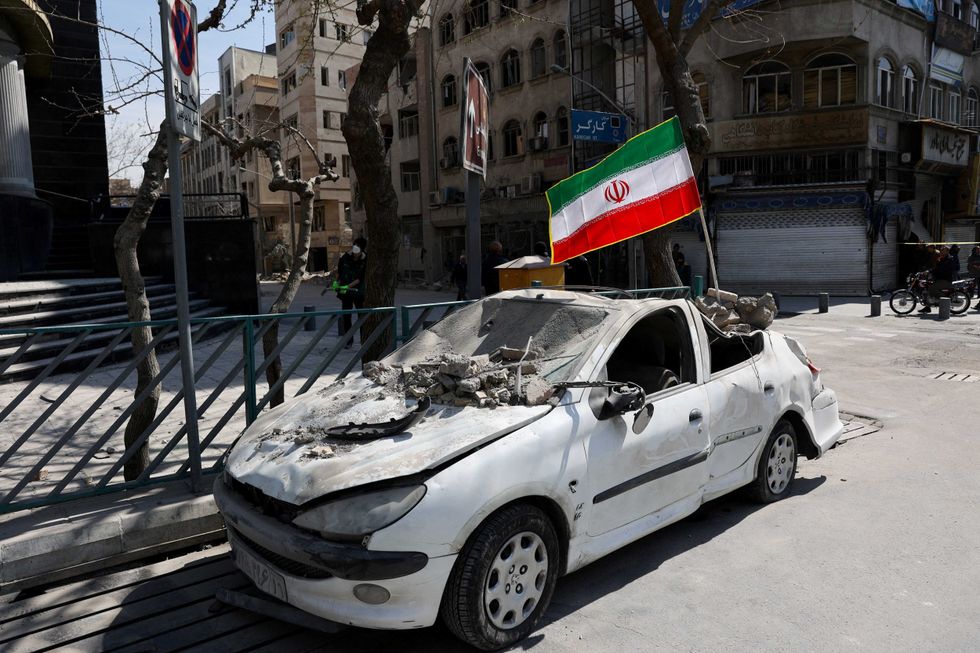
A senior U.S. defense official has explained why the American military keeps returning to bomb the same Iranian targets it has already struck repeatedly since the conflict began in late February, according to Fox News national security correspondent Jennifer Griffin.In a post on social media, Griffin said she pressed the official on why the U.S. has had to go back and restrike sites that have been hit multiple times since February 28, when the war began. The answer, she reported, was that Iran has rebuilt its air defense and missile systems along the Strait of Hormuz in the months since the U.S. bombing campaign wound down on April 7.That reconstitution, the source told Griffin, is why the military is now having to strike areas like Qeshm Island and Sirik that it had already targeted in the past.In the time since the cease fire on 7 April, Iran has reconstituted — thus the targets around the Strait of Hormuz, the official told Griffin.The official acknowledged the scale of the damage already inflicted on Iranian positions while making clear that Tehran has adapted.There is a LOT that is damaged a LOT but they moved things around, the source said.Griffin noted that roughly 10 weeks had passed since the April ceasefire was announced — a window during which, by the official's account, Iran was able to rebuild enough capability to draw fresh U.S. strikes.The reporting offers a window into the cyclical nature of the campaign, in which previously degraded Iranian systems are repaired and repositioned, prompting renewed American attacks. The post was amplified by conservative commentator Erick Erickson.I asked a senior defense official why the US has had to go back and restrike these sites that have been hit multiple times since February 28 when the war began. I was told Iran has reconstituted its air defense and missile systems along the Strait of Hormuz since the US bombing— Jennifer Griffin (@JenGriffinFNC) June 27, 2026
Narrative Intelligence Brief
This article was published by Raw Story, a source frequently categorized with a left bias based in United States of America. Our narrative intelligence engine continuously monitors coverage from this outlet to track framing, bias, and rhetorical patterns. Our initial algorithmic scan of this specific piece did not flag high-confidence rhetorical techniques, suggesting a generally straightforward reporting style or neutral framing. By understanding the editorial perspective of Raw Story, readers can better contextualize the information presented and compare it across our broader media matrix to find the real narrative.
More from Raw Story
June 28, 2026
'Something has changed': Reporter reveals Trump's fear — and the celeb weaponizing it
June 28, 2026
Right-wing outlet mobbed by critics over 'most ridiculous' Dem smear 'of all time'
June 28, 2026
'Like a thunderbolt': Trump admin busted for 'seismic' secret plan to gut watchdog board
June 28, 2026
'Not the picture to show': MAGA movie star mocked over revealing pic making Trump look bad
June 28, 2026
GOP lawmakers 'accidently' expose Trump's 'political vanity project' as major flop: report
Analysis Methodology
This narrative analysis was generated using the CoDataLab Global Intelligence Engine. Our proprietary AI scans thousands of cross-border sources to identify sentiment patterns, framing techniques, and potential media bias. While AI provides the data-driven foundation, our objective is to empower readers with additional context beyond the standard headline.The content displayed above is a structured summary designed for rapid information processing. For the full original report, please visit the source outlet.More Coverage
Discussion
"iran"
All HELL BREAKS LOOSE as Trump BOMBS IRAN…AGAIN!!!

Trump says US hit Iranian targets after ‘ceasefire’ violation, warns ‘Iran will no longer exist’
Is War the Only ‘Understanding’ Between America and Iran?
.jpg)