
Today in News History
On July 9, several notable moments in the history of News stand out. In 551, A major earthquake strikes Beirut, triggering a devastating tsunami that affects the coastal towns of Byzantine Phoenicia, causing thousands of deaths. In 1790, The Swedish Navy captures one third of the Russian Baltic fleet. In 1917, Krystyna Dańko, Polish orphan, survivor of Holocaust (died 2019) was born. In 1948, Hassan Wirajuda, Indonesian lawyer and politician, 15th Indonesian Minister of Foreign Affairs was born. In 1950, Viktor Yanukovych, Ukrainian engineer and politician, 4th President of Ukraine was born. In 1958, A 7.8 Mw strike-slip earthquake in Alaska causes a landslide that produces a megatsunami. The runup from the waves reached 525 m (1,722 ft) on the rim of Lituya Bay; five people were killed. In 1995, The Navaly church bombing is carried out by the Sri Lanka Air Force killing 125 Tamil civilian refugees. In 1999, Days of student protests begin after Iranian police and hardliners attack a student dormitory at the University of Tehran. In 2004, Paul Klebnikov, American journalist and historian (born 1963) passed away. In 2006, One hundred and twenty-five people are killed when S7 Airlines Flight 778, an Airbus A310 passenger jet, veers off the runway while landing in wet conditions at Irkutsk Airport in Siberia. Together, these milestones provide historical context for today's news news and ongoing narratives.
Corruption suspected at Ukrainian shipping giant – media
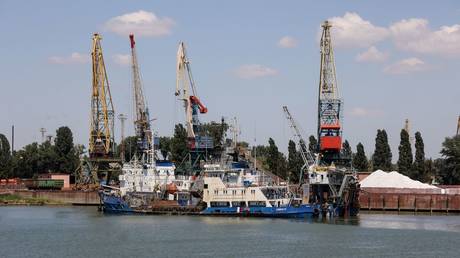
The Ukrainian state Danube Shipping Company has been plagued by corruption “for decades,” according to a leaked letter Read Full Article at RT.com
Narrative Intelligence Brief
This article was published by Russia Today, a source frequently categorized with a right bias based in Russia. Our narrative intelligence engine continuously monitors coverage from this outlet to track framing, bias, and rhetorical patterns. Our initial algorithmic scan of this specific piece did not flag high-confidence rhetorical techniques, suggesting a generally straightforward reporting style or neutral framing. By understanding the editorial perspective of Russia Today, readers can better contextualize the information presented and compare it across our broader media matrix to find the real narrative.
More from Russia Today
July 8, 2026
US strikes Iran for second night as Trump says ceasefire is ‘over’ (VIDEOS)
July 8, 2026
US strikes Iran for second night as Trump says ceasefire is ‘over’
July 8, 2026
US resumes strikes on Iran
July 8, 2026
US blows up Trudeau’s accusations against India with charges against gangster
July 8, 2026
Devastating Cuba: The American Empire is declining, and trying to drag everyone down with it
Analysis Methodology
This narrative analysis was generated using the CoDataLab Global Intelligence Engine. Our proprietary AI scans thousands of cross-border sources to identify sentiment patterns, framing techniques, and potential media bias. While AI provides the data-driven foundation, our objective is to empower readers with additional context beyond the standard headline.The content displayed above is a structured summary designed for rapid information processing. For the full original report, please visit the source outlet.More Coverage
Discussion
"trump"
Trump has CATASTROPHIC AM and KILLS 8 IRANIANS…WAR EXPLODES!!!

Trump’s surprise Ukraine shift steadies nervous Nato allies

Trump excoriates NATO, calls Iranians ‘lying scum,’ and declares MOU over in angry tirade
