Today in News History
On June 23, several notable moments in the history of News stand out. In 1812, War of 1812: Great Britain revokes the restrictions on American commerce, thus eliminating one of the chief reasons for going to war. In 1913, William P. Rogers, American commander, lawyer, and politician, 55th United States Secretary of State (died 2001) was born. In 1941, The Lithuanian Activist Front declares independence from the Soviet Union and forms the Provisional Government of Lithuania; it lasts only briefly as the Nazis will occupy Lithuania a few weeks later. In 1948, Clarence Thomas, American lawyer and jurist, Associate Justice of the Supreme Court of the United States was born. In 1961, Richard Arnold, English lawyer and judge was born. In 1970, Roscoe Turner, American soldier and pilot (born 1895) passed away. In 1972, Watergate scandal: U.S. President Richard M. Nixon and White House Chief of Staff H. R. Haldeman are taped talking about illegally using the Central Intelligence Agency to obstruct the Federal Bureau of Investigation's investigation into the Watergate break-ins. In 1989, Werner Best, German police officer and jurist (born 1903) passed away. In 1991, Katie Armiger, American singer-songwriter and guitarist was born. In 2017, A series of terrorist attacks take place in Pakistan, resulting in 96 deaths and wounding 200 others. Together, these milestones provide historical context for today's news news and ongoing narratives.
Cop accused of threats with police gun granted bail

A detective senior constable has been accused of multiple violent offences including using his police-issue firearm as part of threatening behaviour.
Narrative Intelligence Brief
This article was published by The West Australian, a source frequently categorized with a lean right bias based in Australia. Our narrative intelligence engine continuously monitors coverage from this outlet to track framing, bias, and rhetorical patterns. Our initial algorithmic scan of this specific piece did not flag high-confidence rhetorical techniques, suggesting a generally straightforward reporting style or neutral framing. By understanding the editorial perspective of The West Australian, readers can better contextualize the information presented and compare it across our broader media matrix to find the real narrative.
More from The West Australian
June 23, 2026
Jessica Page: Politicians must earn their pay rise, as WA’s elected members scoop 3.5 per cent increase
June 23, 2026
WA Police search underway after car stolen from Craigie Leisure Centre, reports of woman trying to escape
June 23, 2026
Fremantle Dockers coach Justin Longmuir hints Sean Darcy’s AFL return is imminent
June 23, 2026
‘Engine failure’: Final moments of fatal Parafield airfield crash revealed as investigators identify possible cause
June 23, 2026
Battery-electric haul truck trials launched in Pilbara with BHP, Rio, Caterpillar
Analysis Methodology
This narrative analysis was generated using the CoDataLab Global Intelligence Engine. Our proprietary AI scans thousands of cross-border sources to identify sentiment patterns, framing techniques, and potential media bias. While AI provides the data-driven foundation, our objective is to empower readers with additional context beyond the standard headline.The content displayed above is a structured summary designed for rapid information processing. For the full original report, please visit the source outlet.More Coverage
Discussion
"france"
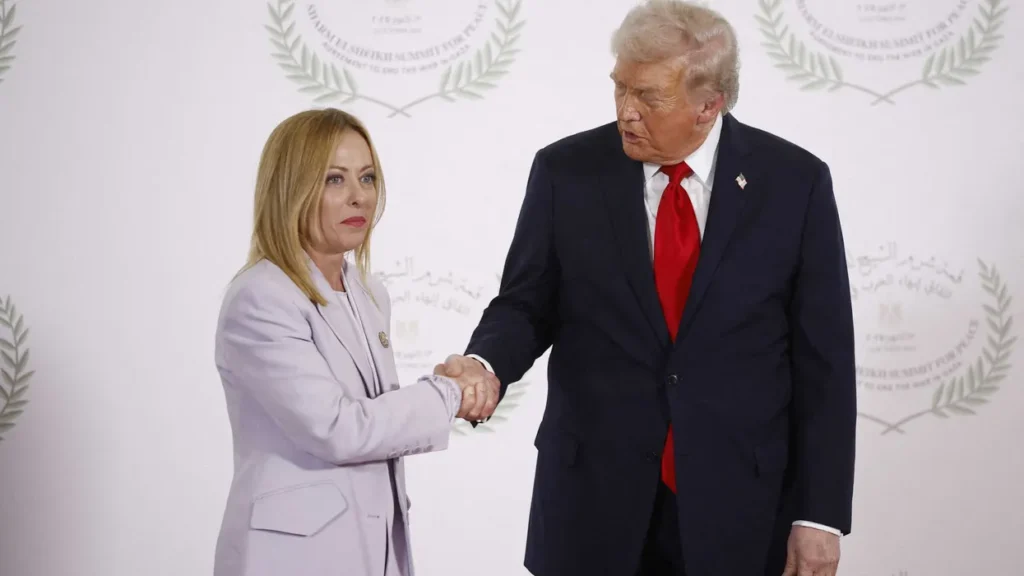
🚨Trump RAGES after HUMILIATION by ITALIAN LEADER

Europe’s current heat wave is so bad the French are considering banning outdoor drinking and adopting AC ‘if necessary’

Report reveals what started Trump’s feud with Italian pal: ‘She doesn’t see this as petty’