
Today in News History
On July 12, several notable moments in the history of News stand out. In 1470, The Ottomans capture Euboea. In 1790, The Civil Constitution of the Clergy is passed in France by the National Constituent Assembly. In 1908, William D. Coleman, 13th President of Liberia (born 1842) passed away. In 1913, Serbian forces begin their siege of the Bulgarian city of Vidin; the siege is later called off when the war ends. In 1913, The Second Revolution breaks out against the Beiyang government, as Li Liejun proclaims Jiangxi independent from the Republic of China. In 1959, Tupou VI, King of Tonga was born. In 1967, Riots begin in Newark, New Jersey. In 1980, John Warren Davis, American educator, college administrator, and civil rights leader (born 1888) passed away. In 2006, The 2006 Lebanon War begins. In 2012, Syrian Civil War: Government forces target the homes of rebels and activists in Tremseh and kill anywhere between 68 and 150 people. Together, these milestones provide historical context for today's news news and ongoing narratives.
Constitutional democracy demands due process, not vigilantism
Narrative Analysis: Glittering Generalities

As tensions surrounding undocumented immigration continue to escalate in KwaZulu-Natal and across South Africa, legal expert Susan Abro of Susan Abro Attorney, is warning that while the law provides clear mechanisms for dealing with unlawful immigration, private citizens cannot assume the role of law enforcement. Recent demonstrations and actions linked to the civic movement March []
Narrative Intelligence Brief
This article was published by South Africa Today, a source frequently categorized with a right bias based in South Africa. Our narrative intelligence engine continuously monitors coverage from this outlet to track framing, bias, and rhetorical patterns. In this specific piece, our systems detected the potential use of the "Glittering Generalities" technique. This narrative approach is often used to shape reader perception by highlighting specific emotional or rhetorical angles. By understanding the editorial perspective of South Africa Today, readers can better contextualize the information presented and compare it across our broader media matrix to find the real narrative.
More from South Africa Today
July 12, 2026
Ugandan farmers sue TotalEnergies’ oil pipeline project in UK court
July 12, 2026
Clinical trials begin in DRC epicenter of Bundibugyo strain of Ebola
July 12, 2026
87 Eastern Cape Abandoned Construction Projects Linked to Contractor Failures
July 12, 2026
North West Department of Agriculture Relocation Delayed Amid TEB Office Park Compliance Issues
July 12, 2026
Massive Illegal Mining Crackdown in Randfontein Nets 121 Suspects
Reliability Insights
P
Technique: Glittering Generalities
System analysis detected use of specific narrative techniques in this piece.Analysis Methodology
This narrative analysis was generated using the CoDataLab Global Intelligence Engine. Our proprietary AI scans thousands of cross-border sources to identify sentiment patterns, framing techniques, and potential media bias. While AI provides the data-driven foundation, our objective is to empower readers with additional context beyond the standard headline.The content displayed above is a structured summary designed for rapid information processing. For the full original report, please visit the source outlet.More Coverage
Discussion
"lindsey graham"
Outrage as Trump and Netanyahu accused of using Lindsey Graham’s death to promote agendas

'Meet the Press’ Host Addresses Lindsey Graham's Death After Interview Plan
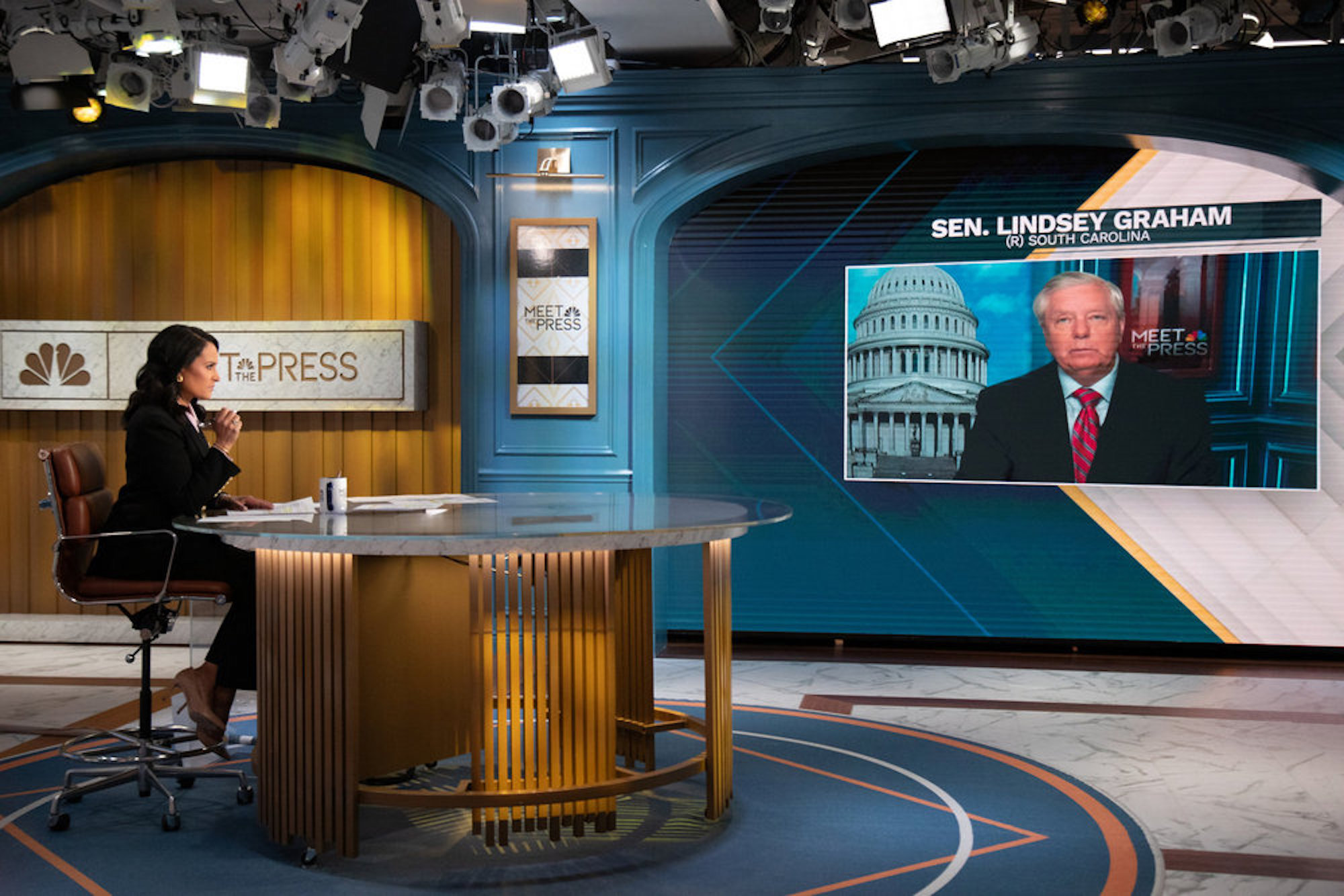
"No Conspiracy": Former Israeli Consul Dismisses Conspiracy Theories about Lindsey Graham's Death

How other outlets are covering this story
Compare narratives across 6 related reports from 6 sources. Real Narrative News aggregates the coverage spectrum so you can see who emphasises what — bias tags reflect the outlet, not the story.
Coverage bias distribution
6 sources
Left 17%
Center 17%
Right 67%
MyJoyOnline
· Jul 8, 2026
Judicialization of politics and the politicization of Judiciary: Implications for Nigeria’s democratic future
Democracy rests on a delicate constitutional balance between the executive, legislature, judiciary and the people. Each institution has a distinct mandate, and the legitimacy of democratic governance depends on each respecting the constitutional limits of its authority. When these boundaries become blurred, democratic institutions gradually weaken. Nigeria is increasingly witnessing a troubling phenomenon in which political disputes are routinely transferred from the political arena to the courtroom, while the judiciary itself is increasingly drawn into highly contested political questions.
Fox News
· Jun 23, 2026
The Founding Fathers would sound the alarm on AOC, Mamdani and our slide into socialism
Polling shows over half of Americans under 30 say democracy isn't essential, raising alarms as the nation marks its 250th anniversary on July 4th.
Quadrant Magazine
· Jun 23, 2026
How Compulsory Voting Tilted the Constitutional Balance
How Compulsory Voting Tilted the Constitutional Balance
Toronto Sun
· Jun 26, 2026
EDITORIAL: Our kingdom for a French dictionary?
Should courts dictate to the Crown who cannot be their representatives in this country?
Malay Mail
· Jun 21, 2026
Federal allocations to states guided by Constitution, says Pasir Gudang MP
JOHOR BAHRU, June 21 — The Madani Government is guided by written laws and the Federal Constitution in matters inv...
Vanguard News
· Jul 2, 2026
The communication cost of governance: When the messenger becomes the story
By TONY USIDAMEN Every government has two responsibilities. The first is to govern. The second is to help citizens understand what it is doing and why it is doing it. Success in the first does not automatically guarantee success in the second. Examples abound of governments that implemented difficult reforms but failed to carry the public [] The post The communication cost of governance: When the messenger becomes the story appeared first on Vanguard News.
Topics:
Related coverage for "Constitutional democracy demands due process, not vigilantism": MyJoyOnline — Judicialization of politics and the politicization of Judiciary: Implications for Nigeria’s democratic future . Fox News — The Founding Fathers would sound the alarm on AOC, Mamdani and our slide into socialism. Quadrant Magazine — How Compulsory Voting Tilted the Constitutional Balance. Toronto Sun — EDITORIAL: Our kingdom for a French dictionary?. Malay Mail — Federal allocations to states guided by Constitution, says Pasir Gudang MP. Vanguard News — The communication cost of governance: When the messenger becomes the story