
Today in News History
On July 12, several notable moments in the history of News stand out. In 1488, Joseon Dynasty official Choe Bu returned to Korea after months of shipwrecked travel in China. In 1789, In response to the dismissal of the French finance minister Jacques Necker, the radical journalist Camille Desmoulins gives a speech which results in the storming of the Bastille two days later. In 1920, Randolph Quirk, Manx linguist and academic (died 2017) was born. In 1925, Roger Smith, American businessman (died 2007) was born. In 1927, Harley Hotchkiss, Canadian businessman (died 2011) was born. In 1949, Rick Hendrick, American businessman, founded Hendrick Motorsports was born. In 1955, Jimmy LaFave, American singer-songwriter and guitarist (died 2017) was born. In 1995, Chinese seismologists successfully predict the 1995 Myanmar-China earthquake, reducing the number of casualties to 11. In 2006, The 2006 Lebanon War begins. In 2008, Tony Snow, American journalist, 26th White House Press Secretary (born 1955) passed away. Together, these milestones provide historical context for today's news news and ongoing narratives.
Chrome is getting better at understanding the breaks and punctations you never say out loud
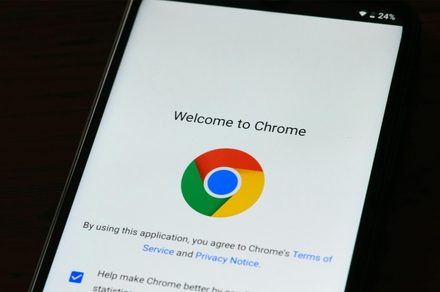
Chrome 151 Beta introduces automatic punctuation for voice recognition, allowing the browser to infer commas and periods from natural speech without spoken commands.
Narrative Intelligence Brief
This article was published by Digital Trends, a source frequently categorized with a Unknown bias based in United States of America. Our narrative intelligence engine continuously monitors coverage from this outlet to track framing, bias, and rhetorical patterns. Our initial algorithmic scan of this specific piece did not flag high-confidence rhetorical techniques, suggesting a generally straightforward reporting style or neutral framing. By understanding the editorial perspective of Digital Trends, readers can better contextualize the information presented and compare it across our broader media matrix to find the real narrative.
More from Digital Trends
July 12, 2026
The Pixel 11 is almost here, and these are the 3 upgrades I’m begging Google to make
July 12, 2026
What is Copilot? Everything you need to know about Microsoft’s AI assistant
July 12, 2026
I spent a fortune on a Copilot+ PC, and I’ve barely ever touched Microsoft’s AI
July 12, 2026
I tried to parody the most absurd AI products, but the tech industry beat me to it
July 12, 2026
I bought into a brighter future, but my digital life bills monthly subscriptions
Analysis Methodology
This narrative analysis was generated using the CoDataLab Global Intelligence Engine. Our proprietary AI scans thousands of cross-border sources to identify sentiment patterns, framing techniques, and potential media bias. While AI provides the data-driven foundation, our objective is to empower readers with additional context beyond the standard headline.The content displayed above is a structured summary designed for rapid information processing. For the full original report, please visit the source outlet.More Coverage
Discussion
"lindsey graham"
Outrage as Trump and Netanyahu accused of using Lindsey Graham’s death to promote agendas

Celebrity Deaths of 2026: Lindsey Graham and More Stars We’ve Lost This Year

"No Conspiracy": Former Israeli Consul Dismisses Conspiracy Theories about Lindsey Graham's Death

How other outlets are covering this story
Compare narratives across 6 related reports from 6 sources. Real Narrative News aggregates the coverage spectrum so you can see who emphasises what — bias tags reflect the outlet, not the story.
Coverage bias distribution
6 sources
Left 17%
Center 50%
Right 17%
ZDNet
· Jul 1, 2026
I made my TV sound dramatically better without buying a soundbar - 7 cheap and easy ways
Great TV sound doesn't have to be expensive - here are my expert-tested audio tweaks.
Seeking Alpha
· Jul 7, 2026
Wall Street Breakfast Podcast: Walmart Turns Up Discounts
Wall Street Breakfast Podcast: Walmart Turns Up Discounts
Daily Dot
· Jun 24, 2026
“The Literacy Crisis is Screaming”: TikToker Says 50% of Americans Can’t Read Above a 6th Grade Level
Have confrontations resorted to familiar slangs rather than full sentences and words because of vocabulary? A TikToker weighed in. Sign up to receive the Daily Dot’s Internet Insider newsletter for urgent news from the frontline of online. The post “The Literacy Crisis is Screaming”: TikToker Says 50 of Americans Can’t Read Above a 6th Grade Level appeared first on The Daily Dot.
Irish News
· Jan 17, 2020
Noise Annoys: Ned's Acoustic Dustbin, Acoustic Dan and Arborist
WELCOME to the first Noise Annoys of 2020, in which I bring you words on new releases from three very different favourites.
Smithsonian Magazine
· Jun 29, 2026
Humans and Great Apes Giggle With a Similar Rhythm and Timing, Suggesting We Have Shared Our Style of Laughter for 15 Million Years
Understanding how laughter evolved can reveal the secrets of human speech
The Register
· Jul 8, 2026
OpenAI makes ChatGPT better at banter
With GPT-Live, talking, listening, and formulating answers all happen at once
Topics:
Related coverage for "Chrome is getting better at understanding the breaks and punctations you never say out loud": ZDNet — I made my TV sound dramatically better without buying a soundbar - 7 cheap and easy ways. Seeking Alpha — Wall Street Breakfast Podcast: Walmart Turns Up Discounts. Daily Dot — “The Literacy Crisis is Screaming”: TikToker Says 50% of Americans Can’t Read Above a 6th Grade Level. Irish News — Noise Annoys: Ned's Acoustic Dustbin, Acoustic Dan and Arborist . Smithsonian Magazine — Humans and Great Apes Giggle With a Similar Rhythm and Timing, Suggesting We Have Shared Our Style of Laughter for 15 Million Years. The Register — OpenAI makes ChatGPT better at banter