
Today in News History
On July 2, several notable moments in the history of News stand out. In 626, Li Jiancheng, Chinese prince (born 589) passed away. In 649, Li Jing, Chinese general (born 571) passed away. In 1776, American Revolution: The Continental Congress adopts the Lee Resolution severing ties with the Kingdom of Great Britain, although the wording of the formal Declaration of Independence is not adopted until July 4. In 1876, Harriet Brooks, Canadian physicist and academic (died 1933) was born. In 1921, World War I: U.S. President Warren G. Harding signs the Knox-Porter Resolution formally ending the war between the United States and Germany. In 1924, Chia-ying Yeh, Chinese-born Canadian poet and sinologist (died 2024) was born. In 1959, Erwin Olaf, Dutch photographer (died 2023) was born. In 1988, Lee Chung-yong, South Korean footballer was born. In 1997, The Bank of Thailand floats the baht, triggering the Asian financial crisis. In 2014, Harold W. Kuhn, American mathematician and academic (born 1925) passed away. Together, these milestones provide historical context for today's news news and ongoing narratives.
China’s Wang Yi to test whether transatlantic turmoil can soften Europe’s Nordic hawks
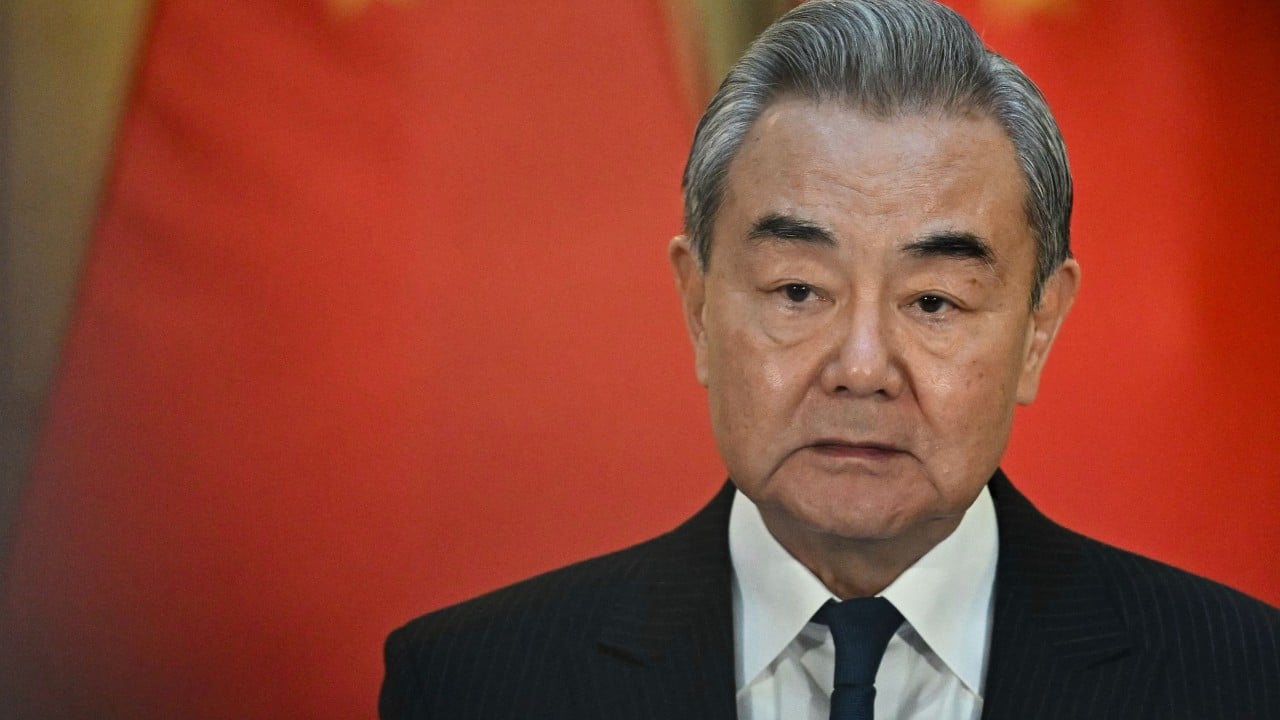
Chinese Foreign Minister Wang Yi kicks off a rare tour of Europe’s Nordic countries on Thursday, as Beijing tests whether it can use shifting geopolitical sands to find openings among some of the bloc’s most China-critical governments. The veteran diplomat will be in Denmark on Thursday and Friday for a series of meetings with Foreign Minister Lars Lokke Rasmussen and a personal audience with King Frederik. In Stockholm he will meet Swedish Prime Minister Ulf Kristersson and Foreign Minister...
Narrative Intelligence Brief
This article was published by South China Morning Post, a source frequently categorized with a lean left bias based in Hong Kong. Our narrative intelligence engine continuously monitors coverage from this outlet to track framing, bias, and rhetorical patterns. Our initial algorithmic scan of this specific piece did not flag high-confidence rhetorical techniques, suggesting a generally straightforward reporting style or neutral framing. By understanding the editorial perspective of South China Morning Post, readers can better contextualize the information presented and compare it across our broader media matrix to find the real narrative.
More from South China Morning Post
July 2, 2026
Gaza marks 1,000 days of war. Palestinians there face an uncertain future
July 2, 2026
What Philippine president’s visit reveals about Canada’s Indo-Pacific ambitions
July 2, 2026
No more warnings for litterbugs as Malaysia’s Penang deploys bodycams
July 2, 2026
Ferrari owner sues ‘unapologetic’ Chinese parents whose kids scratched $530,000 supercar
July 2, 2026
New technologies power China’s Tesla challengers to monthly sales records
Analysis Methodology
This narrative analysis was generated using the CoDataLab Global Intelligence Engine. Our proprietary AI scans thousands of cross-border sources to identify sentiment patterns, framing techniques, and potential media bias. While AI provides the data-driven foundation, our objective is to empower readers with additional context beyond the standard headline.The content displayed above is a structured summary designed for rapid information processing. For the full original report, please visit the source outlet.More Coverage
Discussion


