
Today in News History
On July 12, several notable moments in the history of News stand out. In 1405, Ming admiral Zheng He sets sail to explore the world for the first time. In 1899, Fiat founded by Giovanni Agnelli in Turin, Italy. In 1927, Theodore Maiman, American-Canadian physicist and engineer (died 2007) was born. In 1937, Pai Hsien-yung, Chinese-Taiwanese author was born. In 1962, Project Apollo: At a press conference, NASA announces lunar orbit rendezvous as the means to land astronauts on the Moon, and return them to Earth. In 1971, The nationalization of all large copper mines in Chile is completed. In 1994, Gary Kildall, American computer scientist, founded Digital Research (born 1942) passed away. In 2007, Ed Mirvish, American-Canadian businessman and philanthropist, founded Honest Ed's (born 1914) passed away. In 2009, Ji Xianlin, Chinese linguist and paleographer (born 1911) passed away. In 2015, Satoru Iwata, Japanese game programmer and businessman (born 1959) passed away. Together, these milestones provide historical context for today's news news and ongoing narratives.
China’s new AI master plan is a glimpse at total technological control
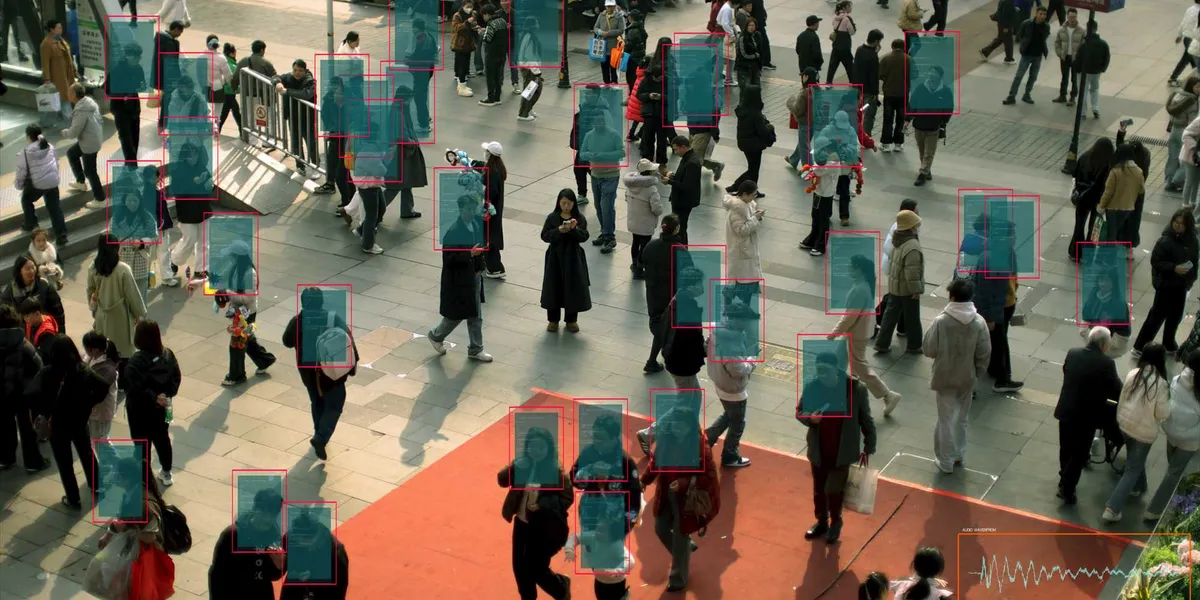
A national five-year plan tells you what a regime believes about the unfolding of society over time: that the future is an engineering problem, history has a rhythm, and the state holds the baton. China is now in its 15th such plan. Its language has evolved over the decades. Whereas early plans stressed Soviet-assisted heavy industry, the current one elevates “AI Plus,” swarm intelligence, embodied AI, and intelligent agents. The word “rejuvenation” appears with the frequency of a liturgical response. But the plan remains a metronome for national development, as an official commentary put it in 2026.China spent 3.93 trillion yuan on research and development in 2025, or 2.8 of GDP. The country holds 6.3 million valid invention patents and installed 295,000 industrial robots in a single year, 54 of all the industrial robots installed on Earth. Nature Index ranks the Chinese Academy of Sciences as the world’s leading research institution. China’s supercomputers now hold the top global ranking.For the first time, the World Intellectual Property Organization placed China in the global innovation top 10 and says the country leads the world in knowledge and technology outputs. Stanford’s AI Index reports that the performance gap between American and Chinese AI models has mostly closed. These indicators report a condition that already exists. However, the interesting question about China’s technological future has never been whether its numbers are big, but what kind of civilization produces them and, in return, what kind of civilization they produce. Engineering everythingWriter Dan Wang calls China an “engineering state,” which he contrasts with America’s “lawyerly society.” In a lawyerly society, problems are disputes to be adjudicated, interests to be balanced, rights to be negotiated in the shadow of precedent. In an engineering state, problems are systems to be optimized. You do not argue about the bridge; you build the bridge. You build it faster than anyone expected, and then you build the rail line to the bridge and then the city around the station, and soon the question of whether the city was a good idea becomes moot because the city is already there and full of people buying things on their phones. By December 2024, China had 1.1 billion internet users, more than a billion online payment users, and 974 million online shoppers. Seventy percent of citizens over 60 were shopping online. Short-video platforms had become major retail channels, with 71 of viewers reporting purchases after watching. What is happening is a compression of social acts: Entertainment, advertising, recommendation, checkout, and social proof collapse into a single continuous interface. Commerce is atmosphere, the feed a way of life. RELATED: Just how American is the Trump phone? This teardown reveals the truth. Eduard Lysenko/Getty Images The philosopher Yuk Hui has argued that technology is never culturally neutral, that different civilizations articulate different relationships between nature and technical practice, and that the assumption of a single universal technics, Greek in origin and Western in development, has blocked serious thought about what Chinese technology might mean on its own terms. For example, China has built a governance architecture around AI that looks little like America’s approach of permissionless innovation followed by belated regulation. China’s algorithmic recommendation rules already require platforms to promote “mainstream values” and “positive energy.” Its measures on generative AI require legal data sources, accuracy improvements, and safeguards against harmful outputs. Its 2025 labeling rules mandate disclosure of AI-generated content. China is engineering the moral atmosphere in which its AI systems operate. A civilization at stakeThe question this raises is the oldest one in the modern history of Chinese technology, first posed during the Self-Strengthening Movement of the 1860s, when Qing reformers tried to borrow Western military and industrial methods without disturbing the civilizational order that received them. The May Fourth intellectuals of 1919 radicalized the problem by turning science into a slogan for national salvation. The People’s Republic added the Soviet planning apparatus. Each generation has found a new way to ask the question: How much of modern power can be adopted technically without rewriting the civilization that adopts it?The answer apparent in the current data is that China has become extraordinarily good at a specific kind of technological work but has not yet settled the deeper question. China leads the world in deployment, turning research into factories, interfaces, supply chains, and mass habits with a speed no other country can seem to match. Its Shenzhen industrial parks run AI models that optimize manufacturing parameters 30 times an hour. Its robot installations outnumber those of every other nation combined. Its open-weight AI models such as DeepSeek V4 have pushed cost-efficient, deployable intelligence to the center of the national ecosystem. Our future?The United States still produces more frontier AI models, holds higher-impact patents, and dominates AI data-center infrastructure. China’s basic-research share of RD spending, while rising, remains low among top performers: 7.08 in 2025, up from 6 in 2019, which represents real movement as well as a persistent tilt toward application over inquiry. China’s supercomputers now hold the top global ranking, but on benchmarks more relevant to AI workloads they rank fourth, running on domestic chips not yet at the leading edge. The semiconductor constraint and export controls are real. The gap between “registered users” and “actual users” of generative AI, between 600 million and 249 million, tells its own story about the distance between infrastructure and habit. The most plausible future is that China becomes the place where 21st-century technologies are most completely socialized — embedded into schools, factories, transport, shopping, and the daily texture of regulation and moral instruction. China will be the civilization that most thoroughly absorbs technology into ordinary life, and in so doing, reshapes what ordinary life can mean. The question is whether absorption at that scale and speed leaves room for the things that cannot be optimized. That question, too, is very old, and the five-year plan cannot answer it.
Narrative Intelligence Brief
This article was published by Conservative Review, a source frequently categorized with a right bias based in United States of America. Our narrative intelligence engine continuously monitors coverage from this outlet to track framing, bias, and rhetorical patterns. Our initial algorithmic scan of this specific piece did not flag high-confidence rhetorical techniques, suggesting a generally straightforward reporting style or neutral framing. By understanding the editorial perspective of Conservative Review, readers can better contextualize the information presented and compare it across our broader media matrix to find the real narrative.
More from Conservative Review
July 11, 2026
Sara Gonzales LIVID: Indian man caught publicly defecating in Texas neighborhood
July 11, 2026
Video: Thug throws Molotov cocktail at man in wheelchair, setting him on fire — right in front of police headquarters
July 11, 2026
Everyone knows Big Food is poisoning Americans ... but most have no idea the dark reason why
July 11, 2026
What the classical education revival is missing
July 11, 2026
Gen Z should not pay for Social Security
Analysis Methodology
This narrative analysis was generated using the CoDataLab Global Intelligence Engine. Our proprietary AI scans thousands of cross-border sources to identify sentiment patterns, framing techniques, and potential media bias. While AI provides the data-driven foundation, our objective is to empower readers with additional context beyond the standard headline.The content displayed above is a structured summary designed for rapid information processing. For the full original report, please visit the source outlet.More Coverage
Discussion
"england"
Tuchel angry at 'lucky' England - but Bellingham defends players

Tuchel angry at 'lucky' England - but Bellingham defends players

‘A dangerous movie’: Glenn Beck warns ‘Citizen Vigilante’ signals a dark moral shift after Germany bans it

How other outlets are covering this story
Compare narratives across 6 related reports from 6 sources. Real Narrative News aggregates the coverage spectrum so you can see who emphasises what — bias tags reflect the outlet, not the story.
Coverage bias distribution
6 sources
Left 50%
Center 17%
Right 33%
South China Morning Post
· Jul 7, 2026
AI ‘central plank’ in Hong Kong’s economic development, John Lee says
Hong Kong’s high-quality economic development will be guided by its first five-year blueprint and the coming policy address, with artificial intelligence (AI) as the “central plank”, the city’s leader has said. Speaking at the South China Morning Post’s China Conference 2026 on Tuesday, Chief Executive John Lee Ka-chiu also said Hong Kong’s “one country, two systems” advantages and commitment to innovation and technology position the city to connect the world with opportunities in an AI-powered...
Bloomberg
· Jun 27, 2026
AI Power Crunch Has Investors Seeking Next IPO Winners
The artificial intelligence boom has a power problem, and Wall Street is betting billions on companies that promise to solve it — even if some of the technology hasn’t been fully developed yet.
Independent Journal Review
· Jun 23, 2026
Can Uncle Sam Finally Take The AI Chip Crown?
Taiwan has the goose that lays the silicon eggs, but now America is learning to breed our own. The fastest AI chip on earth was designed in California, funded by American investors and celebrated in Washington as a
RAPPLER
· Jul 8, 2026
Beijing is looking at curbing overseas access to China’s top AI models, sources say
The talks follow a number of steps by Beijing to keep homegrown AI within the country and underscore how China is now treating cutting-edge AI as a critical national asset that needs controls
The korea Herald News
· Jul 2, 2026
Lee vows to turn Chungcheong region into center of AI-led innovation
President Lee Jae Myung vowed Thursday to turn the central Chungcheong provinces into the global center of artificial intelligence-led innovation as he promoted the government's plan to support large-scale facility investment in the region. Lee made the pledge during a public briefing held in Asan, about 80 kilometers south of Seoul, as a follow-up to the government's announcement of a tripolar mega project centered on attracting massive investment in semiconductors, physical AI and AI data cent
Armstrong Economics
· Jun 30, 2026
The AI Arms Race Is Replacing Globalization
Everyone is talking about artificial intelligence as though it is simply the next technology boom. They are missing the bigger picture. The country that controls the chips, the data centers, the electricity, and the manufacturing capacity will hold the strategic advantage for decades. This is no different than steel before World War I or oil []
Topics:
Related coverage for "China’s new AI master plan is a glimpse at total technological control": South China Morning Post — AI ‘central plank’ in Hong Kong’s economic development, John Lee says. Bloomberg — AI Power Crunch Has Investors Seeking Next IPO Winners. Independent Journal Review — Can Uncle Sam Finally Take The AI Chip Crown?. RAPPLER — Beijing is looking at curbing overseas access to China’s top AI models, sources say. The korea Herald News — Lee vows to turn Chungcheong region into center of AI-led innovation. Armstrong Economics — The AI Arms Race Is Replacing Globalization