Today in News History
On June 24, several notable moments in the history of News stand out. In 1398, Hongwu, Chinese emperor (born 1328) passed away. In 1931, Xiang Zhongfa, Chinese politician, 2nd General Secretary of the Chinese Communist Party (born 1880) passed away. In 1946, Ellison Onizuka, American engineer, and astronaut (died 1986) was born. In 1964, Jean-Luc Delarue, French television host and producer (died 2012) was born. In 1984, Johanna Welin, Swedish-born German wheelchair basketball player was born. In 1989, Jiang Zemin succeeds Zhao Ziyang to become the General Secretary of the Chinese Communist Party after the 1989 Tiananmen Square protests and massacre. In 1990, Michael Del Zotto, Canadian ice hockey player was born. In 2001, Konstantin Gerchik, the second head of the world's first cosmodrome — "Baikonur" (1958-1961). passed away. In 2011, Tomislav Ivić, Croatian football coach and manager (born 1933) passed away. In 2012, Gu Chaohao, Chinese mathematician and academic (born 1926) passed away. Together, these milestones provide historical context for today's news news and ongoing narratives.
China’s medical AI breaks ground as surgical robot wins EU approval, model tops benchmark
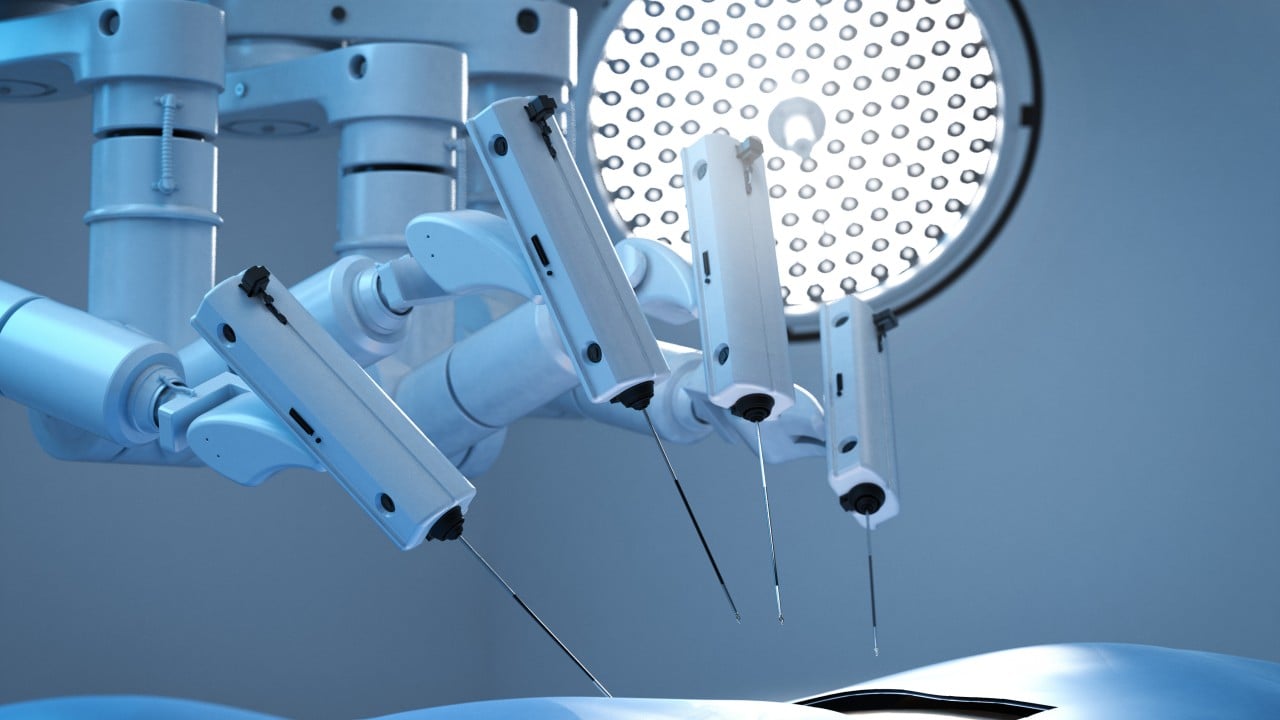
Medical AI from China has reached new milestones, with a teleoperated surgical robot gaining access to the European Union market and a clinical-grade model topping a major healthcare benchmark developed by OpenAI. Shanghai MicroPort MedBot said its Toumai Remote robot, which allowed surgeons to remotely conduct laparoscopic surgeries, had received the “CE mark” from the European Union, a mandatory requirement to enter the market, according to its Hong Kong stock exchange filing on Monday. The...
Narrative Intelligence Brief
This article was published by South China Morning Post, a source frequently categorized with a lean left bias based in Hong Kong. Our narrative intelligence engine continuously monitors coverage from this outlet to track framing, bias, and rhetorical patterns. Our initial algorithmic scan of this specific piece did not flag high-confidence rhetorical techniques, suggesting a generally straightforward reporting style or neutral framing. By understanding the editorial perspective of South China Morning Post, readers can better contextualize the information presented and compare it across our broader media matrix to find the real narrative.
More from South China Morning Post
June 24, 2026
As Europe bakes in early heatwave, fan and air-con sales skyrocket
June 24, 2026
Chinese scientists love Blackpink’s Jennie so much they named a fish after her
June 24, 2026
Man arrested over impersonating ride-hailing driver, breaching visa terms
June 24, 2026
Rebuking Trump, US Senate joins House in vote to end Iran war
June 24, 2026
Airbus to inspect 16 A380 planes after cracks found on wings
Analysis Methodology
This narrative analysis was generated using the CoDataLab Global Intelligence Engine. Our proprietary AI scans thousands of cross-border sources to identify sentiment patterns, framing techniques, and potential media bias. While AI provides the data-driven foundation, our objective is to empower readers with additional context beyond the standard headline.The content displayed above is a structured summary designed for rapid information processing. For the full original report, please visit the source outlet.More Coverage
Discussion
"trump"
Why Trump’s Slimy Humiliation Is Driving Him Mad: Biographer

Trump, US receive overwhelmingly negative reviews in new Pew global survey

Libs Freak Out Because Evil Trump Admin Embraces ‘Fetal Personhood Ideology’