
Today in News History
On June 27, several notable moments in the history of News stand out. In 1924, The Johor-Singapore Causeway opens after five years of construction, providing a land connection for road and rail vehicles travelling between Johor and Singapore. In 1927, Prime Minister of Japan Tanaka Giichi convenes an eleven-day conference to discuss Japan's strategy in China. The Tanaka Memorial, a forged plan for world domination, is later claimed to be a secret report leaked from this conference. In 1944, World War II: Mogaung is the first place in Burma to be liberated from the Japanese by British Chindits, supported by the Chinese. In 1962, Tony Leung Chiu-wai, Hong Kong actor and singer was born. In 1962, Sunanda Pushkar, India-born Canadian businesswoman (died 2014) was born. In 1974, Christopher O'Neill, English-American businessman was born. In 1981, The Central Committee of the Chinese Communist Party issues its "Resolution on Certain Questions in the History of Our Party Since the Founding of the People's Republic of China", laying the blame for the Cultural Revolution on Mao Zedong. In 1986, George Nēpia, New Zealand rugby player and referee (born 1905) passed away. In 1998, Gilles Rocheleau, Canadian businessman and politician (born 1935) passed away. In 2015, Zvi Elpeleg, Polish-Israeli diplomat, author, and academic (born 1926) passed away. Together, these milestones provide historical context for today's news news and ongoing narratives.
China’s low-cost capital could help fix New Zealand’s infrastructure gap - Fran O’Sullivan

Narrative Intelligence Brief
This article was published by The New Zealand Herald, a source frequently categorized with a lean right bias based in New Zealand. Our narrative intelligence engine continuously monitors coverage from this outlet to track framing, bias, and rhetorical patterns. Our initial algorithmic scan of this specific piece did not flag high-confidence rhetorical techniques, suggesting a generally straightforward reporting style or neutral framing. By understanding the editorial perspective of The New Zealand Herald, readers can better contextualize the information presented and compare it across our broader media matrix to find the real narrative.
More from The New Zealand Herald
June 26, 2026
Iran Guards say they’ve attacked US sites in response to American strikes
June 26, 2026
All Whites v Belgium: Live updates from Fifa World Cup Group G game in Vancouver
June 26, 2026
Health funding overhaul shows quiet shift in primary care reform - Cecilia Robinson
June 26, 2026
Father’s plea for police policy change after mentally unwell son stabbed him with a knife
June 26, 2026
United States strikes Iran targets after attack on cargo ship in Strait of Hormuz
Analysis Methodology
This narrative analysis was generated using the CoDataLab Global Intelligence Engine. Our proprietary AI scans thousands of cross-border sources to identify sentiment patterns, framing techniques, and potential media bias. While AI provides the data-driven foundation, our objective is to empower readers with additional context beyond the standard headline.The content displayed above is a structured summary designed for rapid information processing. For the full original report, please visit the source outlet.More Coverage
Discussion
"venezuela"
Venezuela earthquakes: 589 confirmed dead so far as international rescue teams arrive – as it happened
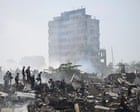
Forty seconds of chaos that wrecked Venezuela’s comeback
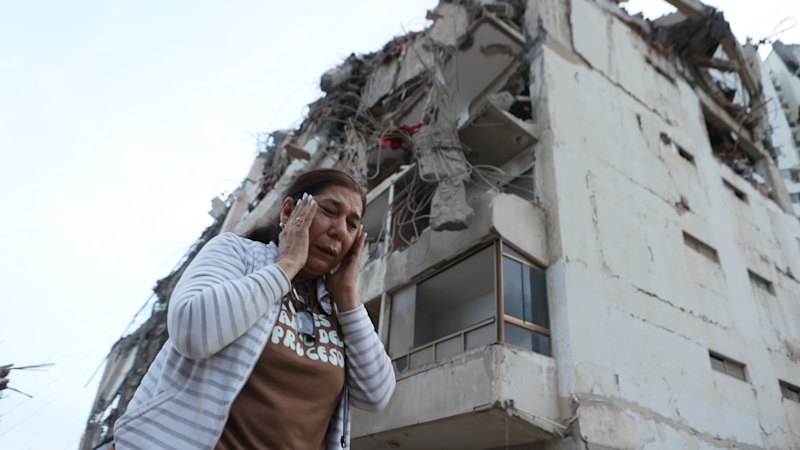
Desperate Search For Quake Survivors in Venezuela’s La Guaira
