
Today in News History
On July 2, several notable moments in the history of News stand out. In 626, Li Yuanji, Chinese prince (born 603) passed away. In 626, Li Jiancheng, Chinese prince (born 589) passed away. In 626, Li Shimin, the future Emperor Taizong of Tang, ambushes and kills his rival brothers Li Yuanji and Li Jiancheng in the Xuanwu Gate Incident. In 649, Li Jing, Chinese general (born 571) passed away. In 706, In China, Emperor Zhongzong of Tang inters the bodies of relatives in the Qianling Mausoleum, located on Mount Liang outside Chang'an. In 1776, American Revolution: The Continental Congress adopts the Lee Resolution severing ties with the Kingdom of Great Britain, although the wording of the formal Declaration of Independence is not adopted until July 4. In 1924, Chia-ying Yeh, Chinese-born Canadian poet and sinologist (died 2024) was born. In 1976, End of South Vietnam; Communist North Vietnam annexes the former South Vietnam to form the unified Socialist Republic of Vietnam. In 1988, Lee Chung-yong, South Korean footballer was born. In 2008, Colombian conflict: Íngrid Betancourt, a member of the Chamber of Representatives of Colombia, is released from captivity after being held for six and a half years by FARC. Together, these milestones provide historical context for today's news news and ongoing narratives.
China’s ethnic unity law is not a tool of transnational repression
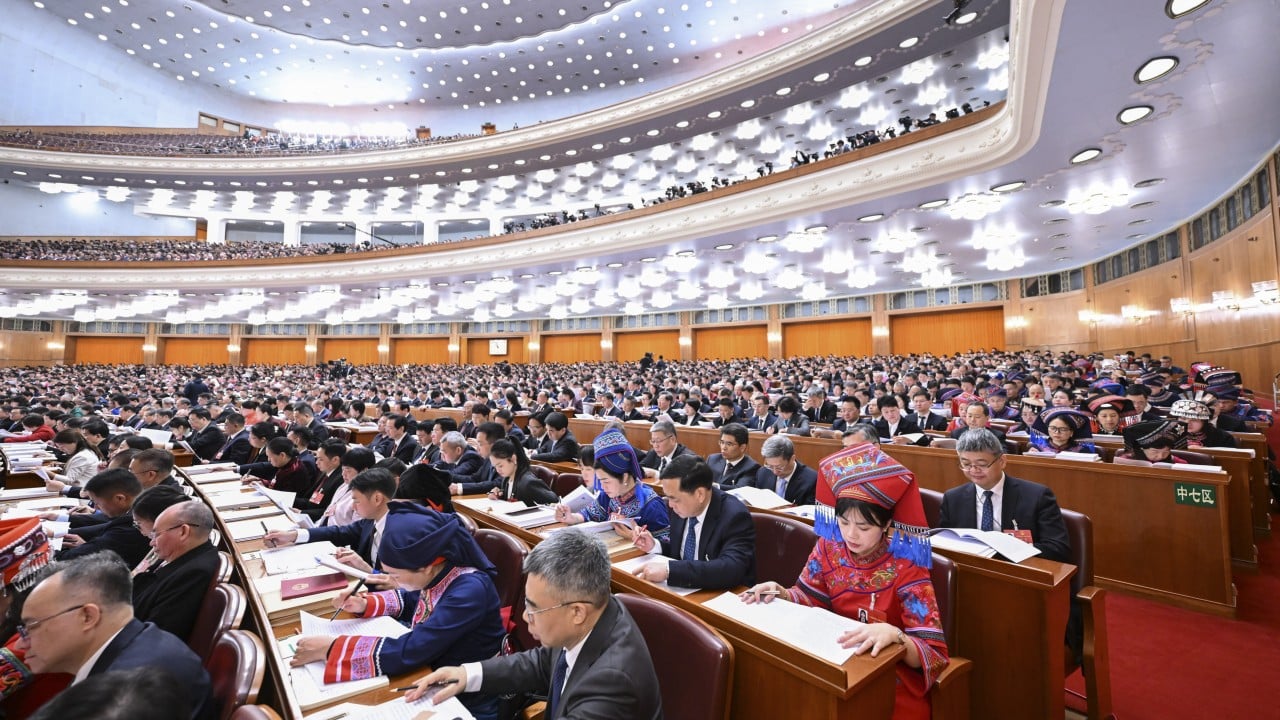
China’s Law on Promoting Ethnic Unity and Progress, passed in March, takes effect this month. It stands alongside the 1984 Law on Regional Ethnic Autonomy as a foundational, comprehensive statute on ethnic affairs, placing the task of forging a strong sense of community squarely within the legal framework. Yet voices abroad have rushed to brand it an act of “transnational repression” and “long-arm jurisdiction”, training their fire on Article 63. Such claims borrow from the vocabulary of law but...
Narrative Intelligence Brief
This article was published by South China Morning Post, a source frequently categorized with a lean left bias based in Hong Kong. Our narrative intelligence engine continuously monitors coverage from this outlet to track framing, bias, and rhetorical patterns. Our initial algorithmic scan of this specific piece did not flag high-confidence rhetorical techniques, suggesting a generally straightforward reporting style or neutral framing. By understanding the editorial perspective of South China Morning Post, readers can better contextualize the information presented and compare it across our broader media matrix to find the real narrative.
More from South China Morning Post
July 2, 2026
Philippines’ abortion ban drives women to risky, underground services
July 2, 2026
Robots to the rescue as South Korea battles severe labour crunch
July 2, 2026
PDD embraces China’s ‘city of the future’ after bruising regulatory clash and record fine
July 2, 2026
‘Massive’ Russian missile and drone barrage pounds Ukraine capital
July 2, 2026
Japan’s detention system under scrutiny after ruling on abuse of restraints
Analysis Methodology
This narrative analysis was generated using the CoDataLab Global Intelligence Engine. Our proprietary AI scans thousands of cross-border sources to identify sentiment patterns, framing techniques, and potential media bias. While AI provides the data-driven foundation, our objective is to empower readers with additional context beyond the standard headline.The content displayed above is a structured summary designed for rapid information processing. For the full original report, please visit the source outlet.More Coverage
Discussion
"trump"
Trump Goons Accidentally Bust New Grift Force One’s Fake Interior

USMCA Was Once Trump’s Brainchild. Now, It’s a Dead Deal Walking.

Trump’s carrot-and-stick approach will win Iran conflict against corrupt regime
