Today in News History
On June 22, several notable moments in the history of News stand out. In 662, Rui Zong, emperor of the Tang Dynasty (died 716) was born. In 947, Qian Hongzuo, king of Wuyue (born 928) passed away. In 1774, The British pass the Quebec Act, setting out rules of governance for the colony of Quebec in British North America. In 1914, Mei Zhi, Chinese author and essayist (died 2004) was born. In 1941, World War II: Nazi Germany invades the Soviet Union in Operation Barbarossa. In 1942, World War II: Erwin Rommel is promoted to Field Marshal after the Axis capture of Tobruk. In 1944, World War II: Opening day of the Soviet Union's Operation Bagration against the Army Group Centre. In 1965, The Treaty on Basic Relations between Japan and the Republic of Korea is signed. In 1990, Cold War: Checkpoint Charlie is dismantled in Berlin. In 2022, An earthquake occurs in eastern Afghanistan resulting in over 1,000 deaths. Together, these milestones provide historical context for today's news news and ongoing narratives.
China defends role in global supply chains amid Strait of Hormuz crisis
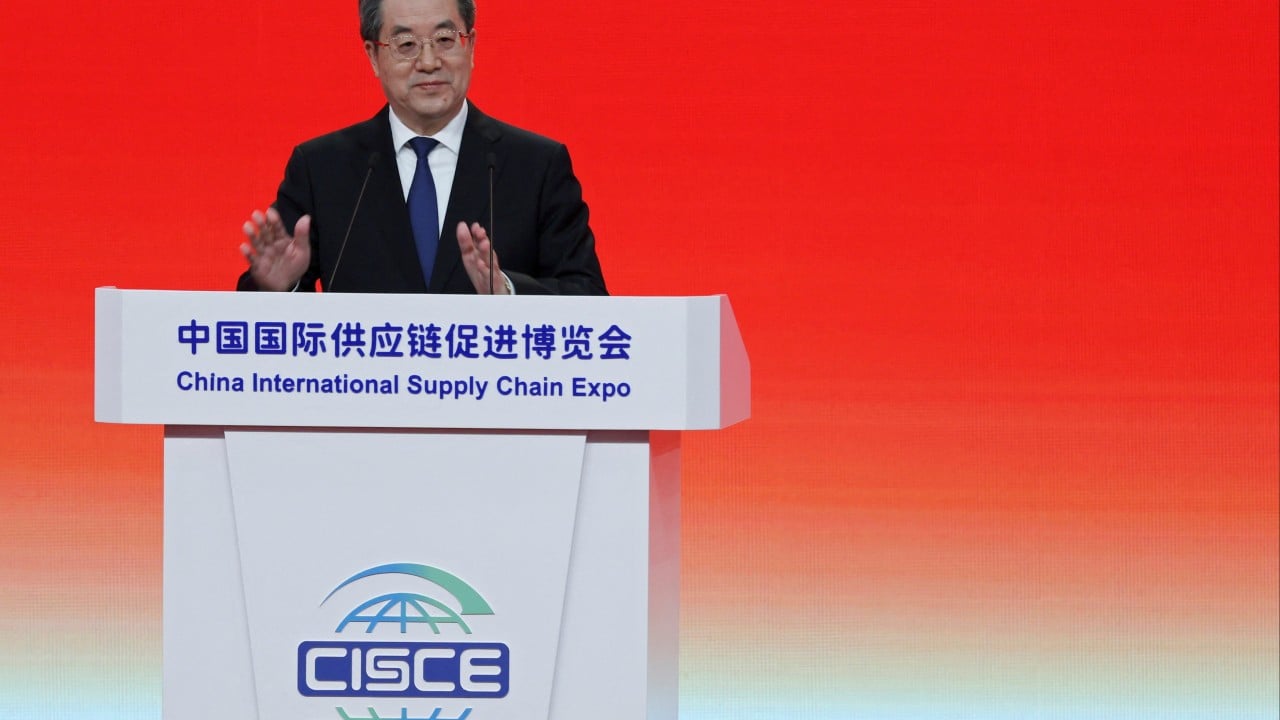
China’s proactive role in stabilising global energy and fertiliser markets amid the Strait of Hormuz crisis shows the country is a defender of global supply chains, rather than a disruptive force as “hyped” by the West, Vice-Premier Ding Xuexiang said on Monday. “The fact that Chinese manufacturing never falters or fails at critical moments fully proves that China is a participant, a builder and a defender of the global supply chain,” Ding said during the opening ceremony of the fourth China...
Narrative Intelligence Brief
This article was published by South China Morning Post, a source frequently categorized with a lean left bias based in Hong Kong. Our narrative intelligence engine continuously monitors coverage from this outlet to track framing, bias, and rhetorical patterns. Our initial algorithmic scan of this specific piece did not flag high-confidence rhetorical techniques, suggesting a generally straightforward reporting style or neutral framing. By understanding the editorial perspective of South China Morning Post, readers can better contextualize the information presented and compare it across our broader media matrix to find the real narrative.
More from South China Morning Post
June 22, 2026
South Korea’s ex-justice minister jailed for 25 years over martial law bid
June 22, 2026
Bangladesh urges Malaysia to ease labour hiring curbs amid exploitation concerns
June 22, 2026
24 drivers arrested, over 4,000 tickets issued in crackdown on errant road users
June 22, 2026
In China, some researchers are attending academic conferences that do not exist
June 22, 2026
Why Wong-Putin meet doesn’t mean Singapore’s going soft on Russia
Analysis Methodology
This narrative analysis was generated using the CoDataLab Global Intelligence Engine. Our proprietary AI scans thousands of cross-border sources to identify sentiment patterns, framing techniques, and potential media bias. While AI provides the data-driven foundation, our objective is to empower readers with additional context beyond the standard headline.The content displayed above is a structured summary designed for rapid information processing. For the full original report, please visit the source outlet.More Coverage
Discussion
"trump"
Trump Marks Father’s Day With Angry Rant

When I moved to Texas people warned me about the Trump-mad lunatics. I’ve been surprised

‘Slowly, then very quickly’: Economist shares striking warning as Trump’s war deal falters