Today in News History
On July 9, several notable moments in the history of News stand out. In 551, A major earthquake strikes Beirut, triggering a devastating tsunami that affects the coastal towns of Byzantine Phoenicia, causing thousands of deaths. In 1357, Emperor Charles IV assists in laying the foundation stone of Charles Bridge in Prague. In 1917, Krystyna Dańko, Polish orphan, survivor of Holocaust (died 2019) was born. In 1955, The Russell-Einstein Manifesto calls for a reduction of the risk of nuclear warfare. In 1986, The New Zealand Parliament passes the Homosexual Law Reform Act legalising homosexuality in New Zealand. In 1993, The Parliament of Canada passes the Nunavut Act leading to the 1999 creation of Nunavut, dividing the Northwest Territories into arctic (Inuit) and sub-arctic (Dene) lands based on a plebiscite. In 1999, Days of student protests begin after Iranian police and hardliners attack a student dormitory at the University of Tehran. In 2004, The Senate Report on Iraqi WMD Intelligence is released by the United States Senate Select Committee on Intelligence, casting doubt on the rationale for the Iraq War. In 2005, Alex Shibicky, Canadian ice hockey player (born 1914) passed away. In 2006, One hundred and twenty-five people are killed when S7 Airlines Flight 778, an Airbus A310 passenger jet, veers off the runway while landing in wet conditions at Irkutsk Airport in Siberia. Together, these milestones provide historical context for today's news news and ongoing narratives.
Changes to thousands of toilets under single-sex spaces code, estimates suggest

Thursday marks the end of the 40-day scrutiny period since the updated guidance was laid in Parliament, during which it could have been rejected.
Narrative Intelligence Brief
This article was published by The Standard, a source frequently categorized with a lean right bias based in United Kingdom. Our narrative intelligence engine continuously monitors coverage from this outlet to track framing, bias, and rhetorical patterns. Our initial algorithmic scan of this specific piece did not flag high-confidence rhetorical techniques, suggesting a generally straightforward reporting style or neutral framing. By understanding the editorial perspective of The Standard, readers can better contextualize the information presented and compare it across our broader media matrix to find the real narrative.
More from The Standard
July 9, 2026
Starmer hints at potential England World Cup win meaning extra bank holiday
July 9, 2026
Trump denies security fears behind change of plane in UK
July 8, 2026
Harry to visit children’s hospital after Wednesday’s meetings made private
July 8, 2026
Burnham on course for coronation as nominations open for Labour leadership
July 8, 2026
Disability benefits not fit for purpose and need bold reform, says Pip review
Analysis Methodology
This narrative analysis was generated using the CoDataLab Global Intelligence Engine. Our proprietary AI scans thousands of cross-border sources to identify sentiment patterns, framing techniques, and potential media bias. While AI provides the data-driven foundation, our objective is to empower readers with additional context beyond the standard headline.The content displayed above is a structured summary designed for rapid information processing. For the full original report, please visit the source outlet.More Coverage
Discussion
"senate race"
LIVE: MAJOR Election SHAKE-UP as WAR ERUPTS… Again!!

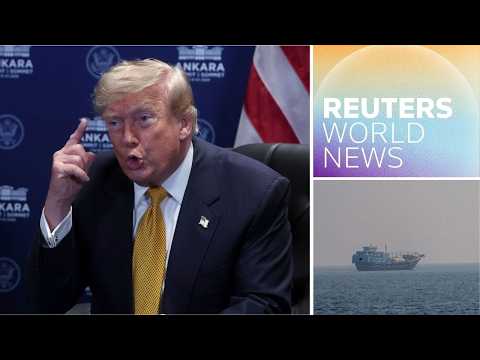
‘They’re scum’: Trump says interim US-Iran deal is over after Gulf base strikes | Reuters World News
Democrats shy away from a Kamala Harris-style ‘coronation’ in Maine